
Podcasts
Practical, compassionate guidance from GBMC clinicians for every stage of life.
Comprised of an expert team of nationally recognized, fellowship-trained laryngologists and credentialed speech pathologists, the Johns Hopkins Voice Center specializes in the care of the professional voice. Using state-of-the-art diagnostic and treatment technology, including laryngeal stroboscopy and acoustic and aerodynamic assessments, we focus on designing optimal medical and therapeutic interventions to address the unique needs of performing artists.
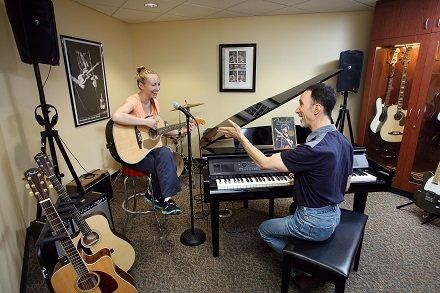
Our unique facility offers a fully equipped music studio with Fender® acoustic and electric guitars, a baby grand piano, amplifiers, microphones, and recording capabilities to meet the needs of performers. The movement education studio is designed for body-centered therapy to enhance body awareness and promote the physical freedom necessary for vocal flexibility. VIEW BROCHURE
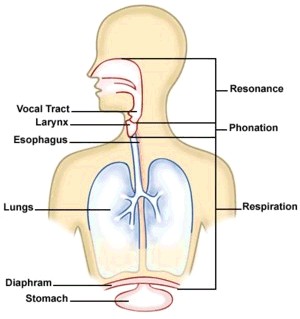
Voice production is a complex action, and involves practically all systems of the body. Voice production begins with respiration (breathing). Air is inhaled as the diaphragm (the large, horizontal muscle below the lungs) lowers. The volume of the lungs expands and air rushes in to fill this space. We exhale as the muscles of the rib cage lower and the diaphragm raises, essentially squeezing the air out.
In order to produce sound, adductor muscles (the "vocal cord closers") are activated, providing resistance to exhaled air from the lungs. Air then bursts through the closed vocal cords. As the air rushes through the vocal cords, the pressure between the cords drops, sucking them back together. This is known as the "Bernoulli Effect." This vibration, or the action of the vocal cords being blown apart and then "sucked" back together, is repeated hundreds or even thousands of times per second, producing what we hear as voice. This sound, created at the level of the vocal cords, is then shaped by muscular changes in the pharynx (throat) and oral cavity (including the lips, tongue, palate, and jaw) to create speech.
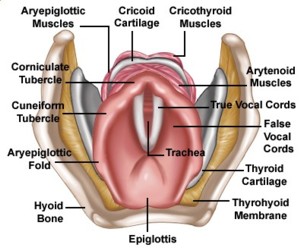
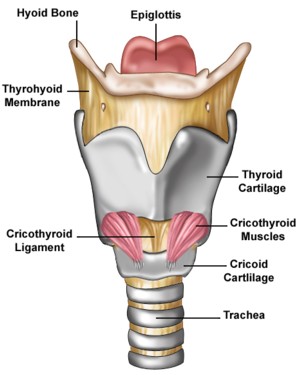
The larynx (lar-inks), commonly called the "voice box," is a tube shaped structure comprised of a complex system of muscle, cartilage, and connective tissue. The larynx is suspended from the hyoid bone, which is significant in that it is the only bone in the body that does not articulate with any other bone. The framework of the larynx is composed of three unpaired and three paired cartilages. The thyroid cartilage is the largest of the unpaired cartilages, and resembles a shield in shape. The most anterior portion of this cartilage is very prominent in some men, and is commonly referred to as an "Adam's apple." The second unpaired cartilage is the cricoid cartilage, whose shape is often described as a "signet ring." The third unpaired cartilage is the epiglottis, which is shaped like a leaf. The attachment of the epiglottis allows it to invert, an action which helps to direct food and liquid into the esophagus and to protect the vocal cords and airway during swallowing.
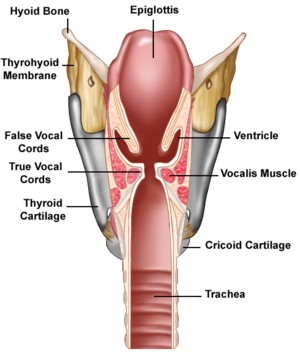
The three paired cartilages include the arytenoid, cuneiform, and corniculate cartilages. The arytenoids are shaped like pyramids, and because they are a point of attachment for the vocal cords, allow the opening and closing movement of the vocal cords necessary for respiration and voice. The cuneiform and corniculate cartilages are very small, and have no clear-cut function.
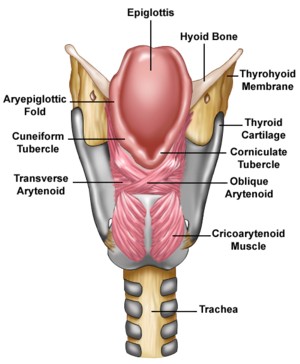
There are two primary groups of laryngeal muscles, extrinsic and instrinsic. The extrinsic muscles are described as such because they attach to a site within the larynx and to a site outside of the larynx (such as the hyoid bone, jaw, etc.). There are eight extrinsic laryngeal muscles, and they are further divided into the suprahyoid group (above the hyoid bone) and the infrahyoid group (below the hyoid bone). The suprahyoid group includes the stylohyoid, mylohyoid, geniohyoid, and digastric muscles. The suprahyoid extrinsic laryngeal muscles work together to raise the larynx. The infrahyoid group includes the sternothyroid, sternohyoid, thyrohyoid, and omohyoid muscles. The infrahyoid extrinsic laryngeal muscles work together to lower the hyoid bone and larynx.
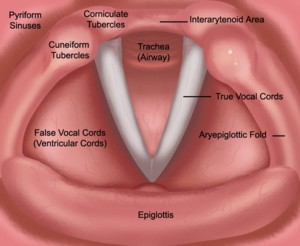
The intrinsic laryngeal muscles are described as such because both of their attachments are within the larynx. The intrinsic muscles include the interarytenoid, lateral cricoarytenoid, posterior cricoarytenoid, cricothyroid, and thyroarytenoid (true vocal cord) muscles. All of the intrinsic muscles are paired (that is, there is a right and left muscle) with the exception of the transverse interarytenoid. All of the intrinsic laryngeal muscles work together to adduct (close) the vocal cords with the exception of the posterior cricoarytenoid, which is the only muscle that abducts (opens) the vocal cords.
The larynx houses the vocal cords, two elastic bands of tissue (right and left) that form the entryway into the trachea (airway). Above and to the sides of the true vocal cords are the false vocal cords, or ventricular cords. The false vocal cords do not usually vibrate during voicing, but are often seen coming together (adducting) in individuals with muscle tension dysphonia, a common voice disorder characterized by excessive muscular tension with voice production. The true vocal cords open (abduct) when we are breathing and close (adduct) during voicing, coughing, and swallowing.
Your voice reflects many different aspects of your personality. It's what makes you unique. Lifestyle choices and differences in daily vocal use or misuse can affect the health and stability of your vocal cords. We do know that the effects of smoking and drinking alcohol can have detrimental effects on the voice and may lead to cancer of the larynx. Keeping a healthy voice throughout your lifetime.
Care of Your Voice as You Age - Watch Video
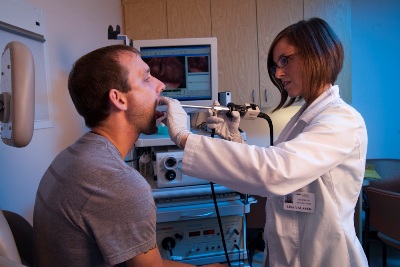
Laryngeal stroboscopy is one of the most useful and state-of-the-art techniques currently available for the examination of the larynx. At the Milton J. Dance, Jr. Head and Neck Center, the laryngeal stroboscopy examination is performed jointly by a physician and a speech pathologist.
What happens during the evaluation?
Step 1: You will first be asked to complete a questionnaire regarding the onset of your voice problem, your medical history and current medications, current voice demands, and any specific symptoms related to your voice problem.
Step 2: A speech pathologist will guide you in performing simple vocal tasks using a microphone. Computer analysis of your vocal quality will then be performed.
Step 3: The physician may spray a topical anesthetic in your throat for your comfort during the procedure. (Note: Please inform the physician if you have had any reactions to anesthesia in the past.)
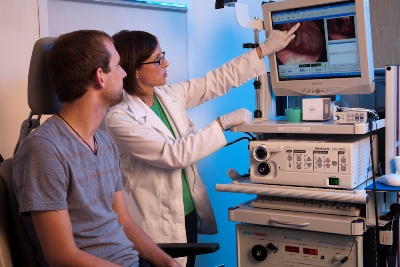
Step 4: The physician will insert a small endoscope through your mouth towards the back of your tongue. The endoscope provides a telescopic video recording of your larynx. The speech pathologist will then ask you to perform various voice tasks in order to observe the movement of your vocal cords and the condition of your larynx.
How long will it take?
The entire evaluation may take approximately thirty minutes to one hour; however, the total time that the endoscope is in your mouth is only approximately two minutes.
When will I receive the results?
Immediately following the evaluation, the physician and speech pathologist will review your results and provide recommendations which may include one or all of the following: referrals, medication, voice therapy, and/ or surgery.
How do I need to prepare?
There is no preparation required for the procedure. You may eat and drink as you wish. Please arrive 15 minutes prior to the appointment to complete the necessary paperwork.
What is acid reflux disease and what are the symptoms?
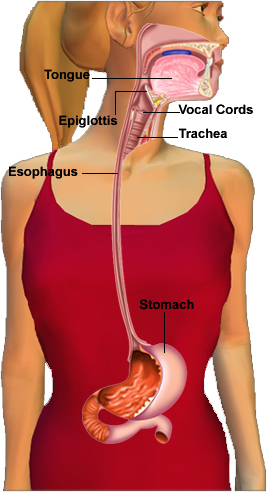
Gastroesophageal reflux disease, or GERD, is the recurring movement of stomach acid from the stomach back up into the esophagus (Gaynor, 1991). Stomach acid in the esophagus may cause heartburn or even chest pain; however, not all individuals will experience heartburn as the esophagus is capable of withstanding a certain amount of acid exposure. On the other hand, the throat and larynx (voicebox) are not meant to withstand any exposure to acid. If acid actually refluxes into the lungs, chronic cough and pulmonary conditions can result, such as pneumonia or bronchitis.
Acid reflux into the larynx and throat is often referred to as "laryngopharyngeal reflux," or LPR. Symptoms of acid reflux into the larynx may include laryngitis, hoarseness, sensation of a lump in the throat, post-nasal drip, chronic throat clearing, excessive throat mucous, sore throat, cough, laryngospasm (spasm of the throat), and/ or throat pain (Gaynor, 2000). With particular regard to singers and professional voice users, other symptoms may include increased time necessary to achieve adequate vocal warm-up, restricted vocal tone placement, and decreased pitch range (Ross, Noordzji, & Woo, 1998).
How does acid reflux happen?
Understanding how acid reflux occurs is crucial in understanding how to avoid it. At the end of the esophagus is a tight muscle, known as the "lower esophageal sphincter," or LES. This muscle is intended to relax only as food passes from the esophagus into the stomach. Reflux can occur when the pressure or tightness of this muscle is decreased. Certain substances and behaviors are linked to the lowering of pressure of the LES. According to Gaynor (1991), diets high in fat and carbohydrates, alcohol consumption, and the use of tobacco products may all result in a susceptibility to reflux. Carminatives (peppermint and spearmint) may also decrease LES pressure; therefore, conservative use of mint-flavored gums and candies may be well-advised for individuals with reflux.
In the work of Wong, Hanson, Waring, & Shaw (2000), acid reflux was often found to occur with belching or when lying down after meals. To avoid this risk, individuals suffering from acid reflux should avoid carbonated beverages, which lead to belching, and should avoid eating two hours before lying down. Individuals with acid reflux may also have delayed emptying of the stomach in the lower intestinal tract, leaving increased amounts of food in the stomach. The more food there is in the stomach, the more time will be needed to allow for gastric emptying, and the higher the potential for more acid to be refluxed (Gaynor, 1991). To address this, it is often recommended that one have several small meals throughout the day rather than three large meals.
Certain behaviors also linked to lowered LES pressure include increased intra-abdominal pressure and bending over, creating an increased possibility for reflux (Gaynor, 1991). Forceful abdominal breathing during singing and strenuous workouts (which often involve bending over) can each contribute to lowered LES pressure. Since certain types of breathing and stretching both contribute to positive vocal use, singers and professional speakers suffering from GERD might discuss with their physician the merits of taking antacids prior to performances and/or physical workouts to neutralize any acid that might be refluxed.
How does acid reflux affect my voice?
Acid reflux into the larynx occurs when acid travels the length of the esophagus and spills over into the larynx. Any acidic irritation to the larynx may result in a hoarse voice. As the vocal folds begin to swell from acidic irritation, their normal vibration is disrupted. Even small amounts of exposure to acid may be related to significant laryngeal damage.
This disruption in the vibratory behavior of the vocal folds will often produce a change in the singing or speaking voice. When a singer or speaker encounters an undesirable vocal sound, the first impulse is to compensate by unknowingly changing the way in which one is singing or speaking. If the negative vocal results of acid reflux are addressed by a compensatory change in vocal technique, functionally abusive vocal behaviors often develop and can exacerbate the original symptoms through excessive muscular tension or even contribute to the development of vocal fold pathologies. For more detailed information on compensatory vocal behaviors, see an article by Dr. Jamie Koufman and Dr. Peter Belafsky entitled The Demise of Behavioral Voice Disorders.
Reflux of acid into the larynx can have a detrimental effect on the voice for several reasons, as mentioned above. One unusual phenomenon has been observed whereby irritation found only in the lower esophagus can stimulate abnormal muscular contractions in the larynx such as coughing or throat clearing via shared nerved impulses between the esophagus and the larynx (Gaynor, 1991; Shaw & Searl, 1997; Wong, Hanson, Waring, & Shaw, 2000). As a result, individuals with acid reflux may have a persistent cough in the absence of any direct contact between stomach acid and the larynx. Persistent coughing can lead to vocal fold lesions, which in turn will negatively affect vocal quality and performance.
Individuals reflux stomach acid as a result of several factors, including hiatus hernia (malfunction of the stomach valve), obesity (being overweight), and poor eating habits. Poor eating habits, which can make reflux worse, include night eating, overeating, and consuming food or drinks that promote stomach acid production, such as spicy, fatty, or fried foods, acidic foods (tomato sauce, orange juice), soda, coffee, tea, chocolate, mints, and alcohol. In addition, using tobacco products in any form promotes stomach acid production.
How can reduce my risk of acid reflux?
To reduce the likelihood of reflux, and to improve your condition, you may adhere to the following guidelines:
In summary, acid reflux affects many voice users, some of whom may be unaware that the source of their vocal difficulty is medical and can be addressed with the options listed above. If you think you may suffer from acid reflux, there is no danger in following the behavioral and dietary guidelines above, but a visit to a qualified medical professional is the only means of securing an accurate diagnosis. Some physicians who do not specialize in voice disorders may be unaware of the relationship between acid reflux and hoarseness, and the symptoms of acid reflux may be easily attributed to other illnesses or poor vocal techniques. Be sure to question your medical professional to be certain that the possible diagnosis of acid reflux is not overlooked.

Singing the Praises of the Johns Hopkins Voice Center at GBMCThe Johns Hopkins Voice Center located at GBMC's Milton J. Dance, Jr. Head & Neck Surgery Center is hitting the right notes as it mends damaged voices with a little help from Fender Musical Instruments Corporation. Read the full article featured on The Baltimore Sun.
GBMC center offers relief for voice, swallowing issues Johns Hopkins Voice Center is newest GBMC addition Elementary school teacher Theresa Wenck is finding her singing voice again inside a brand new studio on the hospital's campus. Over the winter, chronic laryngitis led to a more serious diagnosis for the chorus teacher, who was constantly singing and talking over her students. "I learned that I had a vocal hemorrhage that should have repaired itself with vocal rest, but unfortunately I needed to have surgery," Wenck said. She went to the Johns Hopkins Voice Center at GBMC, the newest addition to a comprehensive treatment facility that provides a one-stop shop for patients of all ages suffering from voice or swallowing issues. For the musicians, they can come sit in our music room, playing whatever instrument they want while they're singing and show us whatever problem they're having. Same thing for our music teachers," said laryngologist Dr. Kenneth C. Fletcher. LEARN MORE
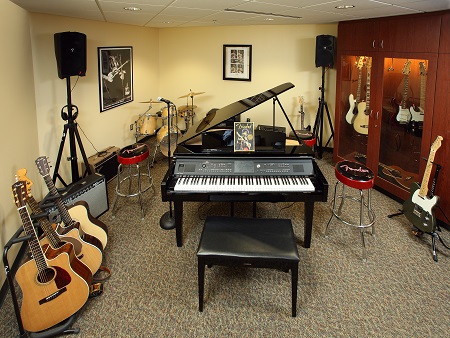
New Treatment Center At GBMC Mending Broken VoicesMending broken voices. That’s the specialty of a new treatment center opening at GBMC. This music studio is only one part of the Johns Hopkins Voice Center at GBMC. There’s also high-tech medicine. “The idea is showing the patient this is what your vocal chords look like,” said Dr. Chuck Fletcher, Johns Hopkins Voice Center. “Your voice is just this great instrument, but it’s complicated and certainly can go bad in different ways.” LEARN MORE
Professional voice users, including both speakers and singers, can follow particular guidelines to promote optimal vocal fold health and function.
Speech Coordinator
Lee Silverman Voice Treatment. Member of ASHA SID 3 and NATS.
Melissa Bidlack, CCC-SLP, is a speech-language pathologist and singing voice specialist at Johns Hopkins Voice Center. She completed her clinical fellowship at Johns Hopkins Bayview Medical Center, specializing in voice, swallowing, and neurological disorders. Ms. Bidlack received her Master of Science degree in Speech-Language Pathology from Columbia University Teachers College. She also holds a Master of Music degree from Rice University in Vocal Performance. Prior to her career in speech-language pathology, she performed as a professional opera singer and served on the voice faculty at Whitman College. Melissa Bidlack, CCC-SLP, is a speech-language pathologist and singing voice specialist at Johns Hopkins Voice Center. She completed her clinical fellowship at Johns Hopkins Bayview Medical Center, specializing in voice, swallowing, and neurological disorders. Ms. Bidlack received her Master of Science degree in Speech-Language Pathology from Columbia University Teachers College. She also holds a Master of Music degree from Rice University in Vocal Performance. Prior to her career in speech-language pathology, she performed as a professional opera singer and served on the voice faculty at Whitman College.
Senior Speech-Language Pathologist Senior Speech-Language Pathologist
Member of ASHA, SID - 2 Neurophysiology and Neurogenic Speech and Language Disorders; SID-13 Special Interest Group 13, Swallowing and Swallowing Disorders (Dysphagia). Board Certified Brain Injury Specialist.
Lisa’s clinical interests are in the areas of swallowing disorders, adult speech, language, and cognition following neurological impairments including stroke and traumatic brain injury. Lisa’s clinical interests are in the areas of swallowing disorders, adult speech, language, and cognition following neurological impairments including stroke and traumatic brain injury.
Administrative Director
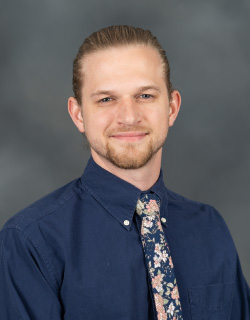
Speech-Language Pathologist
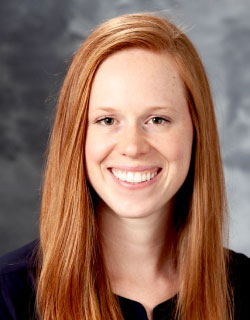
Amberlynn is a Medical Speech Pathologist specializing in adult dysphagia, head and neck cancer-related issues, and laryngectomy rehabilitation. Her expertise includes managing speech, voice, and swallowing disorders related to head and neck cancer, alaryngeal communication, dysphagia post-total laryngectomy, and voice prosthesis management. She also specializes in treatment of head and neck lymphedema and utilizes various modalities for dysphagia treatment such as Manual Lymph Drainage, Manual therapy, neuromuscular electrical stimulation (NMES), and biofeedback modalities (NMES, FEES and Pharyngeal Manometry).
Amberlynn holds a Master’s in Speech-Language Pathology and completed her clinical fellowship year at the University of Wisconsin-Madison Voice and Swallow Clinics. She is a Certified Lymphedema Therapist (CLT) and Certified by the Lymphedema Association of North America. She has a passion for life-long learning and clinical advancement which drives her commitment to staying at the forefront of clinical advancements and evidence-based practice. Amberlynn is also deeply committed to patient education, empowering individuals and families to manage swallowing difficulties and improve their quality of life throughout recovery.
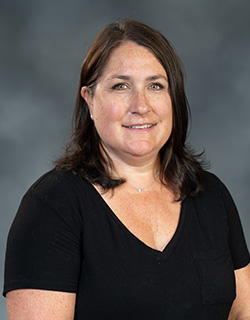
Allison graduated from Penn State University in 1997 with a degree in Nutrition and completed a dietetic internship to become a Registered Dietitian at the University of Delaware, graduating in 2000. She has experience in adult, pediatric, and NICU nutrition. Her current role is in adult oncology. She is a member of the Academy of Nutrition and Dietetics and of the academy's Oncology Nutrition Dietetic Practice Group.
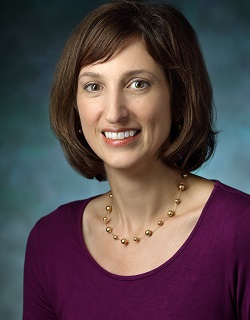
Oncology Social Work Clinical Specialist
Board Certified Oncology Social Worker, Member of Association of Oncology Social Workers
Karen has a clinical interest in assisting head and neck cancer patients and their families with the emotional adjustments and practical issues related to diagnosis, treatment and recovery. Karen has a clinical interest in assisting head and neck cancer patients and their families with the emotional adjustments and practical issues related to diagnosis, treatment and recovery.

Speech Coordinator
Member of ASHA, SID - 2 Neurophysiology and Neurogenic Speech and Language Disorders; SID-13 Special Interest Group 13, Swallowing and Swallowing Disorders (Dysphagia).
Jason’s clinical interests are in the areas of adult speech, language, cognitive, and swallowing disorders following neurological impairments including stroke and traumatic brain injury. He has received specialized training in cognitive rehabilitation by the American Congress of Rehabilitation Medicine. As an affiliate faculty member at Loyola University, he has instructed graduate students on the assessment and treatment of aphasia. Jason’s clinical interests are in the areas of adult speech, language, cognitive, and swallowing disorders following neurological impairments including stroke and traumatic brain injury. He has received specialized training in cognitive rehabilitation by the American Congress of Rehabilitation Medicine. As an affiliate faculty member at Loyola University, he has instructed graduate students on the assessment and treatment of aphasia.
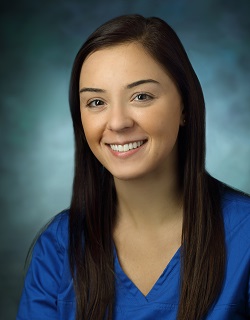
Speech-Language Pathologist
Graduated from Loyola University Maryland with her Master’s Degree in 2019. She completes speech-language and feeding/swallowing evaluations and treatment sessions at the Milton J. Dance Center for children ages 0 months-18 years.

Bushra Lohrasbi received her Master of Arts degree in Speech-Language Pathology at University of Maryland, with an academic focus on progressive neurodegenerative disorders (Parkinson’s Disease, Multiple Sclerosis, ALS) and bilingual language development.
Bushra’s primary clinical specialty at the Milton J. Dance Jr. Head and Neck Center encompasses head and neck cancer swallow and voice evaluation and rehabilitation following surgical resection and/or radiation therapy. Bushra is passionate about designing and conducting clinical translational research. Bushra is facilitating inter-disciplinary clinical trials focused on head and neck cancer populations, alongside of tracheostomized populations for upper airway concerns.
Senior Speech-Language Pathologist
Ana graduated with her Master's Degree in Speech-Language Pathology in 2007 from Loyola University of Maryland. Her areas of interest are in swallowing disorders and voice disorders. She has extensive experience with medically complex patient populations, NICU, PICU, and pediatrics. Her current focus is on the head and neck cancer population. She is a member of the ASHA special interest groups for swallowing disorders, voice and upper airway disorders. She is certified in MBSImP, McNeill Dysphagia Treatment Program, and LSVT Loud.
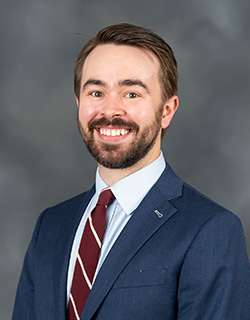
Jesse Palmer is a speech pathologist and voice specialist at the Johns Hopkins Voice Center at GBMC. He received his Bachelor’s of Arts in Vocal Performance from Elon University and his Master’s of Science in Speech and Hearing Sciences from the University of North Carolina at Chapel Hill. Mr. Palmer completed his clinical fellowship at Philadelphia Ear, Nose, and Throat Associates with Dr. Robert Sataloff, specializing in the treatment of voice disorders. He has received level three training in Somatic Voicework™ The LoVetri Method and has completed the Foundations of Manual Therapy: Advanced Voice and Swallowing coursework. Mr. Palmer is a member of the ASHA Voice and Voice Disorders Special Interest Group (SIG-3).
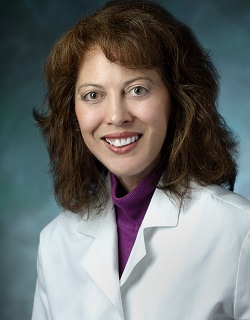
Otolaryngology Nurse Specialist
Karen has 30+ years experience working with head and neck oncology patients and their families/friends. She enjoys working with patients throughout their cancer journey, from diagnosis and treatment through long-term survivorship. Karen co-facilitates the Dance Center’s monthly Head & Neck Cancer Patient and Family Support Group.
Karen has expertise in the management of tracheostomies. She is available for both inpatient and outpatient consultations. She presents locally and nationally on a variety of Head & Neck Cancer topics.
Karen’s involvement in Head & Neck Cancer extends beyond GBMC. She is an active member of the Society of Otorhinolaryngology and Head-Neck Nurses (SOHN). She currently serves as the chair of the SOHN National Education Committee and is SOHN’s Accredited Provider Program Director. Karen serves on the Board of Directors for Support for People with Oral and Head and Neck Cancer (SPOHNC). She is also a member of the Global Tracheostomy Collaborative (GTC) and the Academy of Oncology Nurse & Patient Navigators (AONN+).
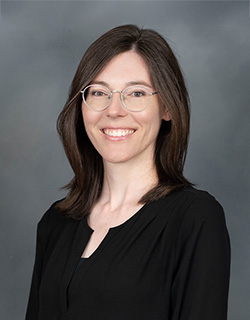
Randi Wooding is a speech-language pathologist specializing in voice disorders at the Johns Hopkins Voice Center. Ms. Wooding received her SLP degree from the University of Maryland and completed her clinical fellowship at Johns Hopkins Bayview Medical Center. In addition to her clinical training, Ms. Wooding holds a Master’s degree in Vocal Performance and Pedagogy from the University of Texas at San Antonio. Prior to beginning her clinical work, Ms. Wooding was on the voice faculty at Baptist University of the Américas and taught singing lessons at multiple high schools and music programs in the San Antonio, TX area.
Practical, compassionate guidance from GBMC clinicians for every stage of life.