Podcasts
Practical, compassionate guidance from GBMC clinicians for every stage of life.
According to the Centers for Disease Control and Prevention, there are more than 700,000 adverse drug events — injuries resulting from the use of medication — that result in hospital emergency room visits each year. Many of these events could have been prevented if information about adverse drug reactions and general medication safety had been more well known.
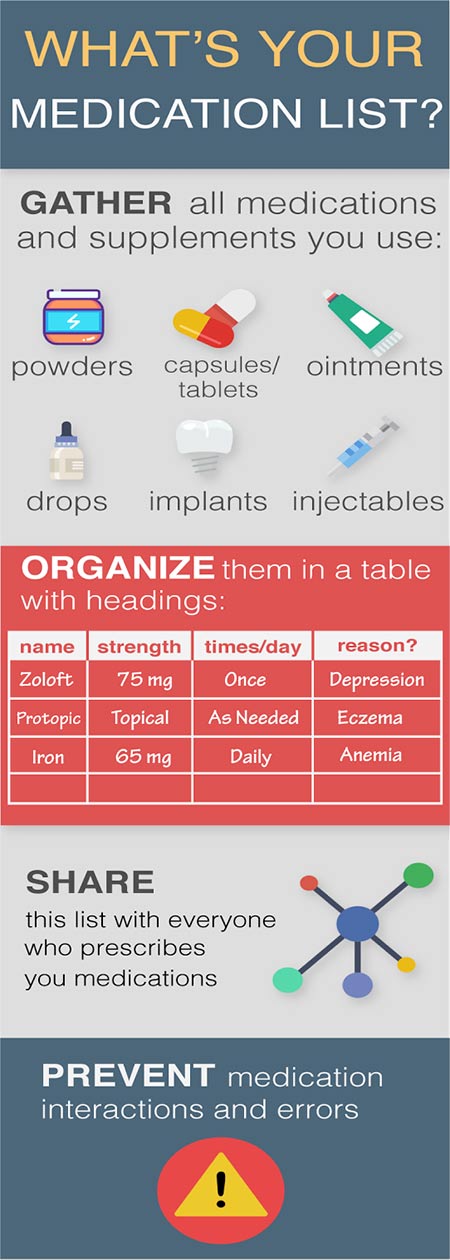
If you're using multiple medications, including powders, ointments, supplements, capsules/tablets, drops, implants, and injectables, it's time to get organized. Making a list is a great way to start. That way, when you visit any health care provider, you won't have to rack your brain about the exact names of your medications and their dosages. Create a table that will help you remember every medication's name, strength, the time(s) of day you take it, and its purpose for you. Share this list with all of your doctors, even if you don't think all of the information is necessarily relevant to them.
It's also a good idea to gather all of your medications, including anything over-the-counter you may be taking, in a Ziploc bag and bring them to your appointments. Even if an item seems benign, such as a vitamin, herb, or supplement, you never know what kind of medical interaction could occur without consulting your physician. It's also wise to try to use the same pharmacy to fill your prescriptions, so that they can help you keep track of everything you're taking. You may form a relationship with the pharmacist, who can alert you of any potential issues to raise with your doctor.
Sometimes, the medications you are taking together may not necessarily be dangerous, but can cancel each other out. For example, if you are taking an iron supplement, the calcium in your daily multivitamin may inhibit your body from fully absorbing the iron supplement. If your doctor knew you were taking both of these, he or she would likely recommend taking them at different times of the day. This way, you know you aren't wasting your money and effort and are getting the full benefit of both medications.
If you think it may be time to update your doctor about your medications and learn about any possible adverse reactions, talk to your primary care provider. If you don’t have a primary care physician, visit gbmc.org/mydoctor to find one who is right for you.
Nurse Practitioner +1 more
GBMC Health Partners

Nurse Practitioner - Family +1 more
GBMC Health Partners

NP-Adult +1 more
GBMC Health Partners

Family Medicine
GBMC Health Partners
Aching back. Sore knees. Shooting pain down your legs. Many older adults chalk these up to getting older...
GLP-1 medications like Ozempic and Wegovy have dominated health headlines in recent years. Originally de...
Endometriosis is a complex condition that can affect more than just menstrual cycles. It may cause pelvi...
As we age, our skin becomes thinner and more porous, which means wounds can happen more often and take ...

GBMC is committed to the wellness of each employee as a whole person – this includes physical, emotiona...
Hunt Valley was the first of GBMC's primary care practices to be designated as a Patient-Centered Medical Home (PCMH), which demonstrates its commitment to providing better health and care at a lower cost.
A proud member of GBMC Health Partners, Jarrettsville Family Care offers primary care services for patients of all ages. Our team is dedicated to making healthcare accessible and convenient for every member of your family.
...
With locations throughout the Baltimore area, extended weekday and weekend hours, integrated electronic health records and a focus on preventive medicine and chronic disease management, staying healthy and well has never been more convenient.
Ranked as one of the hospitals in Maryland with the highest stroke survival and recovery ratesAccording t...
Practical, compassionate guidance from GBMC clinicians for every stage of life.