March 30 is an annual celebration of all physicians as part of National Doctors’ Day, and we know we have a lot to celebrate here at GBMC. GBMC's medical staff is consistently comprised of many of Baltimore's best doctors, covering primary care and an array of medical specialties. Physicians are proud to be at GBMC because it encourages these outstanding clinicians to provide the best and most advanced care, including cutting edge clinical research, while still maintaining personalized and compassionate care of the individual patient. Baltimore magazine’s "Top Doctors" listings for 2017 recognized 139 GBMC physicians in 76 unique specialties, including Dr. Robert K. Brookland, chairman of the Department of Radiation Oncology, who was one of six eminent doctors from a pool of more than 700 physicians in the Baltimore area selected to be profiled. It just goes to show we have the best of the best. You know this because they take care of you! This Doctors’ Day, we are giving you the opportunity to say thank you to the leaders of these teams. Make a donation to GBMC in honor of a physician that touched your life and let us know about it! We love to hear from you and we want them to know their hard work doesn’t go unnoticed. Thank you in advance for joining us in honoring our doctors and thank you for choosing GBMC! Please visit www.gbmc.org/https://www.gbmc.org/doctorsday for more information.
<iframe class="embed-responsive-item" src="https://www.youtube.com/embed/BxvlcBWJzhI" allowfullscreen="allowfullscreen"></iframe>
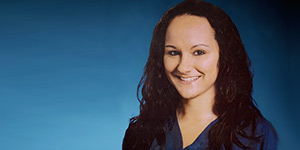
<figure class="image-right"> <img src="/sites/default/files/hg_features/hg_post/359574759cea24f0a0d6c5bffe43c25b.jpg"> <figcaption> Amanda Hindle, RN, BSN </figcaption> </figure> Amanda Hindle, RN, BSN, worked in many different fields – oncology, gynecology, otorhinolaryngology and more – before settling into her “forever home” in GBMC’s Neonatal Intensive Care Unit (NICU). After her clinical trials, which she did in her native Australia, she had the chance to work in pediatrics at a women’s and children’s hospital. Though she was petrified on her first day, she felt that working with young patients was her destiny. <br> <br> In addition to caring for newborns, Amanda prides herself on being able to calm families in scary moments. “I just love when I can allay the fears of the family,” she says. “Their bubble has just been burst. They’ve had this ideal pregnancy and birth all planned out, and then something goes wrong. The patients are just thinking, ‘Will he survive?’” <br> <br> In those moments, Amanda makes it her priority to go above and beyond in making sure the family is well-informed and updated frequently. She uses her medical background to make sure the parents understand in layman’s terms what’s wrong with the child, which can be very reassuring. “I just love it, making the parents feel calm and letting them know that their baby will be ok. It’s a lot of patience and listening,” Amanda says. <br> <br> When graduation day finally comes, and the baby gets to go home, Amanda gets a sense that she’s fulfilling her purpose. “Celebrating that joy and happiness with the family is amazing. On one hand, it’s bittersweet because I’ve become a NICU auntie, especially for long-term babies,” she says, “But I know that my ultimate goal has been achieved, because the baby is finally well enough to go home.” <br> <br> Many of these babies keep in touch via the NICU’s online private support group and participate in the annual Father’s Day 5K and Fun Walk, which benefits the NICU. Amanda is captain of the NICU 5K team and loves being reunited with her patients at the race each year. “It’s amazing to see the kids, who were once so little and in critical condition, just thriving,” she says. “Their parents teach them who we are and tell them about how their life was started in the NICU. It makes up for the heartbreaking moments, knowing that we are saving lives every day.” <br> <br> This year, the proceeds from the 5K benefit the NICU unit being built at GBMC! The renovations will allow for increased privacy, more space for equipment, and refrigerated drawers for storing break milk within patient rooms. Please join Amanda and the rest of the NICU team as they run or walk to raise money for GBMC’s tiniest patients on Sunday, June 17, 2018 at the 30th annual Father’s Day 5K and Fun Walk. <a target="_blank" alt="Register for the Father's Day 5K" href="http://gbmc.healthcare/5k/">Click here to register or to support the event!</a> <div class="end-of-story"> </div>
<figure class="image-right"> <img src="/sites/default/files/hg_features/hg_post/5992652ad094cb9fee2ff796c0dc29dd.jpg"> <figcaption> Sara Hein, BSN, RN, FNE-A/P </figcaption> </figure> Sara Hein, BSN, RN, FNE-A/P likes to listen more than she likes to talk. This comes in handy when her patients who have been sexually assaulted or abused finally get a chance to express themselves. “Many times, this person has been isolated, controlled, with no one to talk to because of their abuser,” she said. “When someone is brought to the hospital, they may want to go through their thoughts and feelings. They aren’t necessarily looking for verbal response. It’s important to be really patient with them during this life-changing event.” <br> <br> It was listening to a heartbreaking patient story as a staff nurse on the child and adolescent psychiatric unit that got Sara interested in becoming a Sexual Assault Forensic Examination (SAFE) nurse. She was asked to sit in on an FBI interview with a 16-year-old girl who was a victim of human trafficking, a form of modern slavery in which humans are transported illegally from one country to another, often for the purpose of forced sexual exploitation. The young girl was exhausted, underfed, and badly bruised from being beaten with a pistol. Sara was struck by the sadness in her eyes and touched by her story. “She really believed that her “pimp” cared about her and loved her unconditionally,” Sara said. <br> <br> <blockquote> It only takes one person to recognize that something is not right with a patient and to step in and make a difference </blockquote> Soon after that interview, Sara joined GBMC’s SAFE team and now makes it her responsibility to educate others on how to intervene to reduce human trafficking. “It’s important to learn the signs of trafficking so that we can help end suffering as soon as possible,” she said. “Victims of trafficking typically only receive healthcare when they have a very serious condition. At that point, they are usually accompanied by someone who keeps them from reporting the crime, maybe even their abuser. It only takes one person to recognize that something is not right with a patient and to step in and make a difference.” <br> <br> Sara is passionate about breaking “the vicious cycle” of sexual abuse and domestic violence, too. She sees patients who have been assaulted repeatedly by the same perpetrator but are too afraid to file a police report. Though it’s rewarding when she provided patients with a sense of safety, even for just a short period of time in the hospital, she prefers working as a team with law enforcement and bringing suspects to justice. <br> <br> According to Sara, reducing these crimes and getting abusers sentenced begins with spreading knowledge and awareness throughout the community to reduce the stigmas associated with rape, sexual abuse, and intimate partner violence. “Someone you know may have been a victim,” she says. “But these issues aren’t talked about, so it can be hard for people to know how to make a difference.” <br> <br> Join Sara and the rest of the SAFE team as they march against rape, sexual assault, domestic abuse, and intimate partner violence on April 21, 2018 at GBMC’s third annual Walk a Mile in Her Shoes®. <a target="_blank" href="http://gbmc.healthcare/walkamile/">Click here to register and fundraise. </a> <div class="end-of-story"> </div>
<figure class="image-right"> <img src="/sites/default/files/hg_features/hg_post/55a146c862d14a822e9851394bc7fb5c.jpg"> <figcaption> Lisa Brengle, BSN, RN, FNE-A/P </figcaption> </figure> Early in her career, Lisa Brengle, BSN, RN, FNE-A/P was working in the OR when a young patient came in. The little girl, no more than 3 or 4-years-old, had a hand fracture, the second one in two weeks. Despite being a new nurse, this set off some red flags for Lisa. Little did she know that her sharp instincts would lead her to become a member of the Sexual Assault Forensic Examination (SAFE) team. <br> <br> Sure enough, as Lisa and her team examined the small patient under anesthesia, several other injuries were discovered. A SAFE Nurse was called in and it quickly became evident that the girl had been physically and sexually abused. “Her injuries were above and beyond what one would expect for such a young child,” Lisa said. “I realized the importance of having people to advocate for kids because they can’t always speak up for themselves. It’s tough to interview a child; they want to please you and say what they think you want to hear.” <br> <br> After seeing how the SAFE nurse on call that day interacted with the girl, socializing with her during the exam, chatting about her hobbies to distract her, Lisa joined the SAFE program at GBMC. Program Manager Laura Clary, RN, FNE-A/P, SANE-A, CPEN, knew she would be a great fit for working with pediatric patients. Though she’s always had a knack for getting along with children, Lisa wondered how she’d be able to handle dealing with kids in such traumatic situations. “They are so young and vulnerable. It’s hard to imagine something like this happening to someone I love,” she said. “I try to put the emotion aside and advocate for them as best as I can.” <br> <br> It’s not always easy for Lisa to go home after work and forget about her SAFE patients. “It’s frustrating, but the reality of our world is that there are monsters out there,” she said. “When I think about the kids, I try to focus on how I’m helping them grow and flourish. I like thinking about what they might be when they grow up.” <br> <br> When things do get difficult, Lisa counts on her teammates and can reach out to them for empathy. Venting to them can be a real stress-reliever. “Laura has created a team that feels like a true support system, and we know we can use each other as an outlet,” she says. “They often help me realize when I’ve done as much as I can do to help. At a certain point, it is out of our hands and that can be difficult to accept.” <br> <br> The SAFE nurses even support each other in court, as going to a sentencing can be nerve-racking. Getting cross-examined by the defense can be particularly scary. “It’s the fear of the unknown – not knowing what you’ll be asked, worrying about your phrasing, not victimizing, and trying to keep the focus on the heinous crime,” she says. “It’s worth it once you see a perpetrator get a deserving sentence. Of course, we always think they should have gotten more time, but seeing that person convicted is extremely rewarding. Getting justice is always the goal.” <br> <br> <em>Join Lisa and the rest of the SAFE team as they march against rape, sexual assault, domestic abuse, and intimate partner violence on April 21, 2018 at GBMC’s third annual Walk a Mile in Her Shoes®. <a target="_blank" href="http://gbmc.healthcare/walkamile/">Click here to register and fundraise.</a></em> <div class="end-of-story"> </div>
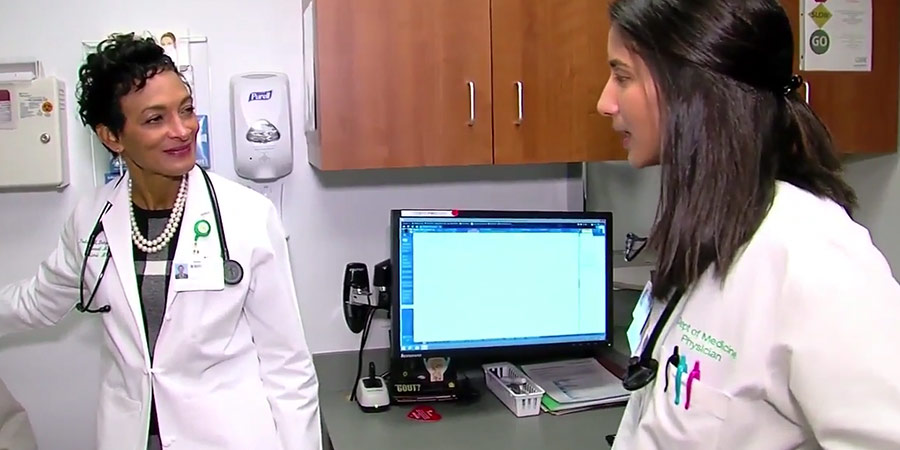
<p class="article-body"> Join a day in the life of GBMC's residents and the Internal Medicine Residency Practice. The clinic's innovative design maximizes residents' relationship with patients while also protecting them in their inpatient duties. The Internal Medicine Resident will spend one week in clinic every six weeks. This unique structure allows patients robust follow up and promotes the resident's longitudinal relationship with their patients. </p>
<p class="article-body"> GBMC’s Oncology Support Services team consists of two experienced social workers, a patient resource navigator, a community outreach coordinator, and a survivorship coordinator. <br> <br> Through their familiarity and expertise with a world of available services, our team may make it possible to access a range of assistance programs such as: </p> <ul> <li> Financial Assistance Through Independent Non-profit Organizations </li> <li> Pharmaceutical Company Financial Assistance Programs </li> <li> Referrals to Support Groups </li> <li> Home Care </li> <li> Hospice </li> <li> Palliative Care </li> <li> Patient Education Materials </li> <li> Social Security Disability </li> <li> Transportation Programs </li> <li> Complementary Therapies (such as massage or acupuncture) </li> </ul> We offer counseling to patients, their caregivers, and their families to help in dealing with emotional strains. We offer access to support groups to help our patients deal with depression and uncertainty about the future, and we offer a variety of options to help with financial issues associated with cancer treatments. <br> <br> Our Patient Resource Navigator is available to help patients and their loved ones access and utilize resources available to help cope with, and overcome, logistical barriers to treatment. <br> <br> Once an individual completes cancer treatments and transitions into a “new normal” life, there can potentially be new issues to face that can impact quality of life. Survivorship Services are also available to offer programs and resources to address specific issues facing cancer survivors after they complete their treatments. <br> <br> GBMC’s Boutique Salon and Wellness Center provides image recovery services in private rooms to meet emotional and aesthetic needs. It carries wigs, prosthetics, clothing, corrective make-up, and skin care products and offers services that include styling and make-up application techniques. Patients may also attend one of our Look Good, Feel Better sessions (made possible in part by the American Cancer Society). This program helps women who are undergoing cancer treatment to cope with appearance-related side effects of treatment (including hair loss and changes in complexion and fingernails) and to regain a sense of self-confidence. <div class="end-of-story"> </div>
Colorectal cancer is the second most common cancer-related cause of death in this country. (Lung cancer tops the list.) Overall, there were 135,000 people diagnosed with colorectal cancer last year. Of this group, 40,000 had rectal cancer. Historically, surgical treatment of rectal cancer was associated with high morbidity, and a permanent colostomy was the rule rather than “the exception.” Fortunately, there has been an historical progression toward more precise surgical technique and the addition of therapies like radiation and chemotherapy, as well as new diagnostic devices and techniques to better stage our patients upon diagnosis. As a result, patients today have more options and better outcomes, and a permanent colostomy has become the exception rather than the rule. At GBMC, there is a system-wide commitment to providing high quality care, from initial diagnosis to survivorship, using the latest research, techniques, and technology. Since GBMC graduated its first colorectal fellow in 1974 under the guidance of Jack Rosin, MD, our program remains the only accredited colorectal surgical residency in Maryland. Robotic surgery: At GBMC, the majority of rectal cancers are removed using this technique. Endoscopic mucosal resection: This endoscopic procedure uses advanced instruments to remove polyps and tumors that would otherwise require major abdominal surgery. Transanal minimally invasive surgery (TAMIS): This is a technique that allows more advanced tumors to be removed from inside the rectum. TAMIS for total mesorectal excision: This hybrid surgical approach uses minimally invasive techniques to remove lower rectal cancers, which allows for precise division of the bowel below the tumor. Short course radiotherapy: This course of radiotherapy is given before surgery for one week, as opposed to five weeks. Surgery follows one to two weeks later. This shortened course of radiation for locally advanced cancers provides accelerated care and is widely adopted in Europe. Sphincter preservation: A variety of techniques are used by our surgeons to avoid permanent colostomy whenever possible
<p class="article-body"> <title> </title> The Oncology Clinical Trials Program at GBMC is entering its third decade of service to our patients. This program is dedicated to offering novel and state-of-the-art therapies to patients who are battling cancer. We have a superior team led by Judy Bosley, RN, BSN, CCRP, along with Pamela Nickoles, RN, BSN, CCRP, and Clinical Research Associates Melissa Loomis CCRP, Kieu Nguyen Markiewicz BS, CCRP, and Steven Schmitt, BS. This team not only provides excellent research support but also greatly contributes to outstanding patient care. <br> <br> The Oncology Clinical Trials program offers nearly 60 trials to our patients for virtually the entire spectrum of cancer diagnoses, including breast, lung, gastrointestinal, gynecological, head and neck, melanoma, genitourinary cancers, and lymphoma. The program is an active member of The National Cancer Institute (NCI) oncology cooperative groups. These groups include the Eastern Cooperative Oncology Group/ American College of Radiology Imaging Network, NRG Oncology (which includes the National Surgical Adjuvant Breast and Bowel Project), the Radiation Tumor Oncology Group, and the Gynecologic Oncology Group. Our patients can also access trials at GBMC through the NCI’s Clinical Trials Support Unit. In addition, our Clinical Trials program has established collaborative relationships with many major pharmaceutical clinical trial efforts working in conjunction with the NCI and Food and Drug Administration. <br> <br> The Oncology Trials Program offers a range of opportunities— from prevention to the latest cancer treatments—using personalized genetic targeting and immunotherapies for all stages of disease. The wide range of these studies is illustrated by the following clinical trials. <br> <br> <strong>1. NANOPAC-2016-01</strong> - Phase II Intraperitoneal NanoPac® with Recurrent Stage III Epithelial Ovarian Cancer Undergoing Second Cytoreductive Surgery </p> <figure class="image-full"> <img src="/sites/default/files/hg_features/hg_post/a5a4e751fd937935e41dfd534e8ed389.jpg"> </figure> This clinical trial is testing an exciting new chemotherapy delivery technology in primary and recurrent ovarian cancer following debulking surgery. This nanoparticle platform allows paclitaxel to be given intra abdominally in a single dose to achieve high locally maintained concentrations of chemotherapy and to minimize effects of chemotherapy to rest of the body. <br> <br> <strong>2. S1400 Lung-MAP:</strong> Biomarker-Targeted Second-Line Therapy in Treating Patients With Recurrent Stage IV Squamous Cell Lung Cancer <figure class="image-full"> <img src="/sites/default/files/hg_features/hg_post/03bfab3a360bfc7564c81171318d0acb.jpg"> </figure> <br> <figure class="image-full"> <img src="/sites/default/files/hg_features/hg_post/7fc5bfdc33087f45220efdb4ed1060c7.jpg"> </figure> The Lung-MAP trial tests several new treatments for patients who have advanced stage squamous cell lung cancer. This trial will establish a method for genomic screening that will determine which new targeted cancer therapy that will be used in the patient’s treatment. Targeted therapies are designed to block the growth and spread of cancer by taking advantage of specific molecular mutations in cancers. <br> <br> The above studies are illustrative of the many exciting and innovative clinical research trials that are offered at the Berman Cancer Institute at GBMC. Clinical research studies are considered in nearly all treatment options for patients. The treatment plan always needs to be discussed with patients and their families so that their desires and goals of care are best achieved. <div class="end-of-story"> </div>
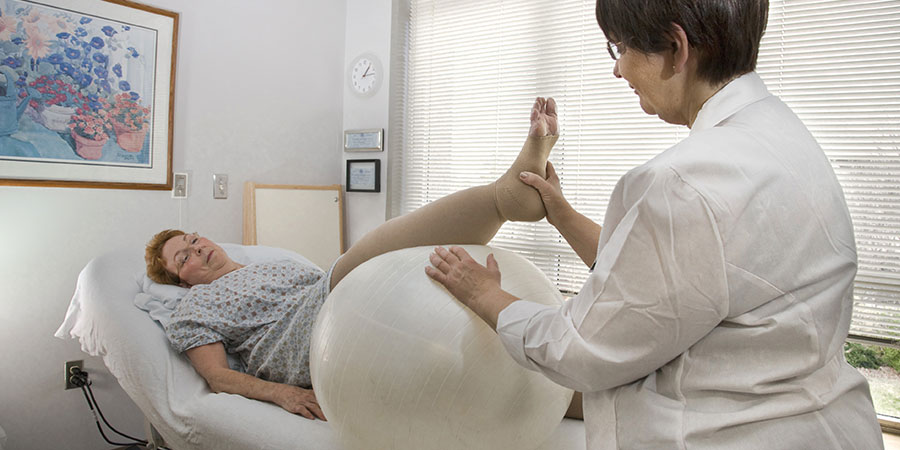
<figure class="image-right"> <img src="/sites/default/files/hg_features/hg_post/67610c080b7de11539b35b2578613439.jpg"> <figcaption> Alan Kimmel, MD </figcaption> </figure> Lymphedema is a common unwanted effect of treatment for many types of cancer. The most common cancers that can lead to lymphedema swelling are breast, head and neck, and pelvic (gynecologic and prostate). However, many other cancer types, such as melanoma, can also be associated with lymphedema. <br> <br> Lymphedema is defined as an abnormal accumulation of protein-rich fluid, which can cause chronic inflammation and fibrosis of affected tissues. <br> <br> <blockquote> Anyone with a history of prior cancer therapy who develops swelling, tissue heaviness, or limitations in mobility or range of motion can come to the Lymphedema Center for an evaluation. </blockquote> It begins with swelling and can lead to discomfort, reduced mobility, skin infections (cellulitis), and pronounced skin changes (including scarring, wounds, and disfigurement). <br> <br> Treatment for cancer may include surgery, radiation, and/or chemotherapy. All of those modalities can inadvertently damage lymphatic vessels and lymph nodes. This damage reduces the lymphatic system’s ability to perform its role of clearing the debris from cellular activities throughout the body. A syrupy fluid piles up, resulting in heavy tissue that feels full of fluid. <br> <br> The Greater Baltimore Lymphedema Center at GBMC is part of the Greater Baltimore Center for Rehabilitation Medicine. It is one of largest and most comprehensive lymphedema centers in the country. Patients come from all points of the compass to seek advice and treatment at our center. <br> <br> Anyone with a history of prior cancer therapy who develops swelling, tissue heaviness, or limitations in mobility or range of motion can come to the Lymphedema Center for an evaluation. <br> <br> During that initial visit, our team will review the patient’s cancer therapy history, even if the cancer and treatment occurred many years ago. We will get a clear delineation of what often begins as vague, ill-defined symptoms that have progressed over time to the present day. We will conduct a full musculoskeletal, skin, and lymphatic evaluation. The team will determine whether the swelling is indeed caused by lymphedema or instead by one of many other causes. <br> <br> A treatment plan will be built around a patient’s individual circumstances and personal goals. These goals might vary widely: Some patients simply want to be able to wear comfortable shoes again or a favorite piece of jewelry, while others might want to compete in marathons or competitive skiing. The focus might be specifically on the swelling or include other issues such as range-of-motion, strength, or bowel and bladder control. <br> <br> At the center of our lymphedema therapy program is Complete Decongestive Therapy (CDT), a therapy that includes manual lymphatic drainage/massage (MLD), compression bandaging, remedial exercise, skin care, and compression garments. <br> <br> All cancer patients can benefit from early involvement in our Oncology Rehabilitation program. This includes basic support, rehabilitation, and education on efforts to prevent and reduce cancer-related fatigue, pain, and range-of-motion. We seek to improve strength, endurance, and a return to a strong sense of well-being. <br> <br> Ultimately, oncology rehabilitation is about patient and family education and teaching self-care and prevention tools and methods. <br> <br> <em>The Greater Baltimore Lymphedema Center at GBMC includes: a lymphology physician and nurse practitioner, lymphedema certified physical and occupational therapists, nurses and wound care specialists, garment fitters, and a professional support team. All are fully engaged in making this experience personal and individualized. <br> <br> Please call the Greater Baltimore Center for Rehabilitation Medicine at 443-849-6210 for more information or to request a consultation.</em> <div class="end-of-story"> </div>
<iframe class="embed-responsive-item" src="https://www.youtube.com/embed/5kLkqkIdTb0" allowfullscreen="allowfullscreen"></iframe> <p class="article-body"> The Board of Lady Managers (BOLM) for the Presbyterian Eye, Ear and Throat Charity Hospital have a rich history of supporting GBMC programs and initiatives, which is why GBMC is honored to help them celebrate their 140th anniversary of serving the community. <br> <br> The Presbyterian Eye, Ear and Throat Charity Hospital is one of two founding hospitals that created GBMC in 1965, but their work in the community began long before then. When a Civil War eye surgeon named Dr. Julius Chisholm and his partner, Dr. Harry Slack, occupied 77 Baltimore Street in 1877 to serve patients, regardless of means, with the best care possible, they were embodying GBMC's vision 140 years before it became so. <br> <br> The Board of Lady Managers played a large and influential role in their work by taking care of financial and clerical tasks, including procuring necessary medical equipment. One of the first BOLM gifts on record included: "one dozen chickens, five pounds of mutton, four trout, corn meal, one haddock, one hundred pounds of soap, china, brushes and linens." Today, they continue their legacy in eye, ear and throat issues with generous support to GBMC's Richard E. Hoover Rehabilitation Services for Low Vision and Blindness and other important programs. <br> <br> Engaged in and dedicated to their work, BOLM members meet quarterly on GBMC's campus to hear reports from various departments, tour new facilities and services, and keep current on GBMC initiatives. GBMC will host a celebration for the Board on November 30 to honor them and their legacy of giving. If you are interested in learning more about the Presbyterian Board of Lady Managers, please contact president, Sue Leber, at gene106@verizon.net. </p>
<p class="article-body"> They’re not just for aches, flu shots and checkups anymore. Primary-care practices are integrating on-site behavioral health resources, becoming one-stop shops for comprehensive treatment of both the body and the mind. <br> <br> “Your mental health affects your physical health, and vice versa,” said Dr. Catherine Harrison-Restelli, Sheppard Pratt psychiatrist and Greater Baltimore Medical Center psychiatric department chair. “For someone with depression, for example, it may be harder to make good choices like eating healthy food and keeping up with medications. But, if the depression is treated, the patient gets better both emotionally and physically.” <br> <br> After a successful pilot program in 2015, the Sheppard Pratt Integrated Behavioral Health at GBMC Health Partners collaborative partnership rolled out in November 2016, embedding full-time behavioral health specialists in nine of GBMC’s 10 primary-care practices, along with visiting Sheppard Pratt psychiatrists and substance use counselors from Kolmac Outpatient Recovery Centers. Evidence-based screening tools indicate a 52 percent reduction in anxiety and a 36 percent drop in depression among the 2,000 patients seen since the program launched. Dr. Harrison-Restelli points out that 86 percent of GBMC patients scheduled for behavioral health appointments through the program actually show up, compared to the national no-show average of 50 percent. <br> <br> In the past, patients have often had to initiate their own treatment for mental health issues such as depression, anxiety, insomnia, stress and substance use by seeking referrals to community-based providers. Many never make it into treatment at all, frustrated by long wait times for appointments and out-of-date directories. A general lack of communication between primary-care doctors and behavioral health providers traditionally makes follow-up difficult for those who actually get in to see someone. <br> <br> “Patients were often left on their own to make appointments, and to make sure the provider is accepting new patients and will take their insurance,” explained Dr. Robin Motter-Mast, a physician and director of primary care at Greater Baltimore Medical Center. “Embedding behavioral health resources into the primary-care practice gives patients much faster, more convenient service, often the same day.” <br> <br> Other advantages of making mental health services available at primary-care settings include a more holistic approach to patient care, access to a built-in network of specialty behavioral health resources, and the comfort of being treated in a familiar setting. <br> <br> “It also helps keep patients out of the hospital,” Harrison-Restelli added. "Many bounce in and out of ERs thinking they’re having heart attacks, when they’re really experiencing stress and anxiety. This way, we can give them educational tools and information that can save them time and money spent on unnecessary tests, procedures and hospitalizations.” <br> <br> GBMC and Sheppard Pratt providers benefit from the partnership as well. A registry system streamlines administrative aspects, making the entire patient record available in one location for easier tracking. Both Motter-Mast and Harrison-Restelli hope the concept of integrating behavioral health into primary-care settings will become more widespread across other organizations and fields. <br> <br> “It’s already been a huge success for our primary-care practices,” said Motter-Mast. “Our current setup is really intended for short-term therapies and interventions, though. In the future, it’s going to be important to facilitate deeper relationships with community-based mental health and substance use providers who can offer longer-term solutions.” </p> <div class="end-of-story"> </div>
<iframe class="embed-responsive-item" src="https://www.youtube.com/embed/w3ukZv9IQAY" allowfullscreen="allowfullscreen"></iframe> <p class="article-body"> Dr. Jennifer Heller enjoys seeing a diverse range of patients at the Vein Center at GBMC. A typical day may be seeing everyone from a young postpartum pregnant woman with varicose veins to an elderly man with a clotting disorder. There are diagnostic resources available on site at The Vein Center, allowing Dr. Heller and her team to test and see results in real time to make determinations about surgery or extended care. <br> <br> Dr. Heller recognizes her team as an extended, second family. Everyone at The Vein Center is part of the team - there is no hierarchy and everyone is essential. Without each person’s contribution, things wouldn't run as well. <br> <br> Kristal Wiggins embodies that philosophy. As the first face many patients see, she strives to treat people as she would like to be treated as a patient, and tries to go a step above every day. <br> <br> Attention to detail and patient care are essential no matter how small the procedure , says Dr. Heller. “I want patients to know that we’re here for them. That’s what it’s all about.” </p> <div class="container-fluid" id="gallery"> <div class="leftside-stories-wrapper full-doc-list"> <div class="gallery-image"> <img src="/sites/default/files/hg_features/hg_post/6b0fd4bb912086aa66a03fba61aeb87f.jpg" alt="The Vein Center at GBMC"> </div> <div class="gallery-image"> <img src="/sites/default/files/hg_features/hg_post/dd9930c1a53fd71c8d161ad65509c123.jpg" alt="The Vein Center at GBMC"> </div> <div class="gallery-image"> <img src="/sites/default/files/hg_features/hg_post/9afd8360cd83a338ec6b516b401279a3.jpg" alt="The Vein Center at GBMC"> </div> <div class="gallery-image"> <img src="/sites/default/files/hg_features/hg_post/c3b0d1c16a11f71509dc3094bbfd9d29.jpg" alt="The Vein Center at GBMC"> </div> <div class="gallery-image"> <img src="/sites/default/files/hg_features/hg_post/b8411cb98ef5b8f6d8701871bdff3b1a.jpg" alt="The Vein Center at GBMC"> </div> <div class="gallery-image"> <img src="/sites/default/files/hg_features/hg_post/5738866d7d090692d7a9e89465c5d796.jpg" alt="The Vein Center at GBMC"> </div> <div class="gallery-image"> <img src="/sites/default/files/hg_features/hg_post/30899fc0f2bfcc2521d2e65d7ef43b95.jpg" alt="The Vein Center at GBMC"> </div> </div> </div> <br> <em>"Day In The Life" is produced by WMAR ABC2</em>
<p class="article-body"> With gastrointestinal (GI) malignancies ranking as the second most common cancer seen at GBMC (283 cases of GI cancer, with colon cancer being the most common, according to 2015 data), a new gastrointestinal oncology program was recently launched to address the multi-faceted health needs of patients with a variety of gastrointestinal cancers. <br> <br> </p> <figure class="image-left"> <img src="/sites/default/files/hg_features/hg_post/fb9924b7db0d5a18f4097f1eda284286.jpg"> <figcaption> Paul Celano, MD </figcaption> </figure> According to Paul Celano, MD, FACP, FASCO, Herman and Walter Samuelson Medical Director of the Sandra and Malcolm Berman Cancer Institute at GBMC, “Patients with gastrointestinal malignancies require many types of specialties and sub-specialties to come together to assist in their care. Recognizing this fact, we created a program focused on comprehensive, multidisciplinary care that addresses all of the complexities associated with diagnosing and treating GI cancer.” <br> <br> Coordinated care and collaboration are the hallmarks of the new GI Oncology program. Dr. Celano explains that twice monthly, specialists from various departments meet to discuss new patient cases at the multidisciplinary tumor board meetings. In addition, program leaders have been working with GBMC primary care physicians on recommendations for screenings to help ensure more patients are diagnosed earlier for better outcomes. <br> <br> <strong>A Multidisciplinary Focus on Gastrointestinal Malignancy</strong> <br> <br> GBMC’s GI Oncology program brings together specialists from a wide variety of disciplines including: <ul> <li> Primary Care </li> <li> Gastroenterology </li> <li> Colorectal surgery </li> <li> Medical oncology </li> <li> Radiation oncology </li> <li> Radiology </li> <li> Pathology </li> <li> Clinical research </li> <li> Genetics </li> <li> Oncology support services and social work </li> </ul> “GBMC has always had all the pieces to be a regional destination for colorectal services, and now we are bringing all of the necessary disciplines together to offer comprehensive care for GI cancer patients,” explained Joseph DiRocco, MD, colorectal surgeon and director of the GI Oncology program at GBMC. <br> <br> <figure class="image-right"> <img src="/sites/default/files/hg_features/hg_post/8c666971bd0c18f42c49a8b50fe22fc4.jpg"> <figcaption> Joseph DiRocco, MD, MBA, FACS </figcaption> </figure> “For GI cancer patients, there has been a historical progression toward more precise surgical technique, the addition of advanced therapies such as radiation and chemotherapy, as well as new diagnostic devices and techniques to better stage our patients upon diagnosis,” added Dr. DiRocco. “As a result, patients have more options and better outcomes. At GBMC, there is a system-wide commitment to providing high quality care from initial diagnosis and treatment to survivorship using the latest research, techniques, and technology.” <br> <br> In the near future, the program will also add a nurse navigator to help patients through their care plan, answering questions, helping with appointments and scheduling of tests, and generally serving as a patient’s guide throughout the entire care process. <br> <br> “The core of our hospital’s strength has always been the quality of the physicians and healthcare professionals who work at GBMC,” added Dr. DiRocco. “With such an outstanding multidisciplinary team in place, patients with any malignancy of the GI tract can be assured to receive world-class care in a warm and personal environment.” <div class="end-of-story"> </div>
<p class="article-body"> The first physician to open a pediatric practice at GBMC, John Boscia, MD, served the community’s children for more than 20 years: treating extended families, children of parents he had also treated in their youth, and some folks well into their 20s, because they just didn’t want to go anywhere else. John dedicated his career to caring and advocating for some of the most medically-challenged patients in our area. He did it because of his sense of fairness. Dr. Boscia had also experienced some physical challenges in his youth and had a special place in his heart for these patients. <br> <br> </p> <figure class="image-left"> <img src="/sites/default/files/hg_features/hg_post/6047ae6ec3a344411f3c9abd5ff6e714.jpg"> <figcaption> John Boscia, MD </figcaption> </figure> Dr. Boscia was a deeply compassionate pediatrician with outstanding clinical skills and an impeccable character. He was loved by his patients and deeply respected by his peers. He was known as a “true pillar in the department of pediatrics” and “a fountain of knowledge" when it came to pediatric medicine. <br> <br> <blockquote> “John exemplified the best qualities of the pediatrician you would want caring for your child. His compassion, kindness and devotion to his patients were unmatched. He is famously remembered by one family for calling while he was on vacation, immediately after their child had received a life-threatening diagnosis in the ED. The family was so touched.” </blockquote> Dr. Boscia served as vice-chair of pediatrics from 1993 to 2013, and also served as acting chairman following Dr. Stephen Amato’s retirement in 1998. Dr. Tim Doran – current chair of the department, who took over after Stephen – said he thought Dr. Boscia would have been given the seat had he advocated for it at the time, but he was a humble man who didn’t want the spotlight. Patient care was his focus and his passion. <br> <br> John Boscia was respected throughout the hospital for his ability to work with other departments in a positive and collaborative manner. Colleagues said he was always composed, no matter the level of chaos. His sign-off on emails was “peace in the Middle East.” <br> <br> Dr. Boscia had to leave his practice prematurely because of an illness, and unfortunately he passed away earlier this year. Patients continue to ask about him daily. His GBMC colleagues and the community he cared for miss him terribly. <br> <br> Dr. Theresa Nguyen, whose first interaction with John was her phone interview with him 17 years ago, while he cooked and played music in the background, said, “John exemplified the best qualities of the pediatrician you would want caring for your child. His compassion, kindness and devotion to his patients were unmatched. He is famously remembered by one family for calling while he was on vacation, immediately after their child had received a life-threatening diagnosis in the ED. The family was so touched.” <br> <br> Dr. Boscia was also fiercely loyal to his colleagues. Dr. Doran remembers when he let some members of the team go after becoming chairman of the department, he received a strongly-worded letter from Dr. Boscia, voicing his displeasure. Months later, Dr. Doran would receive a second letter from Dr. Boscia retracting his reaction and complimenting Dr. Doran on his decision-making, but his initial reaction to defend his colleagues speaks volumes of Dr. Boscia’s personality. <br> <br> Dr. Boscia was chosen as a Titan for being the embodiment of GBMC’s vision of treating every patient, every time as you would your own loved one; for being the kind of physician every parent wishes for their child. His legacy can best be expressed by a story from one of his families: <br> <br> “I began taking my kids to Dr. Boscia in 1996. I was recommended to him by a friend of my sister’s, who went to high school with him. I had a set of 2-year-old twins and a 1-year-old daughter, and I was pregnant with twins. My kids fell in love with him on the first day because of his funny Donald Duck voice. One day, my son asked about Dr. B’s “funny hand” and what a great opportunity it was for me as a mom to explain to my kids that, despite a physical disability, he became a doctor. He did not let that hold him back and that was only one of the many reasons we came to respect him as a doctor and a man. <br> <br> My second set of twins ended up having some issues and he again showed compassion and wisdom. He was humble. He also never made me feel as if my questions were dumb. I trusted him immensely. <br> <br> After he retired, he sent my two youngest daughters birthday cards every year. My one precious daughter passed away this past December due to pneumonia and Dr. Boscia sent me the kindest note, which I have framed. After my divorce in 2007, my kids told me I should marry Dr. Boscia, which just goes to show you how much respect and love they had for their awesome Dr. Boscia.” - Cherie Valentine <br> <br> GBMC suffered a great loss earlier this year with John's passing but I would like to invite Doctor Boscia's husband Gary to the stage to accept the award on his behalf <br> <br> Next is Doctor Karl Diehn <br> <br> <figure class="image-right"> <img src="/sites/default/files/hg_features/hg_post/344350d21f102424a71c3d1564c0676f.jpg"> <figcaption> Karl Diehn, MD </figcaption> </figure> Karl Diehn, MD, is a man with a soft voice and a gentle demeanor. Many times he has been called to our pediatric emergency department to see a patient and he always finds a way. So too, anytime a physician calls Dr. Diehn to see a patient in his office on an emergency basis, he makes room. Dr. Diehn has been a cornerstone of the GBMC otolaryngology department for more than 30 years. After graduating from the University of Maryland medical school in 1975, and finishing his residency at Johns Hopkins Hospital, Dr. Diehn became one of the earliest members of Ear, Nose & Throat Associates, and helped to forge the practice’s reputation as the preeminent provider of pediatric otolaryngology care. His partners were George C. Alderman, MD, Samuel M. Lumpkin, MD and J. Dennis Branger, MD, and together this group defined excellence in otolaryngology throughout the region. During his tenure at GBMC, Dr. Diehn has also served on the GBMC medical board and the GBMC HeathCare Board of Directors. <br> <br> A perennial member of Baltimore’s “Top Docs,” Dr. Diehn is admired for his consistent availability, his accountability, and his kindness. His skill, thoughtfulness and calm demeanor have inspired physicians, students, patients and families throughout his professional career. When the GBMC medical board was asked for nominations for the titan award, Dr. Brian Kaplan, the current chair of otolaryngology, wrote me back the next day and said, “if anyone ever embodied the values of GBMC, it’s Dr. Diehn.” Dr. Diehn also embodies humility. When I first spoke to him about this award he was hesitant to accept it. He said. “I am not special and I do not deserve an award. I just try to do the best job I can.” His response speaks to the true difficulty and complexity of selecting physicians to receive the Titan award. The greatest physicians are often those who simply do their job – in all its manifestations – to the best of their capacity, and do it marvelously well. <br> <br> <blockquote> “He was the best dad -- I’m 37 years old, and we have our own lives, but I still look to him for advice and support.” </blockquote> Dr. Diehn lives in Towson with his wife Catherine; together, they raised 4 children, Megan, Karl, Kate and Kevin. Medicine is all-in-the-family for the Diehns. Catherine was a pediatric intensive care nurse when they met. She resigned when their second child was born so that Karl could devote more time to his practice, and she could devote her time to being a mom. Karl and Catherine’s love of medicine will be carried forward by their two daughters, one a physician and the other a nurse practitioner. The Diehns also have two grandchildren, who are the apples of their eye. <br> <br> Megan Diehn Wood, MD, said she and her siblings had an idyllic childhood, “just growing up around my parents-- him being a doctor and her a nurse -- was incredible. Our up-bringing definitely influenced my sister, Kate, and me going into the medical field.” Megan also spoke of her father’s work ethic, “he made a lot of sacrifices and spent of long hours at work over the years. But we all knew it was for good reason.” Despite Dr. Diehn’s complete dedication to his professional life, Megan had this to add: “he was the best dad -- I’m 37 years old, and we have our own lives, but I still look to him for advice and support.” <br> <br> When speaking to Dr. Diehn’s myriad patients, one often hears, “he took care of my kids too,” and “he’s such a wonderful doctor.” Really it seems that almost anyone you ask in the community knows of Dr. Diehn, a quiet and humble hero, and now a GBMC Titan. <br> <br> And last but not least … Doctor Alan Tapper <br> <br> <figure class="image-left"> <img src="/sites/default/files/hg_features/hg_post/f298435ebdcdf73aa46566f1e8d3e56f.jpg"> <figcaption> Alan Tapper, MD </figcaption> </figure> Alan Tapper, MD, a founder of GBMC’s Ob/Gyn department, has been a physician of remarkable vision and foresight. In the 1970s, he sensed the changing demands of obstetrics in the region and began advocating for family-centered obstetrical care long before that approach was acceptable or popular. In 1978, against very strong objections, Dr. Tapper established the first birthing room at GBMC, and subsequently the first maternity facility in the state of Maryland to have one. <br> <br> <blockquote> His unique character, affability, trustworthiness and sense of humor make him one of the outstanding physicians in our community. </blockquote> Dr. Tapper’s children describe their father as truly the most dedicated and committed doctor. Amy Tapper recalls the many nights he would receive calls from patients at home and without hesitation offer to meet them at the hospital--- regardless of how serious or minor the symptom. “I believe my father truly enjoyed waking up in the middle of night to see a patient or respond to a call—he was perfectly suited for the job—on call 24 hours a day ready to help someone. Scott Tapper, now a vascular surgeon, wrote, “anywhere we went in Baltimore, women would come up to us and tell their stories of childbirth or surgery and how wonderful dad was sitting at the foot of their bed or in chair next them, being super patient with them, taking time to talk to them, answering all their questions, all the while also watching football on TV with their husband!” <br> <br> According to his partner of 22 and a half years, Dr. Emma Zargarian, Dr. Tapper was also well known for consistently promoting progressive changes that improved patient care. Together they elevated GBMC’s position as the preeminent institution for women’s healthcare. Dr. Zargarian also describes Dr. Tapper as being ahead of his time in the way he treated women physicians entering the profession as complete equals. Not everyone would have been able to welcome a woman physician partner in the 1970’s in the way that he did. She states that Dr. Tapper loved the profession and thought of his patients as people first, patients second. From simply asking questions to get to know them better, to attending funerals for patients and their families, he invested in their lives. Dr. Tapper’s family echoes this sentiment: Amy writes: “even today, some years after his retirement, wherever he goes, he takes great pleasure in running into former patients, their children and grandchildren--—and dare I say great-grandchildren. I learned early on that whenever I went anywhere with my dad, even to Graul’s, i needed to look presentable—because no doubt we would hear a ‘hi Dr. Tapper’ . . . And the introductions and stories would begin.” <br> <br> Dr. Tapper is known by the community to be a brilliant, gregarious, extremely funny, and profoundly dedicated individual and we are so lucky to have been the hospital where he chose to dedicate his work. Once when Amy Tapper asked her father why he chose obstetrics, he said it was one of the areas of medicine that was happy and that he was bringing joy to people’s lives. Dr. Tapper slept night after night after night at GBMC delivering babies, his son remembers, and established a work ethic that he now tries to uphold in his surgical practice today. Dr. Tapper’s focus on patient and family-centered care was a clear representation of GBMC’s vision long before it was established. His unique character, affability, trustworthiness and sense of humor make him one of the outstanding physicians in our community. <div class="end-of-story"> </div>