

Podcasts
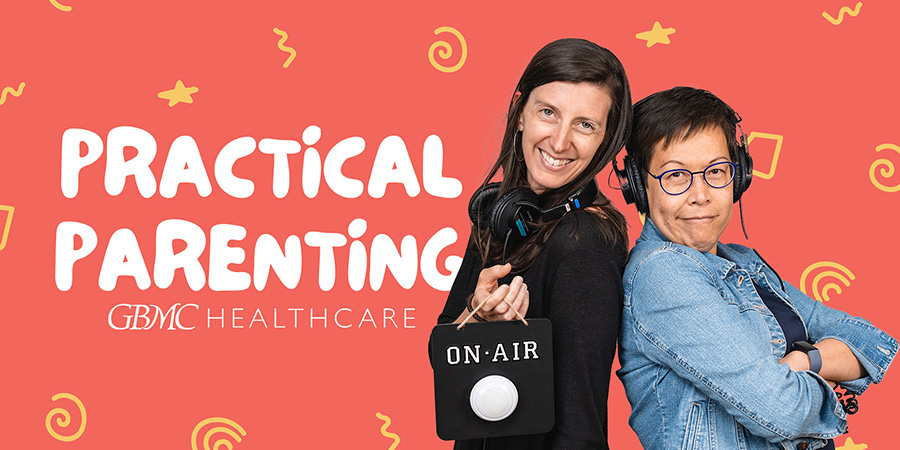
Practical, compassionate guidance from GBMC clinicians for every stage of life.
This summer, social media was filled with parents reminiscing about 90s summers: long days outside, neighborhood games, bikes until dark, boredom that sparked creativity, and very few screens. While the trend may seem rooted in nostalgia, it actually reflects many families’ desire for more balance, more connection, and more unstructured time.
Journalist, NPR education correspondent, and author of The Art of Screen Time, Anya Kamenetz, joined the podcast to explore why the conversation around screens continues to evolve and what parents can realistically do to create healthier habits.
Kamenetz acknowledged that parents continue to experience guilt, shame, and confusion around screen time. She noted families often feel judged regardless of their choices, making it difficult to know what the right approach is. Rather than following rigid rules, she encourages parents to clarify their own family values and consider the individual needs of the child in front of them. Some children can easily transition away from screens, while others may need different supports depending on their temperament or developmental needs.
The conversation also aligned closely with the American Academy of Pediatrics' updated guidance on digital media. Instead of focusing solely on hours of screen time, Dr. Nguyen emphasized considering the "Five Cs": the child, the content, whether screens are being used to calm emotions, what they are crowding out, and ongoing communication. Kamenetz agreed that one of the most important questions parents can ask is how technology fits into the larger relationship with their child. Adults, she said, should "look at ourselves first" and think intentionally about how screens either interrupt or support connection within the family.
Rather than simply taking screens away, Kamenetz recommends intentionally adding meaningful alternatives. Family meals, outdoor play, reading together, and dedicated one-on-one time all naturally crowd screens out. One of her favorite suggestions is a "15-minute focus challenge," where parents give their child their undivided attention while allowing the child to choose the activity. Even short periods of intentional connection can have a lasting impact.
When discussing practical changes families can make immediately, Kamenetz agreed with Dr. Nguyen’s golden rule: keep devices out of bedrooms at night. Research consistently connects screens in the bedroom with poorer sleep, making it one of the simplest ways families can improve overall wellbeing.
Parents don't have to perfectly recreate childhoods from decades past or eliminate technology altogether. Instead, they can focus on building relationships, creating opportunities for connection, and remembering parenting is always evolving. As Kamenetz reminds listeners, children are constantly growing and changing, and every new season offers families another opportunity to reset and try again.
Listen on ...

Neonatal-Perinatal Medicine +1 more
GBMC Health Partners

From Paari Gopalakrishnan, MD, MBA, GBMC HealthCare, President and CEOAs a hospitalist, I heard this ques...
Marsha Hammond's positivity is catching. In fact, she does what she can to share it with anyone who might...
For Matt Bollinger, compassionate healthcare has always been personal. As president of Bollinger Energy a...
On September 15, 2026, at the Vision GBMC event, Dr. Paari Gopalakrishnan, President and CEO, reflected o...

GBMC's robust pediatric program offers basic well child services, such as immunizations and physicals in addition to emergent care and specialized inpatient and neonatal intensive care.
Practical, compassionate guidance from GBMC clinicians for every stage of life.