Podcasts
Practical, compassionate guidance from GBMC clinicians for every stage of life.

At our monthly leadership meeting recently, Brandon Costantino, Administrative Director from the Milton J. Dance, Jr. Head and Neck Center at GBMC, shared a video that I haven’t stopped thinking about.
It featured Steven Navaroli, who spent 30 years as a local sports journalist in South Central Pennsylvania. A year ago, Steven underwent a laryngectomy at the Dance Center.
Using voice AI technology from Laronix and Google, Steven was able to hear a recreation of his voice from before surgery.
In the video, Steven hears it.
His reaction says everything.
“I may tear up, to be honest.”
If I am being honest, I was pretty close myself.
Then they put his new voice to the test with something especially fitting for a longtime sports journalist: a little sports commentary. After hearing himself deliver the broadcast, Steven rates the recreated voice a “solid nine” out of ten compared with his original voice.
For Steven, care was built around something extremely personal: not simply finding a way to speak again, but hearing his voice again. Hearing him speak, it became clear that this wasn't just about communication. It was about identity.
And Steven’s story is not the only example.
Another Dance Center patient, Ben Watson, spent decades in entertainment (in TV and music) before throat cancer led to the removal of his voice box. Through AVA Voice technology developed by Laronix, Ben found a new way to speak clearly and return to something he loves: entertaining.
For Ben, care was built around helping him communicate, reconnect, and get back to a part of life that meant so much to him.
Different patients. Different goals. Different technologies.
But the same question: What does this person want and hope to accomplish?
That is what makes the Milton J. Dance, Jr. Head and Neck Center so special.
Similar to what I recently shared about our cleft lip and palate program, this is highly specialized, multidisciplinary care that many people might expect to find only at a large academic medical center.
Instead, it is happening right here at our community hospital.
The Dance Center’s collaboration with Laronix continues to push this work forward, including an investigational study of MIRA Voice exploring whether the technology could help ICU patients who lose the ability to speak following intubation or a tracheostomy.
That is world-class medicine — delivered with the convenience, relationships, and family feel of a community hospital.
It is also a great example of the vision GBMC was founded on: combining the best of community care with university-level medicine.
I’m incredibly proud of the physicians, speech-language pathologists, nurses, therapists, researchers, and everyone else at the Dance Center doing this remarkable work.
The technology is extraordinary (and so is the staff). But what matters most is what they give back to the person in front of them.
Care built around Steven.
Care built around Ben.
And ultimately, care built around what matters most to each person we serve.
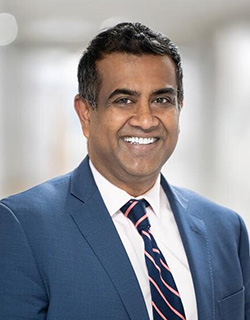
Bringing more than two decades of clinical and executive leadership experience, Dr. G is known for his commitment to transparency, accountability, and compassion. Learn more...
One of my favorite parts of our Monthly Leadership Meeting is something we call the Power of One.Each mon...
At our monthly leadership meeting recently, Brandon Costantino, Administrative Director from the Milton J...
Over the past year, one of the most important things I’ve focused on has been making sure we have the right leaders in the right roles.
I know many of you were probably sitting by your inbox at 6:30 Tuesday morning, eagerly waiting for this ...
One of the things I continue to appreciate about GBMC is just how many special communities exist within o...
I have a confession to make: I recently got scammed by our own IT team.An email landed in my inbox from â...
Practical, compassionate guidance from GBMC clinicians for every stage of life.