Podcasts
Practical, compassionate guidance from GBMC clinicians for every stage of life.

I hope everyone had a wonderful Fourth of July weekend and managed to stay cool.
"Hot" didn't really cover it.
This weekend, I played nine holes of golf with my daughter and son in the sweltering heat. To be honest, the weather didn't seem to help my game, though I'm not sure anything would have. We also spent some time on the beach waiting for fireworks while following the World Cup matches on our phones.
One game in particular caught our attention. Croatia appeared to score a dramatic late goal that would have tied its match against Portugal. Moments later, the goal was taken off the board because technology detected the slightest touch of the ball, so small that the player later said he thought it might have just brushed his hair.
Croatia, it turns out, lost by a hair.
It was a reminder that small things matter.
In sports, tiny details can determine who advances and who goes home. In healthcare, small things can determine whether a patient feels frightened or reassured, frustrated or hopeful, forgotten or cared for.
That thought brought me back to a concept from Unreasonable Hospitality that I've written about before: the way you do one thing is the way you do everything. Excellence isn't reserved for the biggest moments. It shows up in the countless small decisions we make every day. It's reflected in how we treat people when no one is watching. It's visible in the extra effort we make when there is no policy requiring it and no metric measuring it.
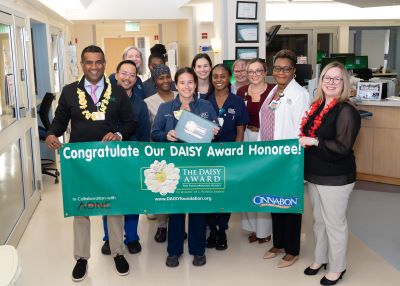
And that's exactly what stood out to me when I read the DAISY Award nomination for Surgical Intensive Care Unit nurse Elizabeth "Liz" Fennell, BSN, RN, CCRN.
Earlier in my career, I spent many years as a hospitalist. One of the things you learn very quickly is the incredible value of nurses like Liz. Physicians may help guide the plan of care, but nurses are at the bedside hour after hour, noticing what is really happening with a patient. They see the frustration building. They notice the exhaustion. They understand when something that may seem small is actually the thing making a hospital stay feel unbearable.
Liz saw the person behind the frustration. She recognized that dignity, rest, and comfort are not "extras" in healthcare. They are central to healing.
And, since I know you are not tired of hearing me talk about unreasonable hospitality, I'll point out that this is another perfect example. It wasn't about a grand gesture. It was about noticing the one thing that would make an unbearable situation a little more bearable and then doing everything possible to make it happen.
What Liz did wasn't expensive. It wasn't flashy. There was no new technology involved and no policy requiring it. She simply noticed what mattered to her patient and took action.
That's unreasonable hospitality.
And it reminds us that the way we do one thing really is the way we do everything.
I'm sharing the nomination below exactly as it was written by Dr. David Roeuth. Thank you, Liz, for turning around this patient's experience, and thank you, Dr. Roeuth, for giving us the opportunity to recognize her.
“I am one of the attendings here at GBMC and would love to share a story about the extraordinary care Elizabeth Fennell provides.
One of our patients had become increasingly frustrated during his hospitalization. Because the patient rooms on this unit do not have showers, he had gone days without being able to shower and was considering leaving the hospital against medical advice.
Recognizing how important this was to his dignity and well-being, Elizabeth went above and beyond by personally transporting him to another unit with shower facilities and supervising him so he could safely shower. The patient was incredibly grateful and ultimately decided to remain hospitalized to continue his care.
In addition, the patient had been unable to sleep due to his ICU bed randomly inflating throughout the night, leaving him exhausted and at risk for ICU delirium. Elizabeth took the initiative to obtain a Stryker bed for him, allowing him to finally rest comfortably.
That night, he was able to sleep.
These thoughtful actions may seem small, but they profoundly impacted the patient’s comfort, dignity, and willingness to continue treatment. This nurse exemplifies compassionate, patient-centered care and the true spirit of nursing."

Bringing more than two decades of clinical and executive leadership experience, Dr. G is known for his commitment to transparency, accountability, and compassion. Learn more...
One of my favorite parts of our Monthly Leadership Meeting is something we call the Power of One.Each mon...
At our monthly leadership meeting recently, Brandon Costantino, Administrative Director from the Milton J...
Over the past year, one of the most important things I’ve focused on has been making sure we have the right leaders in the right roles.
I know many of you were probably sitting by your inbox at 6:30 Tuesday morning, eagerly waiting for this ...
One of the things I continue to appreciate about GBMC is just how many special communities exist within o...
I have a confession to make: I recently got scammed by our own IT team.An email landed in my inbox from â...
Practical, compassionate guidance from GBMC clinicians for every stage of life.