Keeping babies and toddlers safe starts at home
September 28, 2023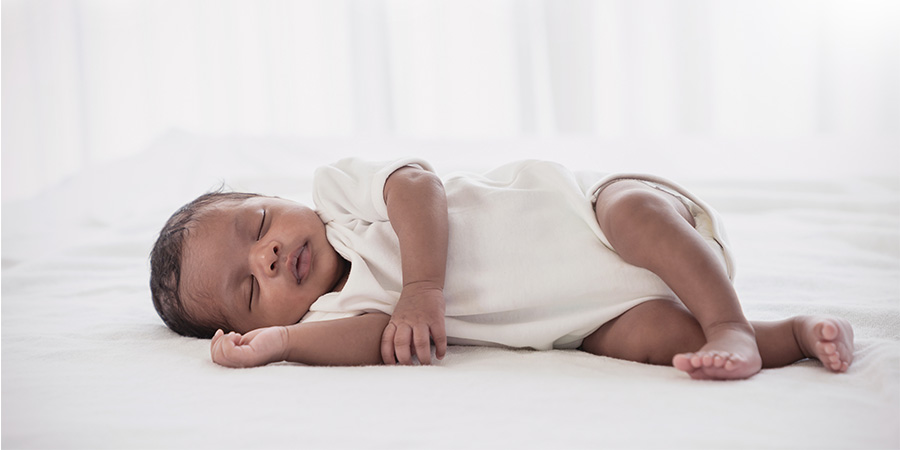
September is National Safe Sleep Awareness Month. Every year, around 3,500 babies in the United States die suddenly and unexpectedly while they're sleeping. Most of these deaths are due to sudden infant death syndrome (SIDS) or accidental deaths from suffocation or strangulation.
Melanie “Lanny” Dowell, manager of the Doula Program and parent education manager at GBMC HealthCare, says if there is one thing to emphasize regarding unsafe sleep practices for infants, it’s this: “Babies should sleep in their own crib or bassinet, never in a co-sleeping situation, whether that’s with parents or another child (in the case of twins).”
Although parents may crave closeness with their babies, it’s actually very dangerous to allow that level of proximity while sleeping.
“Adults have all kinds of things on their beds,” Lanny explains. “Duvet coverings, pillows, soft mattresses, these all can put the baby’s safety at risk. Babies should sleep in an area that has no bunting, no toys, a well-fitted crib sheet, no bumper pads, and no mobiles that they can reach up and grab.”
She says babies should be placed on their backs to sleep, not at an incline or in any sort of carrying device.
“Babies should never be left on a sofa or a chair, unless they’re being actively observed by an adult.”
Lanny says the common practice of letting babies sleep in their car seats outside the car is also cause for concern.
“Once the car seat is out of its base, it’s not in a level position, and the baby’s breathing can be compromised when their chin hits their chest. The same thing happens with a baby swing. They should never be left unattended to sleep in either device.”
Although being in the same bed is considered too close, it is vital for parents or a caregiver to sleep near a baby in case anything happens during the night, Lanny says.
“The World Health Organization (WHO) recommends babies sleep in the same room until one year of age, but we know it can be hard to get enough rest as new parents, and sometimes having your baby right next to you makes sleep even harder.”
She emphasizes parents should be able to easily hear the baby, whether that’s by distance or through the use of monitors. Lanny adds babies should only be dressed in approved safety garments for sleep, such as the Halo Sleep Sack, with no excess blankets or stuffed animals placed in bed with them.
As babies get older and become more mobile, it becomes important to be aware of what they can access.
“Cribs should be placed at the lowest setting to keep the child from propelling themselves over. Also, make sure their bedding (the crib sheet and mattress pad) is very well fitting,” Lanny says.
She recommends getting down on your hands and knees and seeing what looks interesting from their perspective. Things like purses that may have nail clippers or other sharp objects in them should be placed out of reach, and any furniture that can be pulled down should be anchored to the wall. If you have a pool, having locked doors and fences, in addition to a safety cover and alarm, will help keep young children safe.
While it’s important to be aware of the many safety hazards in your home, Lanny says her No. 1 safety tip for anyone caring for an infant or young child is to take an American Heart Association infant and child CPR class.
“It’s a learned skill and knowing how to do it and do it well can be life-saving,” Lanny says. “Don’t buy gimmicks you see online that haven’t been approved. Learned techniques for child safety will always be your best bet.”
Welcoming a baby into your family is an exciting time unlike any other. However, the responsibilities and time commitments can stack up quickly. Mothers struggling with the postpartum period can rely on the Doula Program at GBMC, which is available to help with breastfeeding support, emotional support, errands, light housekeeping, meal preparation, safety tips, and more.