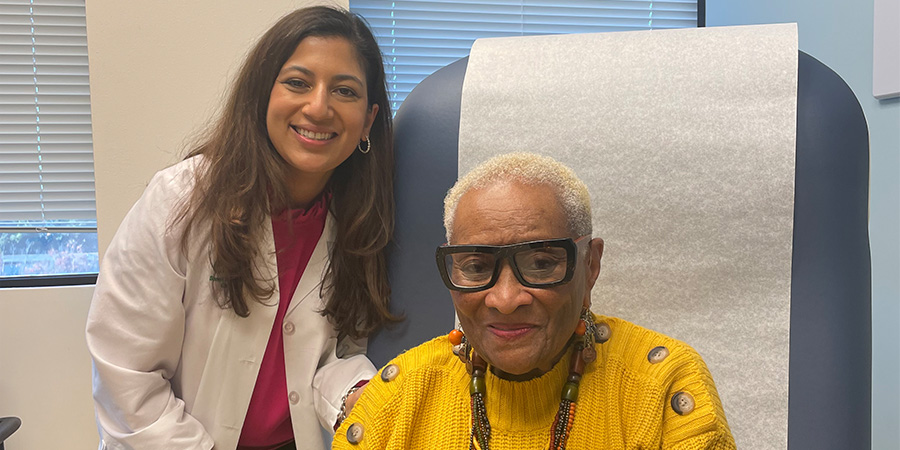
In 2021, more than 2,300 cancer patients who lacked the resources to travel to their appointments at GBMC were provided with free transportation. This service was made possible by donors like Eugenia Starghill. Starghill is a recurring gift donor to GBMC’s Sandra and Malcolm Berman Cancer Institute, and has contributed to its array of programs, including Oncology Support Services. A breast cancer survivor, Starghill is aware she has been more fortunate than many others. For one thing, her breast cancer was caught early. She came into the Sandra and Malcolm Berman Comprehensive Breast Care Center for a routine mammogram and was brought to see Breast Surgeon Dr. Sarah Fogarty right away. After a biopsy, then a successful lumpectomy, her treatment regimen now involves taking a pill once a day. She currently sees Medical Oncologist and Hematologist Dr. Priyanka Mittar regularly to ensure her recovery continues. After receiving an email describing the need for donations to the Oncology Support Services program, Starghill recognized the need and contributed. Oncology Support Services at GBMC includes counseling by licensed social workers, help navigating a cancer journey, and free transportation to and from oncology visits. Patients are never charged for any of these services and the program relies entirely on donations. “I got information about people who need help getting back and forth to their appointments,” Starghill recalled. “I have my family and have been able to use Uber to get back and forth. I knew I could help people who need help.” She enrolled in a monthly giving program that provides a sense of security to the Oncology Support Services program and, by extension, those they seek to serve. Donors like Starghill who arrange recurring gifts choose an amount they can manage and increase the impact of their giving by continuing to give that amount every month. It is a powerful way to help others. It also indicates GBMC and the Sandra and Malcolm Berman Cancer Institute have earned her trust, as a patient, and as a donor. GBMC is Eugenia Starghill’s hospital. She has been here for surgery in the past and when she got her breast cancer diagnosis, she knew where to go. “I had a lot of faith in GBMC,” she said. “I have been pleased with the care I’ve received.” Recurring gifts come in all sizes, entirely at the donor’s discretion. And they don’t just help those on the receiving end. “It makes me feel good because I know I can help somebody who needs help," Starghill said. To set up your own recurring gift, please visit www.gbmc.org/supportcancercare. For more information about Oncology Support Services or making a recurring gift donation, please contact Director of Major Gifts, Maureen McNeill, at (443) 849-4328.
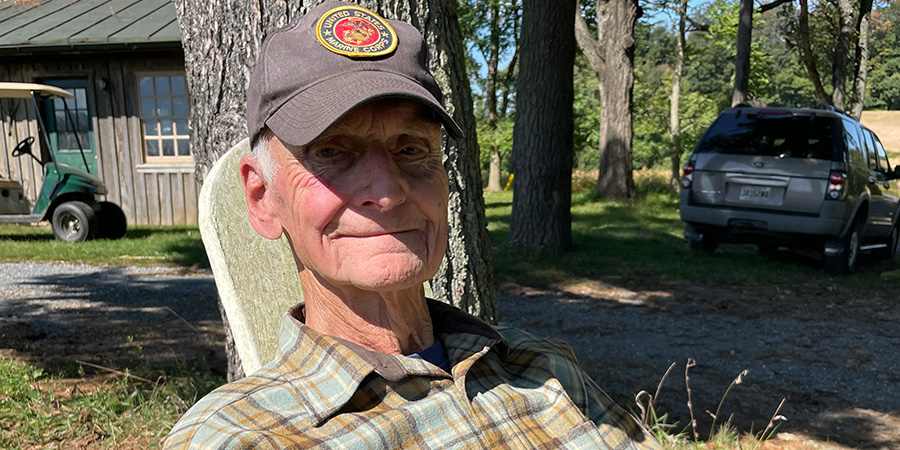
How do you survive cancer while continuing to operate a farm? In Dan Colhoun’s case, it took lots of determination and a bit of luck. But if you ask him, the key was finding the right oncology team. Radiation Oncologist Dr. Geoffrey Neuner's approach was "very understanding of my goals,” he recalled. “I wanted to retain as much physical ability, to run my life and my farm as much as I could.” Dan and Julia Colhoun bought their Baltimore County farm in 1960, the same year they married. Their family and the farm have grown over the years and Dan Colhoun embraced every opportunity to be a good steward of the land. Today, at 88 and 90, the couple manage some 200 acres, assisted by a full-time worker. Committed to the land, Colhoun volunteered for and even helped launch some of the agriculture and conservation programs that have preserved 80,000 acres for farming in Baltimore County. He finds it rewarding “to see so much active agricultural industry alive and well in northern Baltimore County. It lets young people see a future for themselves in agriculture.” Colhoun thinks a lot about the future, just as he did six years ago when he found a swollen gland in his neck and his family doctor recommended a biopsy. His wife had been successfully treated for breast cancer at GBMC years earlier so he visited GBMC’s Milton J. Dance Jr., Head and Neck Center for his biopsy. He was determined to find the best treatment there was long term, so he met with oncologists at all the prominent hospitals in the area to determine next steps. Every one of them recommended surgery to remove the tumor at the base of his tongue and most suggested surgery to then be followed by radiation therapy. The oncologist at the Dance Center was the only one who told him he had time to consider his options. He preferred a noninvasive treatment, one that would disrupt his lifestyle working on the farm as little as possible. After doing this research, Colhoun returned to the institution where he’d felt most confident and most comfortable: GBMC’s Sandra and Malcolm Berman Cancer Institute. When he met with radiation oncologist Dr. Neuner, he found someone with an approach that was understanding of his own goals. “He looked me in the eye, every time we met. And he thoughtfully looked out for my welfare,” he said. Listening to the Colhouns describe their life and goals, Dr. Neuner suggested a plan that was the reverse of the one they’d been presented elsewhere. He recommended beginning with radiation therapy, then turning to surgery if it was necessary. The recovery path from surgery, particularly at 82, was likely to be steeper than from radiation. And it worked. Colhoun is now cancer free and never needed surgery. Clinical studies of this approach have since confirmed its efficacy in treating cancers like Colhoun’s. Treatment wasn’t easy, though – far from it. Colhoun found himself “demobilized” by exhaustion, and occasionally needed a cane to walk. The determination and grit he had sharpened serving in the U.S. Marine Corps kicked in. “I decided I’m going to get up and go out and do the chores,” he recalled. “No matter what. “I wanted to prove to myself that I could do it. And I had Dr. Neuner’s encouragement. He’d tell me, ‘get out of bed if you possibly can.’ And I did.” As much as he prefers moving forward, Colhoun has a full life to reflect on. He flew in the last propeller-driven attack aircraft the Marine Corps had and later ran a civil engineering firm that did work up and down the East Coast and Alaska. While the cancer itself is behind him, some side effects remain. Food doesn’t taste good to him, and he has added an afternoon nap to his daily schedule. Yet this morning, Colhoun is out on the tractor, bringing in the field corn. Some will feed his own livestock; the rest will be sold. “Step-by-step,” he said. “I can see the fruits of my labors.” For that, he says, he is grateful to Dr. Neuner and GBMC. To support patients like Dan Colhoun, please consider a donation to the Berman Cancer Institute.
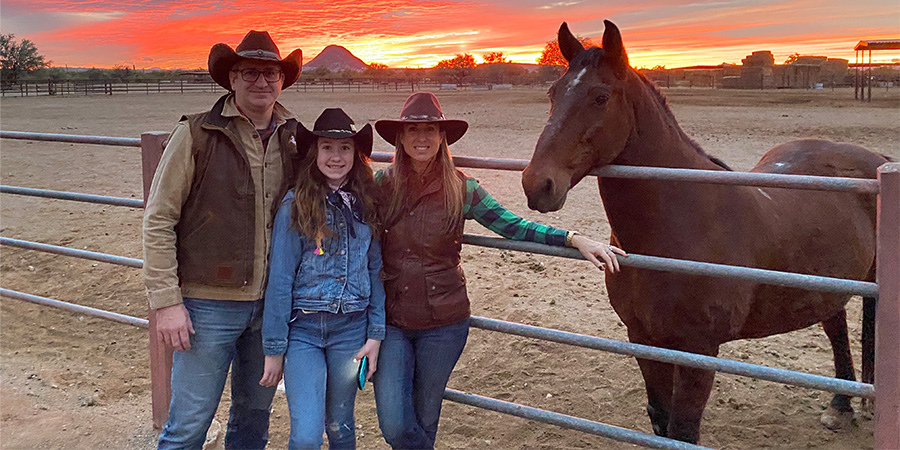
In the back of her mind, Alicia Barger always knew something like this was coming. When an abnormality appeared during her regular mammogram and ultrasound in February 2021, the 46-year-old speech-language pathology graduate instructor did not hesitate. Her primary care doctor at GBMC Health Partners, Dr. Sarah Whiteford, acknowledged news of an abnormality could be scary, but assured Alicia she would be in good hands with Dr. Sara Fogarty, Director of the Sandra and Malcolm Berman Comprehensive Breast Care Center at GBMC. “I trust Dr. Whiteford implicitly,” Alicia said. “Four days after my biopsy results came in, I met my nurse navigator, who ended up being my nurse champion. “And then Dr. Fogarty came in. She eased my mind. She came in a few minutes late because she had been in surgery all day, but she spent so much time with me and walked me through step by step, very clear, very concise, and very real about the experience. She answered every question but wasn’t an alarmist. She was articulate and made me feel like this was an approachable thing, that I could do this.” Dr. Fogarty performed a lumpectomy in April. A few days after her the surgery, Alicia got a call from her breast surgeon with the pathology report: she needed to come back in. “That time I was nervous,” Alicia said. “I brought my husband.” The pathology report showed micro invasive cancer, which moved Alicia’s Stage 0 ductal carcinoma in situ diagnosis to a Stage 1A breast cancer diagnosis, which meant an additional surgery for a margin re-excision of the first lumpectomy and sentinel node biopsy. Radiation was also added to the treatment plan to ensure margins stayed clear. “The worst parts of the entire process were the days of the surgeries when they have to wheel you all over for prep. That was stressful,” Alicia said. “That’s why I think the new (Sandra R. Berman Pavilion) building is going to be so incredible because you won’t have to go through the hallways and move all around to get things done.” During her diagnosis and treatment, Alicia shared her journey with friends and family, some of whom still live in her parents’ hometown of Elmira, New York. Everyone had advice or an experience to share, but Alicia followed her intuition, including putting her faith in experts she trusts at GBMC. “I think sometimes people look at Baltimore and think Hopkins, so they will ask if I was treated there, but just because Hopkins has the name, that doesn’t always mean it’s the place to go for you. Especially if you live in the Baltimore County area, GBMC is where you go. It doesn’t feel like a hospital. It’s so welcoming. I already knew the system and I felt very at ease.” In addition to having a cancer experience and a primary care doctor at GBMC, Alicia also went through fertility treatment and eventually utlized GBMC’s Labor and Delivery services when she had her only daughter, Maggie, who is now a preteen. The two are extremely close and concerns for Maggie dominated Alicia’s thoughts through her diagnosis and treatment. “When I first got this diagnosis, it was like the ball dropped. I think my whole life I was waiting for something like this to happen,” Alicia said. “We sat Maggie down and explained it to her the same way Dr. Fogarty explained it to me. That was the hardest thing for me: wanting her to understand it but not to scare her. We talked about it a lot and how it might impact her later in life. I’m very open with her.” Reports following the second surgery found no traces of cancerous cells, and at her mammogram in February 2022, everything remained clear. All in all, treatment lasted five months, but the experience at GBMC will stay with Alicia forever. “I tell everyone where I went and about the team,” Alicia said. Support The Sandra & Malcolm Berman Cancer Institute and patients like Alicia, donate here.
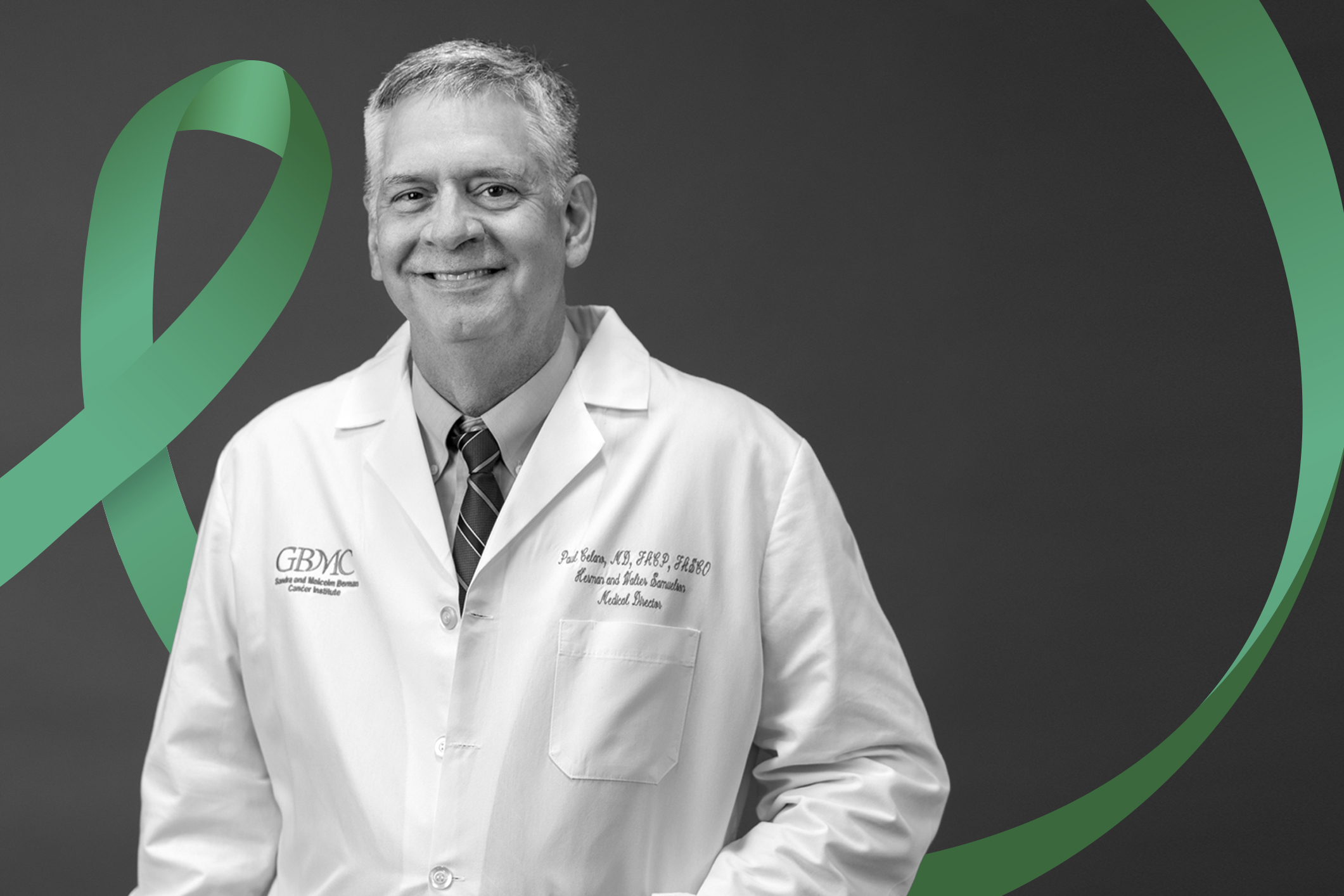
We asked some of the leaders of the Sandra and Malcolm Berman Cancer Institute what inspired them to work with cancer patients. In each edition of Greater Together, we will feature one of them and their answers. We begin with Paul Celano, MD, FACP, FASCO, Herman and Walter Samuelson Medical Director of the Sandra and Malcolm Berman Cancer Institute. “My interest in cancer and in science goes back to when I was a child. My aunt unfortunately died of ovarian cancer when I was young, and it had a big impact on me. It really inspired me to better understand illnesses, and cancer, in particular. I’m the second member of my family to go to college; my oldest brother went to the Naval Academy. “I went to Mt. Sinai School of Medicine in New York City where I learned from some of the leaders of clinical trials, which has really been a large part of my career. “But my real interest has always been in patient care and that’s really what brought me to GBMC because of their long history of excellence in patient care.” Support The Sandra and Malcolm Berman Cancer Institute and its remarkable physicians like Dr. Paul Celano.
<iframe class="embed-responsive-item" src="https://www.youtube.com/embed/iDyfGTazr98" allowfullscreen="allowfullscreen"></iframe>
<iframe class="embed-responsive-item" src="https://www.youtube.com/embed/CrfUa0ozPkY" allowfullscreen="allowfullscreen"></iframe>
<iframe class="embed-responsive-item" src="https://www.youtube.com/embed/wDncg-IqStY" allowfullscreen="allowfullscreen"></iframe>
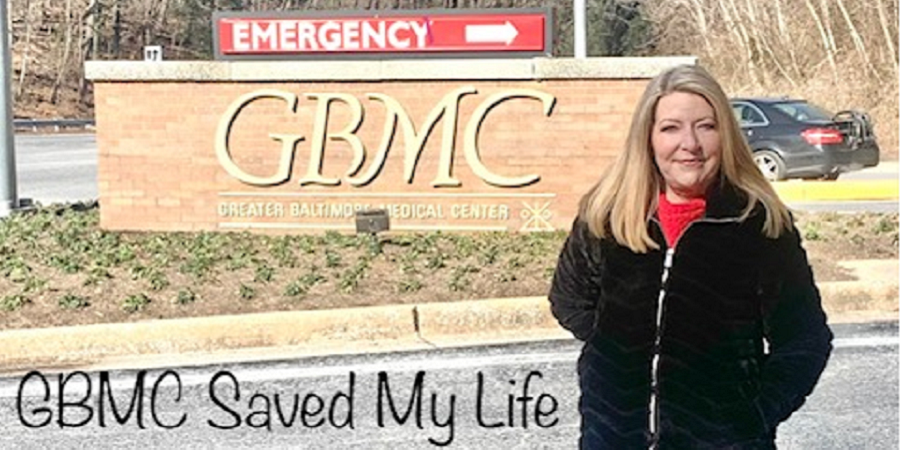
As a single working mother, Kathleen Taylor is used to focusing her time on others. “I’m not always the first priority,” she admits. So, when lingering fatigue and swelling in her neck persisted, she went about the business of her life and trusted the medications her primary care doctor prescribed would eventually restore her health. Unfortunately, her symptoms only worsened, and she found herself in GBMC’s Emergency Department in early January 2022. It quickly became apparent just how sick she was. An abscess in her neck had pressed on her airway, dangerously compromising her breathing, and flesh-eating bacteria was wreaking havoc on her body. Kathleen spent twelve days in the hospital and endured several surgeries. “She’s a tough, tough cookie,” remarks Dr. Julie Winston, the otolaryngologist on call when Kathleen came to the Emergency Department. “Necrotizing fasciitis (the clinical term for flesh-eating bacteria) is incredibly critical and can prove fatal.” Dr. Winston is grateful for the collaboration and rapid response of her GBMC colleagues to get Kathleen into emergency surgery so quickly. Once an initial surgery stabilized her breathing, Kathleen spent the next five days in GBMC’s intensive care unit (ICU). In addition to Dr. Winston, three other doctors oversaw Kathleen’s complex medical condition: Dr. Ray Blanco, Medical Director of the Milton J. Dance, Jr. Head and Neck Center; infectious disease specialist, Dr. Ibukunolupo Oni; and plastic surgeon, Dr. Damon Cooney. Dr. Winston also credits residents Dr. Jonas Miller and Dr. John Ryan for doing “an amazing job coordinating all of (Kathleen’s) labs to help with making the diagnosis.” A first-time GBMC patient, Kathleen was amazed with the care she received. She praises her care team for its comprehensive approach and personal attention. “Dr. Winston was in the Emergency Department that first night. She said, ‘You’re super sick; here’s our plan.’ She explained everything.” Kathleen says she appreciates how well the doctors and nurses kept her informed, especially as she was having difficulty remembering everything that was taking place with her condition and treatment. “The level of care started immediately. It was about ‘Let’s get you healthy.’ The doctors were really present.” Dr. Blanco understands the value of GBMC’s collaborative approach to multidisciplinary care. “We have one mission - the patient.” Infectious disease specialist, Dr. Ibukunolupo Oni, echoes Dr. Blanco’s view of coordinated communication between the care team and with the patient. She understood the challenges of Kathleen’s aggressive infection and recognized the multidisciplinary team for determining a treatment plan in a timely manner. “GBMC is a community of well-trained specialists invested in delivering the highest-quality patient care,” Dr. Oni says. In addition to the doctors overseeing her care, Kathleen knows there were many others helping her to get well. “People knew my name” she says, crediting “Mark, who did my CT scan; Lauren, Lacey, Gyanne, Andrew, and Carly in the ICU; Aimee, Rikki, Carol, LaLa, Kim, Nicole, and Anita on the 4th floor; the transport team who took me to every scan, and the wonderful nurse who helped me wash and comb my hair…the care was just above and beyond.” Now two months after her frightening illness, Kathleen reflects on life before and after her experience. Her advice to others who are feeling unwell: “You don’t need to be Wonder Woman. Give yourself permission to be sick and don’t wait!” As she continues to heal and return to a full and busy schedule, she is grateful for her health and “the little things” that define daily life with her 14-year-old daughter. “GBMC saved my life.”
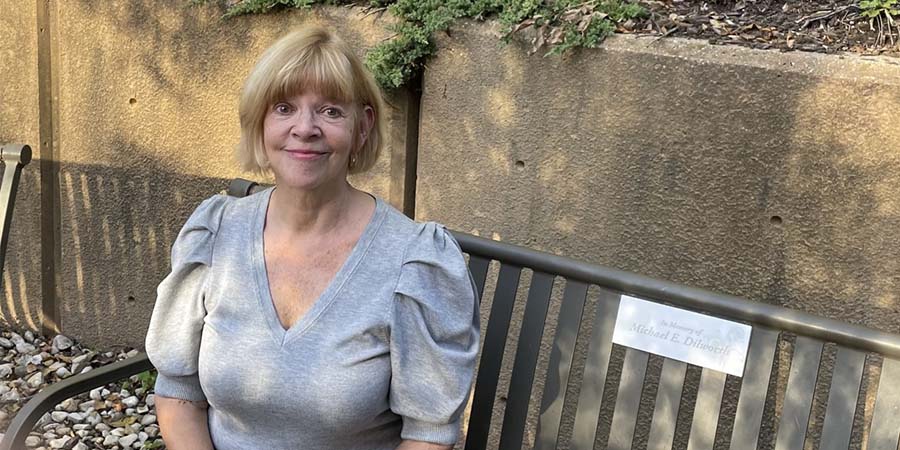
As cancer took its toll, rugged, tough, outdoorsy Mike Dilworth would stop along the walk from their car to the Allan Parsons Infusion Center, turn to his wife Sandy and say, “We need someplace to rest.” Today, one of the benches where he used to stop and catch his breath bears his name. Together, Mike and Sandy Dilworth raised two sons and lived full lives. Sandy has retired from her job as a Vice President for CareFirst and Mike was a master carpenter who owned a construction business. Their lives were upended by Mike’s cancer diagnosis in 2018. After a good experience with GBMC Family Medicine specialist Dr. James Baronas, Mike decided to pursue his cancer treatment at GBMC. They were impressed by the helpfulness they encountered at the Sandra and Malcolm Berman Cancer Institute at GBMC. Everyone they met kindly took time to make sure Sandy and Mike understood what was going on in Mike’s case. The oldest son among six children, Mike was used to looking out for others. He was uncomplaining about the hardships of his own cancer experience. Nonetheless, it made him sad to see patients who were younger than himself or who were alone when they came to their appointments. He understood how important it was to have support on the cancer journey. GBMC Medical Oncologist Dr. Mei Tang remembers Sandy was by Mike’s side “every visit and every step in his care.” When Mike would instruct doctors and support staff to give the important information to his wife Sandy, he’d explain, “she’s my everything.” Though Mike remained in good spirits throughout his treatment, as his illness progressed, the walk from Daffodil Parking Lot to Physicians Pavilion West became more difficult. Always a strong man, he would have to stop and rest on the journey. There was a bench, halfway between the two destinations, where Mike and Sandy would stop until he’d regained his strength. After his passing, Sandy contributed to GBMC, a gift that is memorialized by naming one of those benches in Mike’s memory. Sandy and Mike were married for 46 years, until Mike’s death from cancer in June 2021. Sandy told Dr. Tang that giving back to GBMC helped her feel that she was doing something for other oncology patients, especially those who were going through treatment alone. If you’d like to remember a loved one with a gift to GBMC and the Sandra and Malcolm Berman Cancer Institute, please visit www.gbmc.org/give or contact Maureen McNeill or (443) 849-4328.
Arvea's Story: "Find Someone Who Will Listen" Arvea Woolridge understands how important listening is when she thinks about her care at GBMC. A 2019 diabetes diagnosis landed Arvea in the hospital. “When I left to go home, my A1C was really high,” she says. She quickly found herself faced with a host of new challenges and many questions surrounding her health: What was she allowed to eat and how much? What medications did she need to take? In the midst of an overwhelming situation, Arvea credits her GBMC care team with listening to her needs and coordinating her care to get her health back on track, ultimately lowering her A1C nearly five points from 11.7 to 6.9! Everyone from her doctors, nurses, dietitians, care manager, and office staff provided her with the attention needed to manage her overall health and return to a full and active life. Through her diabetes experience, Arvea realized the benefits of getting her primary care at GBMC. “I love GBMC. I’ve had all three of my kids here, and now my primary care is here. I have a tag team...people working together as a team for the common goal of seeing to it that my health becomes better.”
<iframe class="embed-responsive-item" src="https://www.youtube.com/embed/HYb4Ylt_ZkI" allowfullscreen="allowfullscreen"></iframe>
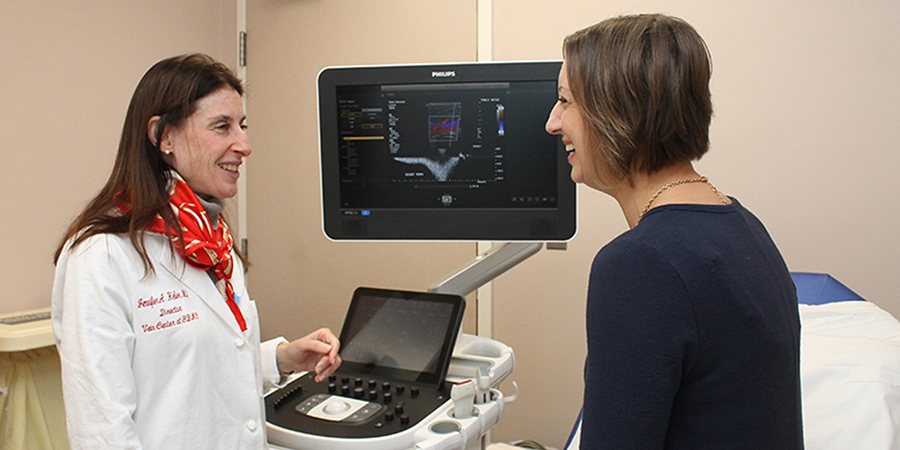
<p class="article-body"> When Christine Brown turned on the television one afternoon in April, she never thought overhearing an interview with Jennifer Heller, MD, RPVI, FACS, Director of the Vein Center at GBMC HealthCare, would potentially save her life. <br> <br> "I was walking by the TV and heard them talking about a free vein screening from GBMC. I'd been having pain in my leg for some time, and it was starting to swell. I don't have insurance and hadn't been able to see a doctor, so I got the information for the screening and decided to get my leg checked out," Christine said. <br> <br> She drove to the screening site and stuck her legs out of the car for Dr. Heller to examine. What happened next, Christine said, took her by surprise. Dr. Heller said she believed Christine had a clot in her leg and she needed to seek treatment right away. <br> <br> Dr. Heller explained, "I told Christine to come back in two hours for an ultrasound. She did have an extensive blood clot, so we sent her down to the Emergency Department because of concern for a pulmonary embolism (a blockage in one of the pulmonary arteries in the lungs)." <br> <br> Christine was evaluated in the ED. And after an imaging test showed a pulmonary embolism was, in fact, present, Christine was admitted to GBMC on the spot. <br> <br> Christine said she was nervous about the hospital stay, but the staff at GBMC made her feel comfortable and eased her worries. "They could see I was super anxious, and they did everything they could to reassure me and alleviate that anxiety." <br> <br> Christine said the more information she gathered about pulmonary embolisms, the more thankful she became. "I realized my life was just saved. I could have had a stroke. Anything could have happened." <br> <br> She said the level of care she received at GBMC during her stay was incredible. <br> <br> "Dr. Heller came to check on me, even though I'm not her patient. Everyone was checking to make sure I was okay. I'm just so grateful GBMC held the free screening and made the public aware that it was happening." <br> <br> Free vein screenings have been a part of GBMC's community outreach for several years, said Dr. Heller. But during a global pandemic, they realized they needed to get creative to reach the public safely. <br> <br> "We set it up like a car emissions test. People open up their car door, swing their legs out, and we examine and have a chat with them. We help people to the best of our ability and get them an action plan to move forward," Dr. Heller said. <br> <br> Dr. Heller explained that many patients may still hesitate to visit the doctor's office or the hospital for routine care because of COVID-19 fears. She emphasized anyone with health concerns shouldn't wait to see their healthcare provider. <br> <br> "We [at GBMC] have the highest standards of safety, are equipped with PPE, and have protocols in place to keep everyone safe. Patients should feel reassured knowing that we're doing all we can to keep everyone as safe as possible," Dr. Heller said. <br> <br> The next free vein screening will be held Friday, May 7 from 8 a.m. to 11 a.m. at Farmhouse Hill on GBMC's campus in Towson. For more information, please visit <a href="/events-search">www.gbmc.orghttps://www.gbmc.org/events.</a> </p> <div class="end-of-story"> </div>
<p class="article-body"> “Since my diagnosis in 2019 and with the guidance of my medical team at GBMC, I have worked full-time since my surgery. I took vacations with my family. I traveled to Illinois for my soon-to-be daughter-in-law's bridal shower. I walked down the aisle with my son at his wedding. I traveled with my daughter to lacrosse tournaments and college visits. I coached my students to win state and national contests.” <br> <br> The words above are from an extremely grateful patient who, to this day, is still battling her diagnosis of late-stage ovarian cancer. Kathy Wojik, patient of Dr. Kimberly Levinson, never thought that her pelvic pain was of any concern. After a visit to her GYN, multiple rounds of imaging, and a visit with Dr. Levinson, Kathy received her diagnosis. Like many, her biggest fear was not for herself but for her family. She didn’t want to leave her children without a mother. She knew she wanted to get started on an aggressive treatment as quickly as possible. <br> <br> Dr. Levinson was quick to schedule Kathy for surgery and start on chemotherapy treatments right away. Shortly after surgery, Dr. Levinson informed Kathy that she qualified for a Clinical Trial. After many hesitations from her family and friends, Kathy decided to move forward knowing that this was her best chance to beat this cancer. <br> <br> The information was scary and confusing but the nurses and care team in The Sandra and Malcolm Berman Cancer Institute at GBMC walked her through every detail and eased her concerns. Kathy spent many hours at GBMC for her treatments. She came every three weeks and spent 6-8 hours in the infusion chair during each visit. She quickly lost her hair and didn’t hesitate to shave it off. She continued teaching, although there were days that she was completely exhausted. <br> <br> After her treatments, she moved forward with genetic testing. She received good news that her cancer was not genetic, calming her fear of passing it onto her children. Through this testing, she learned that her tumor had the BRCA2 mutation, which was good news. This meant that she was in the open arm of the trial and able to receive all of the drugs at no cost. <br> <br> Kathy felt optimistic as she finished her treatment and began to gain her energy again. Her imaging showed that the treatment was working, and her blood results showed the levels of cancer had dropped into the “normal” range but could have been lower. After 3 weeks of medication, there was another drop in her markers - another small victory! <br> <br> After her treatments ended, she was asked if she wanted to continue the medication. With little hesitation, Kathy said yes. She still has another year of oral medication and six months of infusions left but she is feeling blessed and grateful for her care team at GBMC. </p> <blockquote> “I have a great medical team, including Dr. Levinson, the research nurses, and the infusion nurses, leading my way. They have all been a great support system and have helped me stay positive throughout this journey.” </blockquote> Kathy is happy to report that she is back to teaching full time and has been a part of many milestones with her children and family. Kathy is an example of just one of the many patients that make multiple trips to GBMC for their treatment, often lasting more than six hours at a time. You can help ease the burden of these patients by contributing to our <a href="https://www.classy.org/give/308233/#!/donation/checkout" target="_blank">Giving Tuesday Campaign to benefit The Clinical Trial Program in The Sandra and Malcolm Berman Cancer Institute</a> and give more patients, like Kathy, the hope they need to continue their fight. <div class="end-of-story"> </div>
<p class="article-body"> More than 18 years ago, Sally Watsic was diagnosed with breast cancer. She received her diagnosis over the holiday season and was told the surgeon was out of town. Another physician overheard Sally’s conversation with her doctor and recommended GBMC - more specifically, Dr. Lauren Schnaper in The Sandra and Malcolm Berman Comprehensive Breast Care Center. “If you don’t mind the drive from Frederick, they would be the best,” noted the physician. <br> <br> After making the decision to visit GBMC, Sally called Dr. Schnaper “her kind of doctor” - direct and to the point. After one surgery, Sally opted to have a double mastectomy and said to her surgeon, Dr. Sheri Slezak, that she needed to be on the field for her field hockey team. Sally’s surgery occurred on July 29th and by August 14th she was back on the field for try-outs. Both Dr. Schnaper and Dr. Slezak believe that patients who stick to their normal routines tend to experience a better recovery period. </p> <figure class="image-right"> <img src="/sites/default/files/hg_features/hg_post/a5a49af65076d324359de1def3ebef00.jpg"> <figcaption> Sally and her friend - photo taken pre-COVID-19 </figcaption> </figure> Sally had an amazing care team that consisted of her physicians, surgeons, and her oncologist, Dr. Robert Donegan, who encouraged her to keep up with her normal activities and routine. In addition to her medical team, she had a large support system from family, friends, and colleagues during a time when she thought her only battle was against breast cancer. <br> <br> Ten years later, Sally began to experience pain in her hip and lower back. After two months, she visited an orthopedist who immediately ordered several x-rays and asked who her oncologist was, which she knew was not a good sign. Her original diagnosis of metastatic breast cancer had spread to her bones. <figure class="image-left"> <img src="/sites/default/files/hg_features/hg_post/773c21f4cb985790e5809bb45ee0f0d7.jpg"> <figcaption> Sally and her family - photo taken pre-COVID-19 </figcaption> </figure> <br> <br> Sally went back to Dr. Donegan and began treatment right away. As part of her treatment, a rod was put in her left leg to sustain kyphoplasty and radiation. She quickly began to search her prognosis and to research everything she could. Her advice now? “Never look online,” she says. During her research, Sally read that she only had a 22% survival rate. She was not ready to give up her fight and quickly asked Dr. Donegan what clinical trials were available. After a few attempts, they finally found the one that worked for Sally. <br> <br> Sally’s body has responded very well on this trial drug, but she says that the experience is more about the people. Her nurses, Karen and Judy, are so motivating and know that Sally isn’t willing to give up her fight. <br> <br> <blockquote> “I will beat the statistics because I have a great team working with me. I have goals, that I plan to meet. I will see my children graduate college, see them get married, and most importantly, be a grandma! The clinical trial research team will help find the cure; I truly believe that.” </blockquote> <br> <br> Because of many patients like Sally, the research performed at GBMC benefits the future of so many cancer patients and gives so many families more time with their loved ones. YOU can help give this gift of time by donating to our <a href="https://www.classy.org/give/308233/#!/donation/checkout" target="_blank">#GivingTuesday campaign benefiting the Clinical Trials program in The Sandra and Malcolm Berman Cancer Institute at GBMC</a>. <br> <br> *all photos used in this article were submitted and taken pre-COVID-19. <div class="end-of-story"> </div>
Time is something that many of us take for granted. For Ethel Zelenske, a patient in the Sandra & Malcolm Berman Cancer Institute at GBMC, time is something she will always be grateful for and never take for granted again. Ethel’s journey began several years ago with a diagnosis of breast cancer, the same disease that her mother died from when Ethel was just six years old. Ethel received treatment from The Sandra and Malcolm Comprehensive Breast Care Center at GBMC. After Dr. Lauren Schnaper performed surgery, Ethel was referred to medical oncologist, Dr. Madhu Chaudhry. Today, seventeen years later, Dr. Chaudhry remains Ethel’s doctor. Dr. Chaudhry enrolled Ethel in two clinical trials, one for chemotherapy and another for hormonal therapy years later. After seventeen years, her breast cancer has not returned. However, it was not the end of Ethel’s battle against this horrible disease, nor was it the end of her relationship with GBMC HealthCare. Four years after her original diagnosis, Ethel went through genetic testing only to discover that she was positive for the BRCA1+ gene mutation that leads to a higher occurrence of breast and ovarian cancer. Despite a prophylactic gynecological surgery, Ethel developed a rare cancer similar to ovarian cancer. It was then that Ethel added another GBMC physician, gynecological oncologist, Dr. Kimberly Levinson to her treatment team. With a survival rate of less than 50%, Ethel has experienced two recurrences with this specific type of cancer. After her initial diagnosis, she received chemotherapy, surgery, and three years of drug therapy. Dr. Chaudhry continued to study and treat Ethel and suggested she enroll in a new clinical trial, one with targeted oral therapy and a good response rate for women carrying the BRCA gene. This was Ethel’s third clinical trial with GBMC and after the second recurrence of gynecologic cancer, she is in remission and stable, almost ten years after her initial diagnosis. Ethel still visits her team every three months, while also getting a CT scan, bloodwork, and more. The preliminary results of this trial have been published and Ethel is happy to report that she is in the small group of women who have not only had a reduction in the disease but have gone into remission. The best part is that Ethel receives the oral medication at no cost since she is still being studied by the trial. Ethel continues to be grateful for the gift of time she has received thanks to the care of the many GBMC oncologists involved in the Clinical Trials Program. “When I was first diagnosed with the gynecologic cancer, I remember my oncologist telling me she could give me a few good years. But here I am nearly ten years later. Every day is a bonus and I have a great quality of life - even during the pandemic! This trial has given me the best gift of all – TIME! That, I thought, I would never have.” #GivingTuesday is a national day of giving back to support those in need that occurs each year on the Tuesday after Thanksgiving. By donating to GBMC HealthCare's #GivingTuesday campaign benefiting the Clinical Trials program in The Sandra and Malcolm Berman Cancer Institute at GBMC, you can give future patients like Ethel the gift of time. Time with their loved ones, time pursuing their dreams, and time to keep fighting!