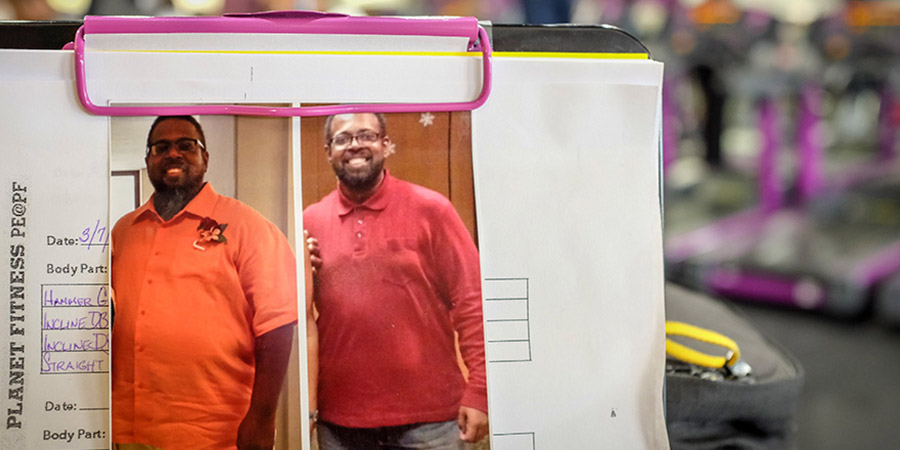
<iframe class="embed-responsive-item" src="https://www.youtube.com/embed/2-HJLO087s8" allowfullscreen="allowfullscreen"></iframe> <p class="article-body"> Xavier Smothers-White is helping others to live a more healthy life and focusing on doing the same for himself. <br> <br> He was a fit, former member of the U.S. Air Force when he injured his knee. But he said he continued to eat as though he was as active as he used to be. <br> <br> "I ballooned up to 330 pounds, figured enough was enough, and I came to an info session here at GBMC," Smothers-White said. <br> <br> He took the leap and underwent bariatric surgery at GBMC. It's a decision that has changed his life. <br> <br> "The weight loss surgery is a tool, there's still a lot of work that goes into it," Smothers-White said. <br> <br> He's lost a total of 141 pounds since having the surgery and has shifted into a new profession focused on fitness. <br> <br> "Post-surgery life has been awesome, I've had a career change. No longer sitting behind a desk I'm out, active, I got a awesome job as a fitness trainer at Planet Fitness and now I spend every day helping other people who aren't quite ready for bariatric surgery get healthy, lose weight," Smothers-White said. </p> <div class="container-fluid" id="gallery"> <div class="leftside-stories-wrapper full-doc-list"> <div class="gallery-image"> <img src="/sites/default/files/hg_features/hg_post/7314d4522c41caba192ee53ba3537198.jpg" alt="Xavier Smothers - Bariatric Patient at GBMC"> </div> <div class="gallery-image"> <img src="/sites/default/files/hg_features/hg_post/6a376ad46b2e19c518a7a6ded19918a5.jpg" alt="Xavier Smothers - Bariatric Patient at GBMC"> </div> <div class="gallery-image"> <img src="/sites/default/files/hg_features/hg_post/304168cd0908fb38a64a13263d4ee9bc.jpg" alt="Xavier Smothers - Bariatric Patient at GBMC"> </div> <div class="gallery-image"> <img src="/sites/default/files/hg_features/hg_post/49202ec9769da5099a8d619b81164330.jpg" alt="Xavier Smothers - Bariatric Patient at GBMC"> </div> <div class="gallery-image"> <img src="/sites/default/files/hg_features/hg_post/60e99c77286fcac3cc614773732c947a.jpg" alt="Xavier Smothers - Bariatric Patient at GBMC"> </div> <div class="gallery-image"> <img src="/sites/default/files/hg_features/hg_post/4fe164cf883e2234471c4a603571cb8a.jpg" alt="Xavier Smothers - Bariatric Patient at GBMC"> </div> <div class="gallery-image"> <img src="/sites/default/files/hg_features/hg_post/0a9f75ce58a4521664c68af71963eebd.jpg" alt="Xavier Smothers - Bariatric Patient at GBMC"> </div> <div class="gallery-image"> <img src="/sites/default/files/hg_features/hg_post/8cd6fed239de4a9d4e74f15ad80968b7.jpg" alt="Xavier Smothers - Bariatric Patient at GBMC"> </div> </div> </div> <em>A Day in the Life is produced by WMAR - ABC2</em>
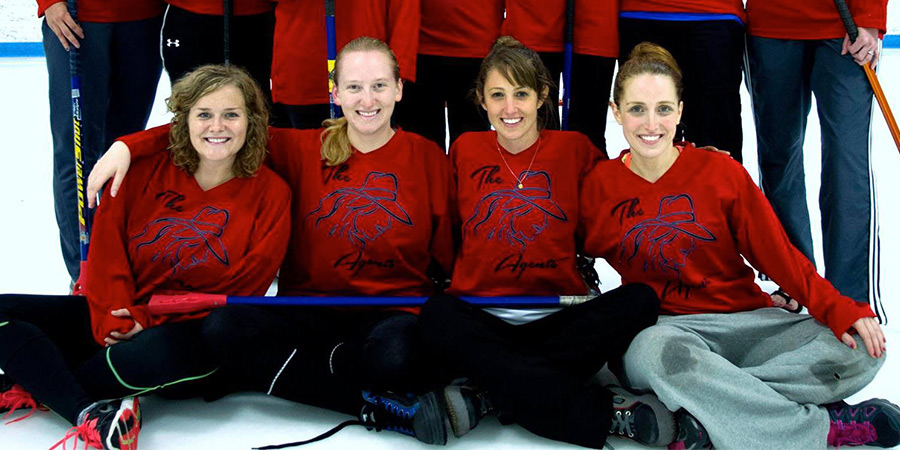
The story of Becky Stover, in her own words.I should start this narrative by saying that I play a lot of sports. I love to run, swim, bike, dance and more. I’ve been dancing since I was four years old and I truly have a hard time sitting still! In March of 2013, I was playing broomball (which is a sport most similar to ice hockey) and took quite a tumble on the ice. I was able to return to work without issues, but I was unable to return to exercise of any kind without pain. I consulted my GBMC primary care provider who referred me for physical therapy.I requested to come to GBMC’s physical therapy office, and I was paired up with an amazing therapist, Emily Wood. At the time, I was working as a bedside nurse and had already informally asked the inpatient therapists, physicians and orthopedic nurses for their therapy recommendations. I was frustrated, concerned and worried about whether I would be able to play sports again. I had gone from being a tri-athlete to being unable to complete a single mile. I met with my therapist and explained my story. While I thought I had a back injury, she informed me it was actually a rotation of my pelvis, which she was convinced we could correct. Additionally, she had remedies for all of my other ailments to help correct the injuries. The therapy office worked with my schedule, setting up appointments during my breaks at work, and the inpatient and outpatient therapists continued to encourage me when I thought I would never get back to running and sports. Becky (on left) at the Ronald McDonald House 5KFast forward one year to March of 2014. I completed my first post-injury 5K, the Ronald McDonald House Charity Fundraiser. I was able to regain control of my injuries and compete in running and sports again. I am back to swimming, biking, running and all my other sports! Thanks to the patience of my therapist and her unwillingness to let me give in to my frustrations, I continued to progress, and am back on the ice playing broomball. Completing the 5K was a huge accomplishment, and really opened my eyes to preventative measures. I continue to take charge of my own health at the gym, in my diet and in my everyday activities. I am very thankful for the GBMC physical therapists!
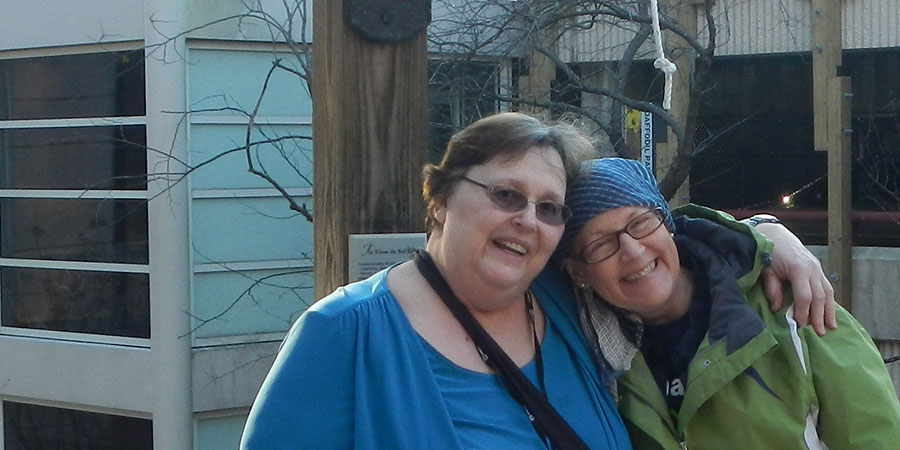
Susan Alban’s Story I joined the GBMC family on September 14, 1987 as a laboratorian. If you know anything about laboratorians, you know that we are a “behind the scenes” type of people. We love and care for our patients with the same compassion and dedication as others in the hospital, just from the comfort of the laboratory. Most of us don’t venture out unless we have to, so we miss the opportunity to see our other GBMC family members. Susan AlbanIn the spring of 2013, I was led to find out more about my cousins — the cousins by blood on my father’s side of my family and those here in my GBMC family. In April 2013, I was diagnosed with Lynch syndrome, a genetic predisposition to a variety of cancers, with colon and endometrial being the most prevalent, and a lifetime risk between 60-80 percent. Lynch gave me a bridge of communication to my “blood” cousins, some of whom I had never met, so I am thankful for that since the syndrome has already wiped out two previous generations and half of mine. Lynch also gave me the chance to meet many of my GBMC cousins! Christy Haakonsen (now Smith) in Clinical Genetics broadened my knowledge and helped me decide on a prophylactic hysterectomy. That led me to meet Dr. Francis Grumbine for my surgery. Then, because we found cancer, I was able to meet Dr. Paul Celano and the awesome team in the Sandra & Malcolm Berman Cancer Institute when I went for chemotherapy. And, because I wanted to know everyone I possibly could, I was fortunate enough to meet Dr. Geoffrey Neuner and the friendly gang in Radiation Oncology!It has been quite a journey these last two years, but I would not have wanted to experience it anywhere but here.My coworkers were so supportive, filling in for me where they could, donning hats the first day after I shaved my head, learning more about Lynch or just having a friendly smile when I needed it most! I have been here at GBMC for over half my life, and am very thankful for the ability to provide for my family through working here and for the great team who has helped me to become cancer-free! I would not have wanted to be anywhere else! Thank you, my GBMC family! I may never be fully out of the watchful eye of the docs here at GBMC because of my Lynch syndrome. But, because I am currently cancer-free and feeling stronger every day, I am able to continue my journey as part of the GBMC family, providing excellent care so others may continue to have successful stories!
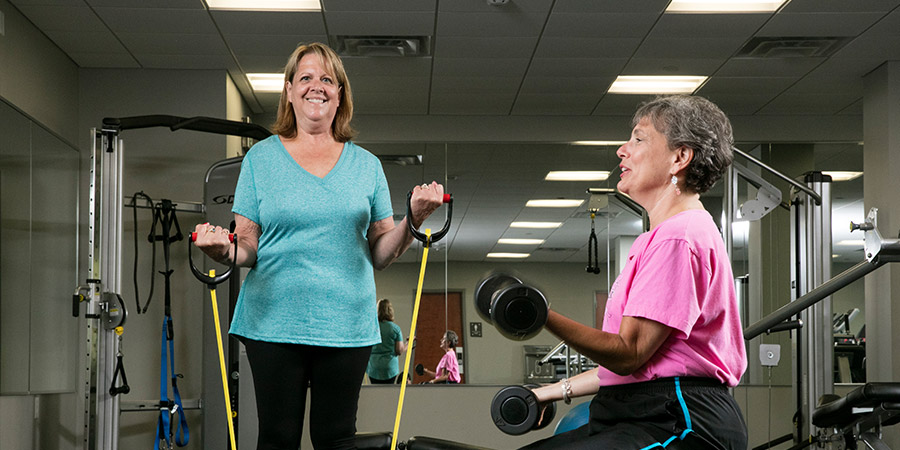
<p class="article-body"> Karen Cherelstein had a normal mammogram in October 2006, but a self-examination in January 2007 revealed a lump. A visit to her OB-GYN and a biopsy confirmed her fears: she had Stage 1 cancer with a small tumor just before her fiftieth birthday. “When my internist asked for a special appointment, I knew the news wouldn’t be good,” Ms. Cherelstein says. “As more results came through, I learned that my cancer was aggressive.” She spent several months undergoing chemotherapy and radiation under the guidance of Gary Cohen, MD, Medical Director of the Sandra & Malcolm Berman Cancer Institute at GBMC, and has been cancer-free for eight years. <br> <br> “By October 2007, I was working full-time again and my hair was growing back,” Ms. Cherelstein says, “but I was beginning to have weight issues.” At 5 feet 1 inch tall, she says that any additional weight is obvious on her body. Not realizing it might be related to her cancer, she struggled with managing her weight for years and, by October 2014, she had reached a number on the scale that she could not believe. <br> <br> </p> <blockquote> "Studies have shown that excess body weight may be linked to certain cancers, including breast cancer." </blockquote> <figure class="image-left"> <img src="/sites/default/files/hg_features/hg_post/6107387bd9a48d6beaedf69215ec3a59.jpg"> <figcaption> Friends and cancer survivors Karen Cherelstein (left, in pink) and Diane McClyment often exercise together to encourage each other and hold each other accountable. </figcaption> </figure> While Ms. Cherelstein fought to achieve a healthy weight, her friend Diane McClyment was going through similar life and body changes. Ms. McClyment was called back after a mammogram in October 2013 and a biopsy revealed she had breast cancer. Her physicians at a local hospital recommended radical treatments, which had her on edge. Ms. Cherelstein suggested a second opinion with Dr. Cohen. “The minute I met him, I knew he was the right doctor for me,” Ms. McClyment Friends and cancer survivors Karen Cherelstein (left, in pink) and Diane McClyment often exercise together to encourage each other and hold each other accountable. www.gbmc.org | GREATER living 5 says. “He handled everything, even contacted a physician I had 25 years ago in New York to discuss my previous lymphoma treatment.” <br> <br> With Dr. Cohen overseeing her care, Lauren Schnaper, MD, performing her surgery and Geoffrey Neuner, MD, administering radiation therapy, Ms. McClyment felt she was in great hands. She had a lumpectomy and was treated with a “one and done” radiation treatment, both of which were successful. “My only complaint was the weight gain. Like Karen, I was grateful to be alive, but had a difficult time shedding excess pounds.” <br> <br> At a September 2014 follow-up appointment, Dr. Cohen could tell Ms. McClyment felt negatively about her appearance. “Studies have shown that excess body weight may be linked to certain cancers, including breast cancer,” says Dr. Cohen. “Excess weight and obesity may lead to worse outcomes despite cancer treatments, and weight gain following a breast cancer diagnosis may significantly increase the risk of recurrence and cancer-related deaths.” Dr. Cohen referred Ms. McClyment to a clinical trial entitled “A Randomized Study Evaluating the Effect of a Remote-Based Weight Loss Program on Biomarkers in Women with Early Stage Breast Cancer” being offered through the Johns Hopkins Clinical Research Network (JHCRN). The JHCRN is a collaborative effort between GBMC, the Johns Hopkins Institute for Clinical and Translational Research and several other regional medical centers. It is designed to accelerate the transfer of new diagnostic, treatment and disease prevention advances from research to direct patient care. Ms. McClyment was excited about the weight control study and immediately enrolled. <br> <br> <figure class="image-right"> <img src="/sites/default/files/hg_features/hg_post/a6651afc6a88d124a6a8e4c75843cd52.jpg"> </figure> “The trial is a yearlong weight loss program designed to specifically meet the unique needs of women who have completed their acute therapy for early breast cancer,” says Vered Stearns, MD, Co-Director of the Johns Hopkins Breast and Ovarian Cancer Program and a lead physician on the JHCRN research team. Study participants are randomized into two groups, self-directed weight loss or active remote intervention (Practice-based Opportunities for Weight Reduction, or POWER-remote), and each group follows a strict plan of exercise, diet tracking and health assessments. The goal of the study is to gauge the effectiveness of weight loss intervention techniques and assess the effects of weight loss on biomarkers associated with breast cancer, inflammation and obesity. This information will be used to help implement further clinical intervention techniques in breast cancer patients. “While it is too early to determine overall benefits, we have seen an increase in awareness and attention to diet and physical activity in all participants, and several women have experienced a reduction in their weight,” says Dr. Stearns. <br> <br> Ms. McClyment was placed in the active intervention POWER-remote group and has lost 37 pounds and four inches from her waist, is down four sizes and is pleased with the reasonable goals and accountability aspects of the program. Ms. Cherelstein, who could not directly take part in the study because of the time elapsed since her treatment, completed the program on her own by sharing Ms. McClyment’s study plan. Both women are thrilled with the marked improvement in their individual bodies, minds and overall health. “We started checking in with each other almost every day as the pounds started rolling off,” Ms. Cherelstein says. “It was a process, but we’ve both excelled. We talk about shopping for new clothes instead of how fat we feel! We’re grateful for the care we received and are optimistic that the odds of cancer recurrence have been decreased for both of us.” <br> <br> <div class="end-of-story"> </div>
<h4> Erlene Miller's story, in her own words. </h4> I was diagnosed with breast cancer in 1994. I had an excellent team who took outstanding care of me, from the mammographer, who was at Advanced Radiology at St. Joseph, to Dr. Bill Howard who did my biopsy and was my second opinion doctor. My treatment team was at GBMC. <br> <br> Dr. Frank Rotolo did the lumpectomy. I told him that I felt well enough to go back to work after a week, but he would not allow me because I still had the drainage system in. I told him that I had prepared my students and purchased several oversized sweaters. I could do it. He still said no. After that, I met with Dr. Paul Celano, my Oncologist, who mapped out my treatment plan. I will never forget what he said to me. Dr. Celano said, "Just take one day at a time. If you are a person who has handled other situations in your life and did not fall apart, you will handle this too." <br> <br> Dr. Celano also said that at my age, we were going to need to be aggressive and give me both chemotherapy and radiation. I was 46 years old. He said it would put me into menopause, and informed me that unfortunately I might not come out of it at the end of treatment because I was so close to the natural time for menopause. My niece was with me and she was very negative saying Dr. Celano should give me something for my emotional state. Dr. Celano must have read my body language or facial expression because he asked her to wait outside. <br> <br> The nurses who provided the infusion could not have treated me better. I'm embarrassed to say this, but the nurses loved me, and I them, but I forgot this one particular nurse's name. You know you always have a favorite. The chemo treatment was fourteen days on and fourteen days off for about six to seven months. I told Dr. Celano that I had a busy summer already planned and that if he could work around my schedule, that would be nice. He replied, "We can do that." <br> <br> I had written a proposal to become a candidate in the Governor's Academy of Mathematics, Science and Technology, a program that was very intensive and held at Towson University for one month, and I was accepted into the program. At the end of that program, I had a week's vacation scheduled to Buffalo, New York, Niagara Falls and Toronto, Canada. After returning from that trip, I had my second chemo treatment before heading to London, England and Paris, France for two weeks. <br> <br> After returning from my Europe trip, I began my treatment program non-stop. I was in a week-long workshop in south Baltimore, too, and when school started in August, I went every day. I was never sick and did not lose my hair, though I will say it thinned out some. After chemo, I began radiation for about six to eight weeks, Monday through Thursday. I thought my chemo team was great, but Dr. Robert Brookland and his radiation team were phenomenal. Dr. Brookland greeted me every day with a hug, and his bedside manner was outstanding. He said he had never had a patient like me. I kept him posted on everything I was doing. At the time, I lived alone and took total care of myself except for once or twice when I had my niece come to change my bandages. I had a routine. <br> <br> After my treatments for both chemo and radiation, if I needed a prescription or groceries, I would go to the Giant Foods near my home and sit in the chair by the pharmacy to wait for my medications to be filled. The only problems I experienced were tiredness after treatment and a few mouth sores from eating acidic foods. Once I learned that, I did not eat any more acidic items during treatment. The radiation did burn my skin, but I was told to use aloe vera gel and that worked perfectly. Dr. Brookland asked if I would agree to be featured on Channel 2 as a cancer survivor and I agreed. I requested permission from my principal and students' parents, and Channel 2 came to my classroom for the interview. Evidentially I made AP news because family members saw me on the news in New Jersey! <br> <br> I will always love my treatment team because they saved my life. I am an almost 21-year cancer survivor. Oh, I almost forgot: My primary care doctor, Dr. Mark Stromberg, referred me to Dr. Rotolo and that got this whole ball rolling. <br> <br> Since my treatment at GBMC, I continued to work. In fact, I seemed to have taken on much, much more. I was a renter at the time, and I did not have life insurance. I saw that my life was in shambles and I needed to get my business in order. I was separated with one daughter who counted on me. <br> <br> First, I took out a life insurance policy. Next, I met with my financial planner. He helped me to get organized so that I was able to build my four bedroom, two car garage colonial in Harford County. I have since owned two Lexus vehicles, I put my daughter through Pennsylvania State University’s School of Engineering and my real estate sales took off. I love to travel. I have been to Barcelona, Spain; London, England, twice; Paris, France; Berlin, Germany; Jamaica; Aruba twice; St. Thomas; Barbados; Nassau; Paradise Island; Dominique; St. Marteen; Freeport and around 31 out of 50 US states. I am currently planning a trip to Sydney and Melbourne, Australia, and Auckland, New Zealand, scheduled for 2015. I am retired and traveling is my life. In fact, as I write this, I should be packing right now for a trip to Boston, Massachusetts. <br> <br> Thanks to GBMC, I feel relaxed and complete. I now have a Will, a Living Trust, an Advanced Directive, a Power of Attorney and Final Arrangements in place. I am proud of the love, care, expertise and professionalism of my treatment team at GBMC. They made an unfortunate situation bearable. <div class="end-of-story"> </div>
<p class="article-body"> Right from the start, I sensed there was a special culture at work at GMBC, one that demanded doing things differently. I saw facets of this extraordinary culture in everything from my dedicated medical team and the soothing physical surroundings to the opportunity to give back by participating in research. <br> <br> To me, the term “patient-centered” doesn’t begin to convey the kind of care I received. Reflected in my personal experience is GBMC’s commitment to provide every patient, every time, with the care one would want for their own loved ones. <br> <br> Little things, like having the flexibility to choose my own appointment times, or to communicate with my team by email, meant a lot to me. I felt an unparalleled level of compassion and sensitivity. <br> <br> I wasn’t the only recipient of GBMC’s watchful eye and healing. The team was always acutely aware that they were one of two caregivers. Alongside GBMC was my nurturing wife, Lynn, whose needs along the path to recovery were of equal consideration. I am forever grateful of the support from both. <br> <br> Like every GBMC patient, I had a dedicated team of healthcare professionals who were with me every step of the way. It was reassuring to know that everyone, from my primary care physician to my dietitian, was always up to speed on my case. <br> <br> Seeing the same familiar faces throughout my treatment made me feel like a family was looking after me, and because of that I would like to share a story that I’ll never forget: Back in the hospital after my cancer treatment had ended, I opened my eyes to find my entire former team had come to visit me! <br> <br> I love GBMC. I want to support them with my time, my funds and my message. <br> <br> I see GBMC as unique among community hospitals, investing heavily in medical research and technology within a “healing environment” through gardens, walking trails, artwork and natural light. Many former patients give back to the hospital by participating in visionary research, and in turn, support the patients who follow in their footsteps. As a research participant myself, I take joy in being part of this “circle of giving” at GBMC. </p> <div class="end-of-story"> </div>
<h4> David Kaye's story, in his own words. </h4> In 2010, I was diagnosed with stage 3 throat cancer. My local primary care physician referred me to Dr. Califano at the Dance Center at GBMC. <br> <br> In preparation for my treatment, Dr. Califano admitted me to GBMC to perform several procedures: a relocation of my left salivary gland from the submandibular to under my chin, a surgical biopsy and the insertion of a feeding tube. <br> <br> <figure class="image-left"> <img src="/sites/default/files/hg_features/hg_post/61bca9b16af033d47cb85b04117519f5.jpg"> </figure> I was then referred to Dr. Mei Tang, a medical oncologist at GBMC, for chemotherapy and Dr. Eva Zinreich for radiation therapy. I received radiation twice daily for seven weeks and chemotherapy weekly. During this entire time, I was always amazed at the level of care and caring given by the GBMC staff. <br> <br> I never felt so physically miserable in my entire life. I was extremely fatigued and was losing weight at an alarming rate, but the GBMC staff found a way to stabilize my weight loss and made plenty of valuable suggestions to ease many of my symptoms. Having served 25 years in the U.S. Army, I had no problems following the medical staff's orders. <br> <br> I am elated because I was at GBMC on November 25, 2014, and am still cancer-free. <br> <br> Because I am cancer-free, I decided to add some new dimensions to my life. I now devote a great deal of time to volunteering with the American Cancer Society. I speak at many of their fund raising events, especially Relay for Life events. In my mind, speaking as a survivor represents hope for cancer patients. I am committed to helping others struggling with cancer and hope to make a positive impact on as many lives as I can. <div class="end-of-story"> </div>
<h4> The story of Thomas Stack, in his own words </h4> As I was getting dressed for work one morning, I sneezed while bent over and felt a sharp pain in my back. I made it to the bed and had to stay there for most of the day. The pain seemed to get slightly better, so I went to work the next day, but my condition got progressively worse over the following couple of days. Soon I was no longer able to walk. I started getting back spasms, too, which intensified the pain. I rapidly went downhill. <br> <br> Within the next few days, I went for an MRI to get an assessment of what had happened to my back. I am not sure what happened after that, but between that day and the following Wednesday, I know that I was not able to get relief. Finally, on Thursday, August 13th, I was able to get an appointment to see Minal Rami, MD, the neurosurgeon at GBMC. He had a copy of my MRI and saw that there was a place where a disc had ruptured in my lumbar area. <br> <br> At that time, I was in a wheelchair, unable to walk due to the intense pain. Dr. Rami was able to fit me in for surgery the next day and treated my situation as an emergency due to what he called "intractable pain." I was admitted to the hospital at GBMC that night and was operated on the next day, Friday, August 14th. Dr. Rami told me afterward that my condition would not have healed on its own and that the surgery was completely necessary. He was right: I felt relief almost immediately and was able to walk the next day after surgery. <br> <br> I feel immense relief that Dr. Rami was able to completely fix my problem. I have absolutely no residual back pain or any problems at all. The recovery time was quick, and the convalescent time was minimal. Because of this experience, I realize the importance of keeping fit and not allowing myself to get overweight because that would put further strain on my back. I am able now to exercise with no restrictions and I am not limited in any way from physical activity. <br> <br> Looking back, it was quite an experience to be incapacitated for almost two weeks. I’ve never been in that situation before or experienced that level of pain. It seems like a miracle that something that seemed so serious could be fixed so quickly and easily. I am fully recovered today thanks to Dr. Rami and my care at GBMC. <div class="end-of-story"> </div>
<p class="article-body"> Twenty-eight years ago, my son, Justen Michael Peeling, was born. He would not be here today if it were not for Dr. Khouzami and Dr. Claire Weitz and the care they gave in 1986-1987. <br> <br> I was a very high-risk patient. Two other hospitals turned me away and suggested I terminate my pregnancy due to my blood pressure history. I had already had a daughter; she was five years old at the time, and my pregnancy with her was a close call – we both almost died. <br> <br> </p> <figure class="image-right"> <img src="/sites/default/files/hg_features/hg_post/5d331941d215f6d066e16daa7bd808d4.jpg"> </figure> Six years had gone by since my first child was born, and I really didn't think I would be able to conceive again. I was 26 at the time, and Justen would be my second child, I was frightened and so happy at the same time. I knew I would be under strict orders because of my previous complications, but I never thought I would be turned away by doctors and hospitals because of thoughts that I would not make it through the pregnancy. <br> <br> I was referred to Greater Baltimore Medical Center by two specialists from St. Joesph's. I was told to ask for Dr. Victor Khouzami. <br> <br> My husband and I met with Dr. Khouzami and were introduced to his then-partner, Dr. Claire Weitz. Dr. Khouzami had strict rules: no ice cream, no pickles, no salt whatsoever, no cheese, and everything I ate was to be baked or broiled. I met with a dietician, had frequent medical visits and was bedridden from my fourth month to my eighth month. Dr. Khouzami told me that if I expected to live through this pregnancy and birthing the baby, I had to listen to every word, every instruction. <br> <br> I did listen to my doctors – every single command, every single word. After all, it wasn’t just about me and the new baby; I had my daughter and my husband to think about, as well. <br> <br> I will never forget that time of my life. It was in August of 1987, a week before Justen decided to make his appearance to the world, that I was given permission to have one scoop of ice cream. You would have thought I had won a million dollars! I had only gained 23 pounds at the time – a total of 25 pounds when I gave birth. <br> <br> My son's birth was a planned cesarean, and he was not supposed to make his appearance until September of 1987, but Justen decided to come a bit earlier. I was having contractions, so I had a stress test on August 25, 1987, and was sent home. But, my contractions never stopped. I came back to GBMC later that night and Dr. Weitz delivered my son because Dr. Khouzami was out of town. <br> <br> I was wide awake, my blood pressure was monitored the entire time and the entire OR crew that night was awesome. I had my own cheerleaders in the OR that night, and Justen was born at 12:43 a.m. on August 26, 1987. My second miracle was given to me, and we both were going to be just fine. I held him and kissed him and still thank God for giving all of the beliefs and knowledge we needed to get us through that tumultuous time. <br> <br> <figure class="image-left"> <img src="/sites/default/files/hg_features/hg_post/6b4c2502ccf7f7e05d62549cb3f30513.jpg"> </figure> If it were not for GBMC, for Dr. Khouzami taking a chance on me and being the greatest doctor I have ever known, or the amazing assistance of Dr. Claire Weitz, neither my son nor I would be here today. I thank God every day for both of my miracle babies that are now 34 and almost 28 years old. Both are very successful and have grown up to be great adults. <br> <br> GBMC has doctors that don't give up on people, and I was treated with the utmost respect and compassion. I just want to say thank you, still, to Dr. Khouzami, even after all these years. Though I'm sure he would not know me today, I have never forgotten him and his team. I now work for GBMC and have been here for about two years. I would never have thought I would be here after all these years, but it felt like coming home. <br> <br> Because of GBMC, I was able to see my son, Justen, graduate not only from high school, but also from college and grow up into a wonderful man. I still tear up every time I think about the entire event of my pregnancy, and feel so very grateful, blessed and thankful for the outcome. Thank you again from the bottom of my heart. <div class="end-of-story"> </div>
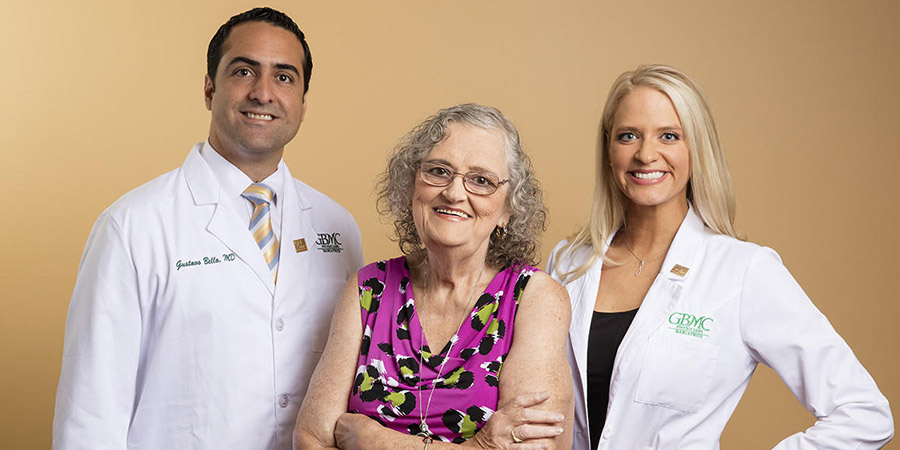
<p class="article-body"> <em>Image: Helen Roby with Dr. Elizabeth Dovec and Dr. Gustavo Bello. Roby has lost 165 pounds with a combination of bariatric surgery and healthy lifestyle choices.</em> <br> <br> Two years ago, when Helen Roby went for a dip in the pool at her son’s house, it took four men to get her out. At 335 pounds, she couldn’t get into or out of a chair, needed a walker and because of her weight, suffered from diabetes, gout and high blood pressure. <br> <br> Today, the 71-year-old former school principal has lost 165 pounds and her obesity-related conditions are gone. “Last Fourth of July,” she said, “I got up that pool ladder and danced on the deck. I have so much energy.” <br> <br> It wasn’t a miracle drug or crash diet that got her there. It was a combination of bariatric surgery and a total commitment to lifestyle change — the key elements of the Comprehensive Obesity Management Program at Greater Baltimore Medical Center. <br> <br> </p> <blockquote> People don’t have to live with these conditions or with depression related to obesity. We need to increase public awareness that there are good, safe options. </blockquote> “People don’t have to live with these conditions or with depression related to obesity,” said Elizabeth Dovec, M.D., bariatric surgeon and director of the program. “We need to increase public awareness that there are good, safe options.” <br> <br> To qualify for the program, a patient’s body mass index — a calculation based on height and weight — must be at least 40 kg/m2, or 35 to 39.9 kg/m2 with an obesity-related medical condition. <br> <br> Advances in Cancer Care: GBMC offers personalized treatments that match patients with the most effective leading-edge procedures When patients enroll in the program, bariatric surgery is not the first step. Participants must first spend between three and seven months learning about health and nutrition while developing what must become permanent new eating and exercise habits. Roby, for example, lost 40 pounds before she even had surgery. <br> <br> When it’s time for surgery, Dovec and fellow bariatric surgeon Dr. Gustavo Bello provide two options. The laparoscopic sleeve gastrectomy removes most of the stomach leaving only a “sleeve” about the diameter of a garden hose. The laparoscopic Roux-en-Y gastric bypass sections off most of the stomach, leaving a pouch that’s smaller than the sleeve and restricts food intake even more. Dovec and Bello also offer a variety of revisional surgeries to patients who may have had a previous failed procedure or who need surgical adjustments such as from inadequate weight loss or weight gain, medical complications or unresolved co-morbidities. <br> <br> “I usually allow patients to pick their own surgeries because I really want them to do their homework,” Dovec said. “When they do, they own it more and do better.” <br> <br> Before entering the GBMC program, it’s important for patients to understand that surgery alone is not the answer. <br> <br> “The first year is a honeymoon. Everybody loses weight and gets close to their goal within 12 to 18 months,” Dovec said. “That’s when the hard part sets in. If you go back to old behaviors, you're going to gain the weight back.” <br> <br> The only way to maintain the weight loss, she explained, is by eating a high-protein diet, minimizing carbohydrate and sugar intake, and exercise. Roby, who had not been able to get out of a chair, now works out at the gym three times a week. Another of Dovec’s patients runs half marathons and is training for her first full marathon. <br> <br> According to Dovec, the national average for weight loss maintenance after surgery is 85 percent — a huge difference from the national average for weight loss maintenance with diet and exercise alone, which is just 5 percent. <br> <br> One reason for the program’s success is GBMC’s ongoing support system, which includes lifetime follow-up visits. There are also special events for patients, as well as an online support community in which Dovec and Bello participate daily. <br> <br> “We’re there for the newcomers,” Roby said, “encouraging them and giving them all the help we can.” <br> <br> The results transform patients' lives. “They have more confidence and get better jobs," Dovec said. "They can buy clothes off the rack. They can even fit into those little seats at Orioles games.” <br> <br> <em>- Maxine Nune for Greater Baltimore Medical Center</em> <div class="end-of-story"> </div>
<p class="article-body"> Joyce Myrick was diagnosed with fallopian tube cancer in the summer of 2014, and her journey to recovery had a difficult beginning. She was referred to a local hospital for chemotherapy, but her calls to schedule appointments went unanswered. “I asked my daughter, who’s a lawyer, to get involved so my treatment could begin,” she says. Losing her hair took an emotional toll also, prompting her daughter to suggest attending the American Cancer Society’s “Look Good Feel Better” lecture series. The series, which is held at GBMC, offers support and teaches cancer patients and their families about beauty techniques. <br> <br> </p> <blockquote> At the lecture, I was listening to another attendee talk about her positive experiences in GBMC’s Infusion Center and was just baffled. I thought that all cancer treatments were the same, that everyone had a hard time feeling cared for or getting the information they needed. </blockquote> After the lecture, Mrs. Myrick spoke to Paul Celano, MD, a GBMC oncologist, about her treatment and immediately transitioned to GBMC. “It was an excellent experience from start to finish.” <br> <br> Now cancer-free, one of Mrs. Myrick’s favorite aspects of care at GBMC is the Survivorship Program, which is designed to help cancer patients and their families navigate the changes and challenges that come with a diagnosis of and treatment for cancer. “The current accepted definition of survivorship is the process of living with, through and beyond cancer,” says Felicity Kirby, Oncology Nurse Coordinator for Oncology Support Services at GBMC. “Cancer survivorship begins at diagnosis and includes people who continue to have treatment to either reduce risk of recurrence or to manage chronic disease. It also includes their families.” <br> <br> <figure class="image-left"> <img src="/sites/default/files/hg_features/hg_post/ecb0eceadedf73ed36b032aab997d3eb.jpg"> <figcaption> Joyce Merick, cancer-free, thriving and surviving! </figcaption> </figure> According to the American Cancer Society, the number of people with a history of cancer in the United States has increased dramatically, from 3 million in 1971 to about 13.7 million in 2014. GBMC works to aid that population by providing supportive services such as rehabilitation, nutrition, counseling, palliation of symptoms and care coordination, among others. By using a Resource Guide provided at diagnosis, patients can organize all of the information they receive throughout their care, including education materials, treatments, medications, pain management, test result logs and support resource listings. Patients who complete treatment and transition to follow-up care are eligible to meet with Ms. Kirby to receive a customized treatment summary and care plan. Surveillance, screening, prevention of recurrence and new cancers, follow-up guidelines, risk reducing strategies, how recovery is going and more are reviewed during this visit. <br> <br> “During my first appointment at GBMC, everything was handled for me,” Mrs. Myrick says. “I kept the packet they gave me when I started my treatment, and still use it to store my test results and information. Everyone is so kind and always there to answer my questions. The funny thing is that I rarely have problems because Felicity anticipates my needs before a problem can come up.” <br> <br> <div class="end-of-story"> </div>
<p class="article-body"> In January 2011, I got the exciting news that my husband, Robert, and I were going to be parents again. My son Evan was 2 years old at the time, and we were more than ready to add another member to our family. To our surprise, soon after we got the initial news, we found out that our joy was going to be doubled: I was pregnant with identical twins. <br> <br> Robert was thrilled, but I was very nervous. In a few short months, our family of three would become a family of five. I knew we would need help adjusting to this drastic change. Some of my friends who have twins recommended that I hire a postpartum doula for the first six weeks, so I did some research about what services this type of doula offers. <br> <br> I was impressed to learn that GBMC’s specially trained postpartum doulas assist with everything from breastfeeding support and sibling care to housekeeping and running errands. Lanny Dowell, Doula Program Coordinator, helped set us up with the perfect doula for us -- Georgeanne Saddington. <br> <br> I gave birth to my twin daughters, Grace and Quinn, on July 29, 2011, and Georgeanne started working with us on August 2, 2011. Each night, she would arrive at 10 and stay until 6 a.m. She fed and changed the girls, which allowed us to rest and recharge. I myself was recovering from a C-section and also had a root canal shortly after we brought the babies home, so her help was greatly appreciated. <br> <br> Even more valuable than the extra sleep we were able to get was the helpful advice Georgeanne offered. She provided expert tips on taking care of twins and the importance of keeping them on the same schedule. She taught us how to get them to sleep in their cribs and so much more. She really became part of our family. <br> <br> We were so pleased with the services she provided that we expanded our eight-week contract by 12 more weeks! </p> <div class="end-of-story"> </div>
<p class="article-body"> Strokes can occur at any given moment and can be frightening. They usually occur when a blood vessel leading to the brain bursts (hemorrhagic stroke) or is blocked by a blood clot (ischemic stroke). According to the Centers for Disease Control and Prevention (CDC), about 800,000 people in the United States have a stroke each year, costing the country an estimated $36.5 billion annually. <br> <br> Baltimore resident Carol Pijanowski unfortunately had an ischemic stroke last summer, and was rushed by her husband, Don, to GBMC’s Emergency Department for treatment. “I was experiencing all of the major symptoms of a stroke like dizziness, double vision, blurred vision and my left side was feeling numb,” explains Mrs. Pijanowski. “My neighbor noticed the symptoms and informed my husband, who took quick action.” <br> <br> At GBMC, Mrs. Pijanowski was treated with Tissue Plasminogen Activator (tPA), which dissolves blood clots after being injected. This medication helps to significantly reduce disability from a stroke but does not decrease a patient’s chance of having another stroke in the future. <br> <br> “After I was given the shot, I had a complete turnaround of my symptoms,” says Mrs. Pijanowski. <br> <br> </p> <blockquote> “Within 24 hours, my mobility and sight came back. It was like the stroke never happened! My family and friends still can’t believe I had one.” </blockquote> James Bernheimer, MD, Medical Director of the Primary Stroke Center at GBMC, says that there are some uncontrollable factors that contribute to having a stroke such as age, sex, race and previous stroke or heart attack. However, there are many risk factors that can be controlled. He advises people to watch their blood pressure, cholesterol, smoking and eating habits to decrease the likelihood of having a stroke. <br> <br> <figure class="image-right"> <img alt="Dr. James Bernheimer" src="/sites/default/files/hg_features/hg_post/bc98efca59a0458b1ca057c39a0d9e34.jpg"> <figcaption> Dr. James Bernheimer </figcaption> </figure> “The best thing to do when you experience unusual sensations such as a sudden numbness or weakness on one side, confusion or trouble speaking, dizziness or trouble with your vision is to call 911 or be taken to a hospital immediately,” says Dr. Bernheimer. “Three things that accurately indicate a person is having a stroke are drooping of one side of the face, inability to hold up the arm on that side and slurred speech. When someone has these symptoms, it is best for a doctor to treat the patient as soon as possible.” GBMC is recognized as a Primary Stroke Center by the Maryland Institute for Emergency Medicine Services Systems (MIEMSS) and is dedicated to providing care and education for stroke patients, their families and the community. <br> <br> Today, Mrs. Pijanowski is monitoring her cholesterol and blood pressure as well as eating a healthy diet. Performing simple tasks like these can help lower her risk of having another stroke. “Thanks to Dr. Bernheimer and his stroke team at GBMC, I am still able to do the things I enjoy like caring for my neighbor’s children during the day, cooking for my family and spending time with my three granddaughters.” <br> <br> <div class="end-of-story"> </div>
<h4> The story of Caroline Broomell, in her own words. </h4> I have been a nurse at GBMC for more than 15 years. Both of my children were born here, and I had a fabulous experience both times. It is my experience with my second child, however, that I really want to share. I was given the option to have this second baby at another hospital, because my husband works at another institution. I could not imagine having my babies anywhere but at GBMC, and I am so happy that I made that decision. <br> <br> <figure class="image-right"> <img src="/sites/default/files/hg_features/hg_post/9930e23107e8442300401a913709da16.jpg"> </figure> Almost from the time that I found out I was pregnant, my GBMC family cared for me. I have been blessed to work in Labor & Delivery, the Newborn Nursery, Postpartum, and most recently in the Women's Surgical Center, so I know a lot of people here. Everyone, from the Genetics team to people I would see in the hallway, expressed joy when I would see them during my pregnancy. My fellow nurses and surgeons were supportive and caring. I got to dance, pregnant belly included, in the GBMC Overcomer video, which was such a positive experience. I worked full time until past my due date, and when it came time to have the baby, my water broke at work. Bev Anderson, my coworker in PACU that day, got everyone to pitch in and get me to Labor and Delivery. I felt like I was given the royal treatment. I was wheeled to L&D, greeted at the desk, and given superior care. My doctor, Dr. Dominique Allen, was scheduled to go on vacation that evening, but the other doctors covering for her made sure I knew I'd be well cared for. My primary nurse, Lisa Bachman, was my preceptor when I came to GBMC in 1999, and she was also present at the couples' weekend getaway in Cape May when my husband and I got engaged. I was so lucky to have her there; she, as always, provided stellar care and emotional support. Dr. Tom Pesar provided the best anesthesia! So many others came in to help and to cheer us on. My beautiful daughter, Elizabeth, was delivered by Dr. Allen, in the attendance of Lisa, Dr. Pesar, and many of my GBMC family members. It was amazing. <br> <br> <figure class="image-left"> <img src="/sites/default/files/hg_features/hg_post/e665e915933746cc4598a5eb687a09f2.jpg"> </figure> My entire stay at GBMC was incredible, but it didn't end there. After we went home, baby Elizabeth and I both developed complications. We came back and forth to GBMC many times while I was on maternity leave. The lactation department and parent education were very helpful. Elizabeth suddenly quit breastfeeding, and I wasn't ready to give up. This went on for days, during which I talked to Marla Newmark many times on the phone, and she helped get us through. One of my friends, Tina Gambrell, who I met when she was a lactation consultant at GBMC, made a home visit to help us. She and I suspected a tight posterior frenulum, which causes major difficulties with breastfeeding and is tricky to diagnose. Dr. Andrew Goldstone was recommended to us, and his staff members were so caring and competent with baby Elizabeth. After our visit to Dr. Goldstone, Elizabeth was able to breastfeed without difficulty! I had issues with abdominal muscle separation. Dr. Frank Rotolo and his office, and the CT scan department took great care of me. Dr. Allen and my children's pediatrician, Dr. Mary Jo Minton, were also very helpful during these difficult times. Elizabeth and I did well, due to the care we received. <br> <br> I am so glad that I was able to have both of my babies at GBMC. I felt truly cared for by my GBMC family. I feel very blessed. <div class="end-of-story"> </div>
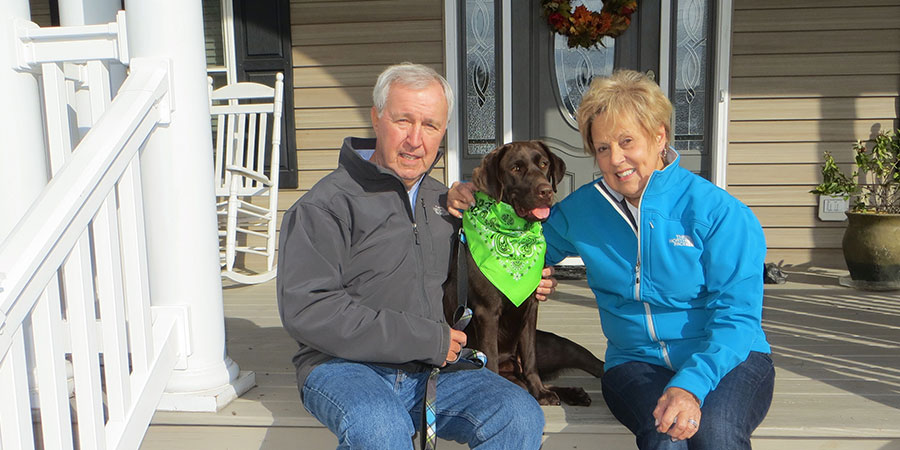
<p class="article-body"> For Bill and Audrey Sento, retired education professionals from Ridge, Maryland, chronic hip pain due to osteoarthritis robbed them of the active life they had planned for themselves. Both patients of Leroy (Lee) M. Schmidt, MD, Bill had his left hip replaced in August 2013 and his right replaced in July 2014, and Audrey had her right hip replaced in February 2014, which has given them the opportunity to enjoy their retirement. This is their story, in their own words. <br> <br> <strong>BEFORE SURGERY</strong> <br> Bill: “Life was pretty painful and I had a difficult time being mobile because of that. I couldn’t go fishing and had trouble walking and getting around in general. Dr. Schmidt was recommended to us by a nurse we know and after some tests and discussion about my left hip, he recommended surgery. I had a lot of respect for his opinions — he even predicted that I might need the right side done.” <br> <br> Audrey: “I didn’t have much quality of life in terms of pain and ability to navigate or move in a way that I wanted to. In the days before my surgery, I couldn’t sleep at all during the night. Painkillers didn’t work for me, and my pain radiated all the way up and down the leg from my ankle through the buttocks area. We came to our hero, Dr. Schmidt, and he helped us both tremendously.” <br> <br> <strong>SURGERY AND RECOVERY</strong> <br> Bill: “I’m pleased about our decisions to go through with the hip replacement surgeries at GBMC. I have nothing but the utmost respect for Dr. Schmidt and the people who work alongside him. Joint replacement surgery is a major surgery, but neither of us had complications. After a short hospital stay and several weeks of physical therapy, we were up and moving again.” <br> <br> Audrey: “Dr. Schmidt and all of our caregivers were helpful with their explanations of what they were doing, and they all had a way of making you feel comfortable, even though what you’re going through is traumatic. I’m sure that our quick progress is because Dr. Schmidt gives you the opportunity to set the parameter of what you want to do and then he assists you in that direction.” <br> <br> <strong>LIFE AFTER SURGERY</strong> <br> Bill: “We decided that we wanted to golf when we retired, and are now well on our way to that goal. I am also now able to ride a bicycle and fish, both of which I had a difficult time doing before surgery.” <br> <br> Audrey: “I sleep much better now and am able to go for walks and garden, two things that I really enjoy. We also got a puppy about a year ago, a chocolate Labrador named Nali after one of our favorite vacation spots, Denali, Alaska. She requires a lot of exercise — we wouldn’t have been able to keep up with her before surgery.” Of all the things Mr. and Mrs. Sento appreciate about their experiences at GBMC, the accessibility and caring of the staff are the most prominent. <br> <br> Audrey: “If we called with questions, Dr. Schmidt got right back to us, just like a family member would. We have a good life, physically, because we’ve had so many good experiences with the medical team at GBMC.” <br> <br> </p> <div class="end-of-story"> </div>