

Podcasts
Practical, compassionate guidance from GBMC clinicians for every stage of life.
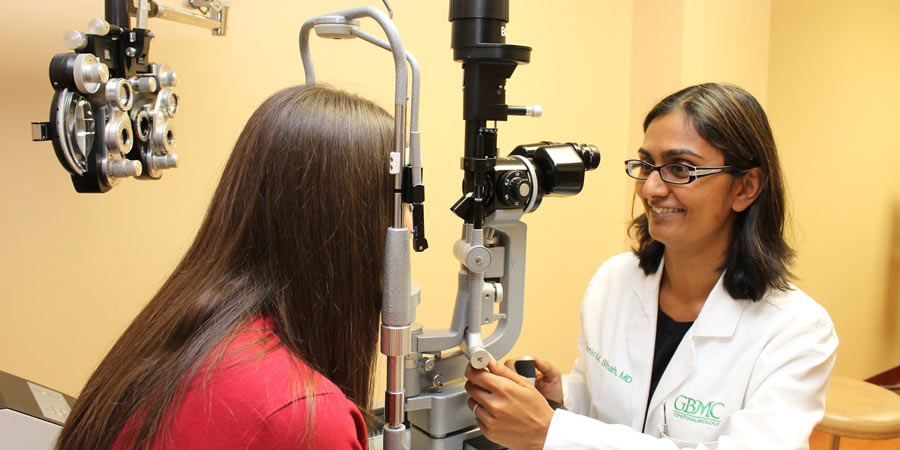
If you’re at risk for diabetes or are living with the disease, there’s one more item you should add to your health to-do list — getting regular eye exams. “Poorly controlled blood sugar can lead to a number of eye problems, so it’s important to work with your primary care physician to make sure your A1C level, which reflects your average blood sugar level over several months, is in the appropriate target range,” explains Tanvi M. Shah, MD, a board-certified ophthalmologist at GBMC.
Poor blood sugar control can cause several vision problems, including:
While cataracts and glaucoma also affect people who don’t have diabetes, if you’re living with this disease, you’re 60 percent more likely to develop cataracts and they may develop at a younger age. Patients who have diabetes are also 40 percent more likely to develop glaucoma.
“If you have fluctuating vision — sometimes it’s blurry, sometimes it’s not
— or if you simply can’t see as well as you feel you should, you should make an appointment for an exam with an ophthalmologist,” says Dr. Shah. “The sooner the problem is diagnosed, the sooner we can start treatment to slow its progress and preserve your vision.”
Symptoms you should know
Often, the earliest stages of eye problems caused by diabetes, including diabetic retinopathy, do not cause symptoms.
GBMC offers a number of effective treatments for eye problems caused by diabetes, such as:
“The best strategy is to take preventive steps to protect the health of your eyes. Work with your primary care physician to get good, consistent control of your blood sugar, blood pressure and cholesterol levels,” adds Dr. Shah. “One of the biggest problems is that there are more than 8 million people in the U.S. who have diabetes that is undiagnosed. Since they’re not receiving treatment to control their A1C, the disease can silently damage their eyes for years, so being proactive is important. If you’re at risk for diabetes but have not been diagnosed with the disease, see your primary care physician for regular blood tests to monitor changes in your blood sugar level.”
To learn more about ophthalmology services and primary care at GBMC, visit gbmc.org/ophthalmology and mygbmcdoctor.com or call 443-849-GBMC (4262).
Artificial intelligence has woven itself into nearly every corner of our lives: how we work, how we sear...
Ovarian cancer has long been one of the most difficult gynecologic cancers to detect early. In the lates...
Cancer isn't over when it's "over." And if you have finished your treatments at GBMC's Sandra & Malcolm B...
GBMC HealthCare today announced Ann E. Kane, MD, as its new Associate Chief Medical Officer and Vice Pres...

...
Ranked as one of the hospitals in Maryland with the highest stroke survival and recovery ratesAccording t...
Review GBMC’s Quality & Patient Safety Metrics — our transparency dashboard showing performance on CLABSI, hand hygiene, HCAHPS, hospice comfort, and more.”
img.wellbeing { max-width:900px; } @media only screen and (max-width : 700px) { img.wellbeing { ma...
GBMC is committed to the wellness of each employee as a whole person – this includes physical, emotiona...

Our specialists provide a full spectrum of services ranging from routine eye exams to sophisticated diagnostic procedures and the latest surgical techniques.
Practical, compassionate guidance from GBMC clinicians for every stage of life.