Podcasts
Practical, compassionate guidance from GBMC clinicians for every stage of life.
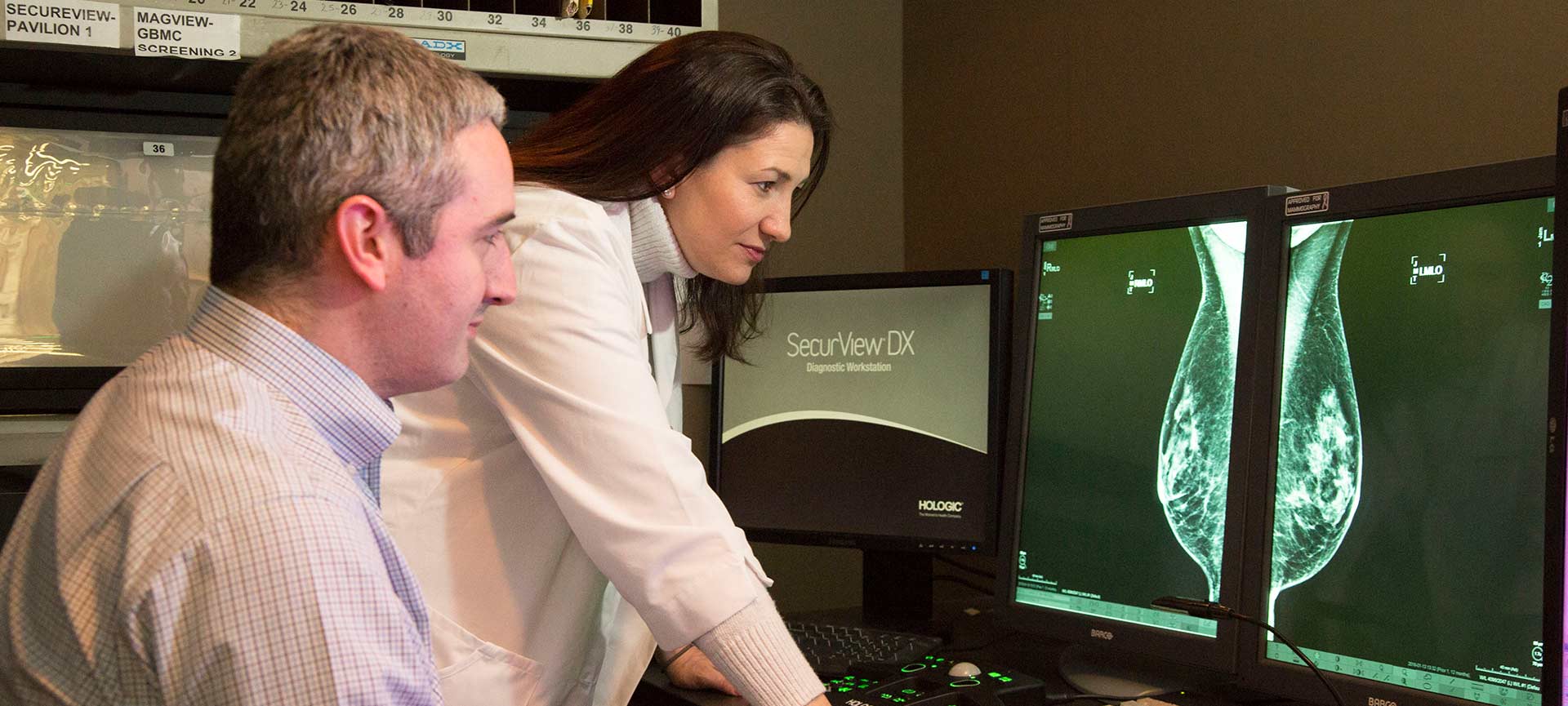
3D mammography (tomosynthesis) is an FDA-approved technology that complements conventional 2D mammography. When 3D and 2D mammography are used together, some studies show that it may improve cancer detection rates. While traditional mammography generates a 2D image, tomosynthesis creates a 3D image of the breast allowing the radiologist to evaluate thin mammography sections of the breast, minimizing superimposed tissue. 3D mammography can provide a clearer image of the breast tissue and may reduce the need for additional imaging.
3D mammography is performed at the same time as 2D mammography, using the same system and no additional breast compression. An X-ray arm sweeps in an arc over your breast taking images from multiple angles. Images are combined to create a 3D mammogram. 3D tomosynthesis does involve additional radiation when compared to the standard 2D mammogram. The total radiation dosage of having both studies is below current Mammography Quality Standards Act (MQSA) guidelines.
3D mammography is FDA-approved for all women who are undergoing a standard mammogram and elect to have this additional technology added to their exam.

Practical, compassionate guidance from GBMC clinicians for every stage of life.