Podcasts
Practical, compassionate guidance from GBMC clinicians for every stage of life.
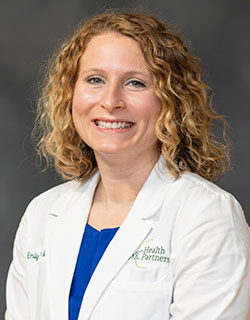
GLP-1 medications have become one of the most talked-about tools in weight management, and one of the most misunderstood. Dr. Emily Watters, a general and bariatric surgeon at GBMC's Comprehensive Obesity Management Program (COMP), recently led a webinar to cut through the noise and give patients the facts.
The first thing to understand is what GLP-1s actually do. They are naturally produced hormones, and these medications work by mimicking that hormone synthetically, signaling the stomach to slow digestion and sending fullness cues to the brain. Many patients on the medication describe a reduction in what's known as "food noise," the constant mental pull toward eating, because the medication also acts on the brain's reward pathways.
The most widely known GLP-1 is semaglutide, sold under the brand names Ozempic and Wegovy, which is associated with roughly 15% total body weight loss. A newer class combines GLP-1 with a second hormone, GIP, in medications like Zepbound and Mounjaro, which can produce around 20% weight loss.
A third option combining three hormones is currently in clinical trials, showing 24% weight loss in early data. Oral pill forms are also now available, including Rybelsus and the recently released Foundeo, offering more accessible options for patients who prefer not to inject.
Side effects such as nausea, vomiting, and constipation are most common in the first 48 hours after an injection and can often be managed with over-the-counter remedies. Over the long term, gallbladder issues can arise, though Dr. Watters notes this is typically tied to rapid weight loss rather than the medication itself.
GLP-1s are not recommended for people with a history of pancreatitis or medullary thyroid cancer. They're indicated for adults with a BMI over 30, or over 27 with an obesity-related condition such as sleep apnea, high blood pressure, or diabetes.
One question that comes up frequently is whether patients need to stay on GLP-1s indefinitely. Dr. Watters frames obesity as a chronic condition, much like high blood pressure or diabetes, meaning long-term treatment may be necessary for many patients, though dosing can often be reduced over time.
"It's really important not to stop the medication right away," she said, "but to figure out how you're going to come off it, or if you're going to come off it, and just be in close contact with your provider."
Cost remains a significant barrier. Injectable medications run roughly $350–$500 per month out of pocket, while oral pills are closer to $150–$250. Insurance coverage varies widely. Dr. Watters advises patients to call their insurer and ask specifically whether the medication is covered for weight loss, sleep apnea, or cardiovascular risk, not just whether it's covered generally.
For those interested in learning more or scheduling a visit, GBMC's Comprehensive Obesity Management Program can be reached at 443-849-3779 or at gbmc.org/bariatrics.
Bariatric Surgery +1 more
Accepting new patients
GBMC Health Partners
Heavy periods. Pelvic pressure. Painful cycles. Urinary frequency. For many women, these symptoms may fe...
Zucchini and yellow squash may not be the flashiest items in the produce aisle, but registered dietitian...
Enter for your shot at Orioles tickets — and help name GBMC's Wound Care Center lobby in honor of Brooks Robinson.
Motherhood has a way of reshaping every part of life. In this episode, entrepreneur, podcast host, and mo...

GBMC's Comprehensive Obesity Management Program (COMP) understands that bariatric surgery requires a lifelong commitment and offers a variety of support services to help patients before, during and after their procedures.
Here, you'll find real-life stories of individuals who have transformed their lives through weight loss surgery.
Practical, compassionate guidance from GBMC clinicians for every stage of life.