

Podcasts
Practical, compassionate guidance from GBMC clinicians for every stage of life.
Entitlement can show up in subtle ways — the sigh when you ask for help, the irritation when things don’t go their way, or the holiday moment many parents know too well, when a child races through gifts and asks, “Is that it?”
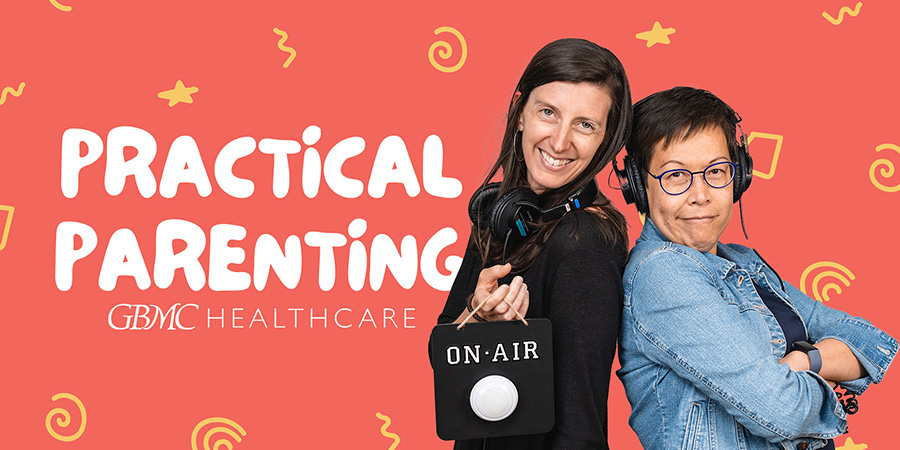
As the holidays approach and expectations rise, many families wonder whether they’ve “created” entitled behavior or missed a key parenting step. In this episode of Practical Parenting, we unpack what entitlement really is, where it comes from, and how parents can respond without shame, panic, or overcorrection.
Entitlement develops when children grow accustomed to getting what they want quickly and consistently. In today’s world of instant delivery, immediate entertainment, and constant stimulation, kids get used to that pattern and way of life.
On top of that, parents often unintentionally reinforce this by stepping in too quickly, providing solutions, or eliminating frustration before a child has the chance to work through it. One of the most significant drivers of entitlement is avoidance of discomfort.
Children need opportunities to sit in their frustration, even for just a little bit, and parents need to resist the urge to intervene and fix it. When we rush in to solve every problem, the message a child receives is: You can’t handle this; I have to do it for you. Over time, this pattern undermines their confidence and adds to expectations of ease, instant solutions, or special treatment.
The holidays amplify these issues. Children compare what they receive with peers or cousins, and families often place pressure on themselves to make the season magical by saying yes to every request. Parents should not feel guilty for setting limits and should feel empowered to distinguish clearly between wants and needs.
“I see why you like this. It’s a want, but it’s not a need.” Setting boundaries is a necessary part of teaching realistic expectations.
Gratitude also plays a central role in reducing entitlement, but it develops through experience, not lectures. Volunteering or other acts of service can help kids understand perspective in a meaningful way. These shared family experiences create emotional memory and help children recognize abundance without comparison.
At home, modeling, as always, is critical. Whether it’s patience, empathy, or managing disappointment, kids learn far more from what adults do than what they say. This includes monitoring our own attachment to convenience, technology, and instant gratification; behaviors our children observe closely.
Ultimately, entitlement isn’t a fixed trait. It’s a pattern, and patterns can be changed. Parents can support healthier habits by acknowledging feelings, allowing children to experience tolerable frustration, setting clear boundaries around wants and needs, and modeling gratitude and patience.
You don't have to keep them happy and content all the time. That’s actually not your job. What matters most is helping children build resilience, perspective, and the ability to appreciate what they already have, skills that last long after the holiday season ends.
Listen on ...

Neonatal-Perinatal Medicine +1 more
GBMC Health Partners

With so much health information on social media, in podcasts, and in ads competing for attention, it can...
GBMC HealthCare is aware of a scam involving emails and texts that impersonate MyChart and advertise a â€...
GBMC HealthCare today announced Michael C. Pulido, MHA, SPHR, will join as Senior Vice President and Chie...
Michael W. Stein, MHSA, FACMPE, has been appointed Executive Vice President and Chief Operating Officer o...

Diagnosing, counseling and managing individuals and families with many different genetic conditionsSome c...
The GBMC Pediatric Group services includes routine check-ups, childhood immunizations, treatment for chronic medical conditions as well as care when your child is sick.
GBMC's robust pediatric program offers basic well child services, such as immunizations and physicals in addition to emergent care and specialized inpatient and neonatal intensive care.
Practical, compassionate guidance from GBMC clinicians for every stage of life.