<iframe class="embed-responsive-item" src="https://www.youtube.com/embed/0lAQJ6TjEQY" allowfullscreen="allowfullscreen"></iframe> <p class="article-body"> Joe Simons was a longtime CLL(Chronic Lymphocytic Leukemia) patient at GBMC's Sandra and Malcolm Berman Cancer Institute. Joe brings an inspiring outlook on treatment and life in general. This video is dedicated to his memory. "Life isn't about waiting for the storm to pass. It's about learning to dance in the rain." </p>
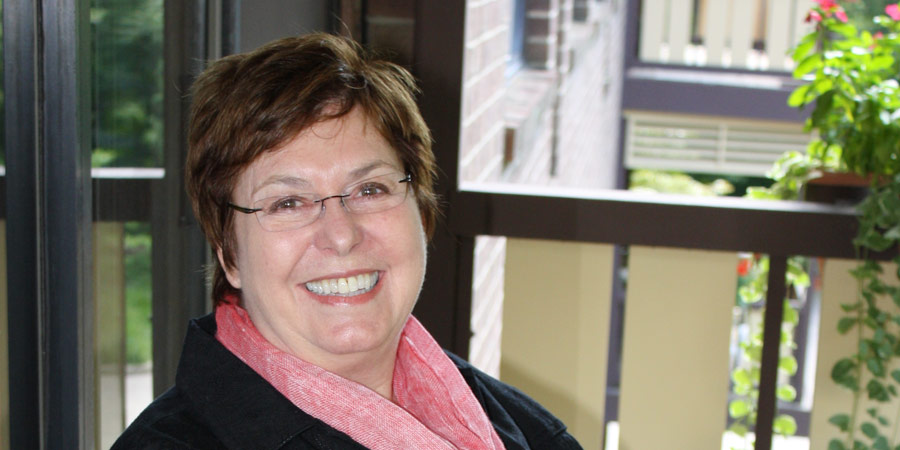
<p class="article-body"> When Carol Colgan stepped off the flight from her last business trip before retirement in 2009, she didn’t think twice about the clogged feeling in her right ear. The veteran traveler had experienced her fair share of discomfort from flying. A few days later, when her ear still had not returned to normal, she sought help from her GBMC primary care physician Sarah Whiteford, MD. After a regimen of antibiotics provided no relief, Ms. Colgan was referred to Brian Kaplan, MD, FACS, Chairman of the Department of Otolaryngology. <br> <br> A hearing test confirmed that the “stopped up” feeling in Ms. Colgan’s right ear was in fact hearing loss. Dr. Kaplan delivered the news that she had suffered 100 percent hearing loss in her right ear and that it was, unfortunately, likely permanent. “I was shocked,” recalls Ms. Colgan. “I didn’t understand how my hearing could just vanish.” <br> <br> “The cause of Ms. Colgan’s hearing loss is unknown,” says Dr. Kaplan. “One theory is that the change in barometric pressure caused an injury to her inner ear, resulting in sudden hearing loss.” <br> <br> Although a cause could not be pinpointed, Dr. Kaplan was quick to suggest a solution: the Baha implant. This device is used to treat patients like Ms. Colgan, who experience single-sided deafness, or unilateral sensorineural hearing loss. Baha is a surgically implanted device that allows sound to be conducted through the bone, rather than the middle of the ear. <br> <br> In May 2010, Dr. Kaplan implanted a small titanium screw into the bone behind Ms. Colgan’s right ear during an outpatient procedure. <br> <br> “I thought the surgery was going to be painful, but I was pleasantly surprised,” she says. “I didn’t even need to take any of the prescribed pain killers afterwards.” <br> <br> Three months later, when the titanium screw had merged (osseointegrated) with the bone, Ms. Colgan was fitted for the Baha hearing device. A sound processor hooks onto the screw, which transfers the sound vibrations from the processor to the implant. The implant sends sound vibrations to her functioning ear, where it can be converted into nerve impulses that travel to the brain, allowing Ms. Colgan to hear. <br> <br> </p> <blockquote> “After the implant, I was finally able to get back to my normal life. I could resume being active." </blockquote> <br> <br> <div class="end-of-story"> </div>
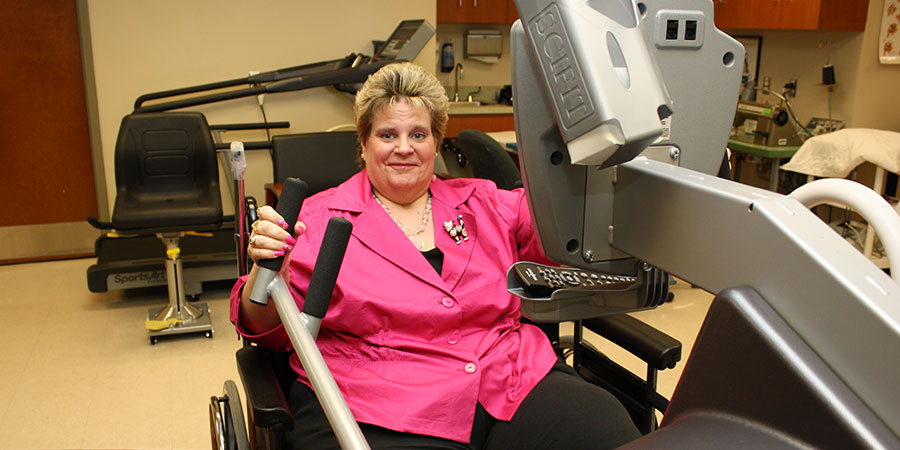
<p class="article-body"> In August 2011, Rose Gauza celebrated a special milestone in her life. “I went back to teaching fourth grade after spending one year out of work due to complications of lymphedema,” explains Ms. Gauza. Lymphedema causes fluid to build up in the arms or legs, triggering severe swelling. “I was deathly ill with swelling, open wounds and morbid obesity,” she says. “My legs were filled with lymphatic fluid. Mobility was painful, nearly impossible. I felt hopeless.” <br> <br> </p> <figure class="image-left"> <img src="/sites/default/files/hg_features/hg_post/68222bcac3f5dfbb7cd2cdc81e3a800f.jpg"> <figcaption> Rose Gauza is back in the classroom teaching fourth grade after suffering life-threatening complications from lymphedema. </figcaption> </figure> Ms. Gauza’s life began to turn around after she sought treatment at GBMC. She worked for months with Virginia Moratz, oTR, CHT, CLT, Director of the Greater Baltimore Lymphedema & Rehabilitation Center, and Medical Director Alan Kimmel, MD, to control her swelling. Brent Birely, MD, of the Wound Care Center, performed surgery to help heal her infected leg wounds. Although lymphedema is not curable, it can be managed through Complete Decongestive Therapy, which may include manual lymphatic drainage, bandaging, exercise therapy, proper diet and wearing compression garments on a daily basis. <br> <br> “This experience helped me become independent again. My goals were to regain my health and return to teaching — my passion. The phenomenal staff at the Lymphedema and Wound Care centers gave me a second chance to live,” says Ms. Gauza. <br> <br> As she celebrated her progress and prepared for her return to the classroom, another patient was just learning about her own diagnosis. For Lori Lautenbach of Traverse, Michigan, painful swelling in her legs was just something she lived with. “I’ve dealt with leg swelling my entire life. My doctors never suggested that there was a medical cause for it,” she explains. That all changed after meeting Dawn Roelofs, RN, a nurse at the Lymphedema & Rehabilitation Center, online. Ms. Roelofs noticed Ms. Lautenbach’s leg swelling in a Facebook photo, and recommended a lymphedema assessment. <br> <br> Ms. Lautenbach traveled to GBMC in August 2011 for a consultation with Dr. Kimmel, who confirmed the diagnosis. “Comprehensive lymphedema care is not available in some states,” explains Dr. Kimmel. Patients like Ms. Lautenbach often come to GBMC from other states and countries for assessment or treatment of lymphedema. With new hope, Ms. Lautenbach has initiated treatment as prescribed by Dr. Kimmel. “It is a great relief to finally have answers and know that I can control this condition.” <br> <br> <div class="end-of-story"> </div>
<iframe class="embed-responsive-item" src="https://www.youtube.com/embed/xQMoWNt6vak" allowfullscreen="allowfullscreen"></iframe> <p class="article-body"> Tony Sartori sought out a second opinion on clinical cardiovascular care from Dr. Reed Riley, a Johns Hopkins Cardiologist who practices on the medical campus of Greater Baltimore Medical Center. Learn more about Johns Hopkins Cardiology at GBMC and how the benefit of an academic medical center is provided in the comfort of a suburban setting. </p>