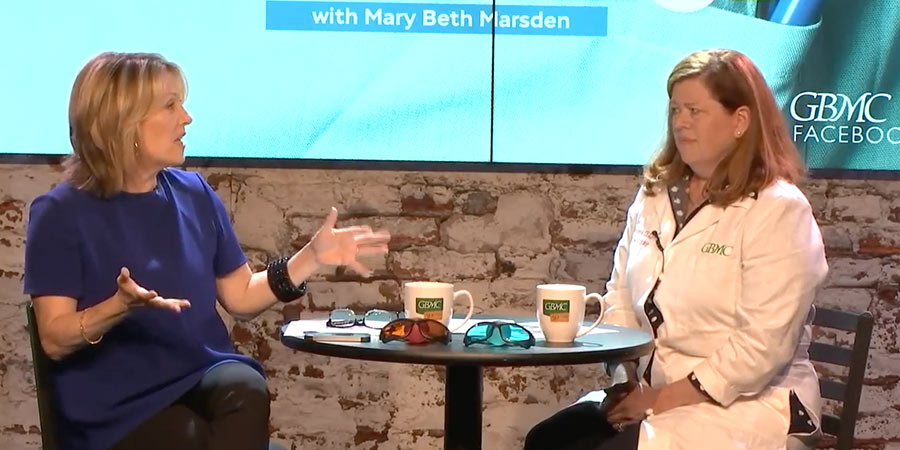
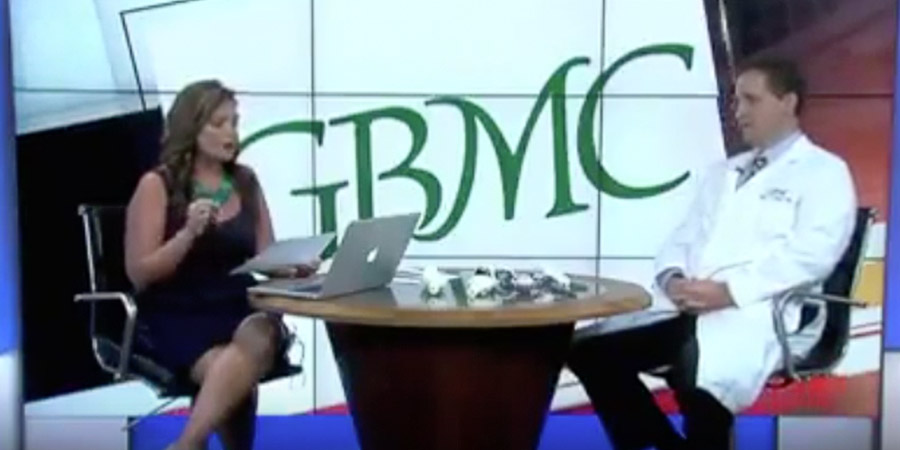
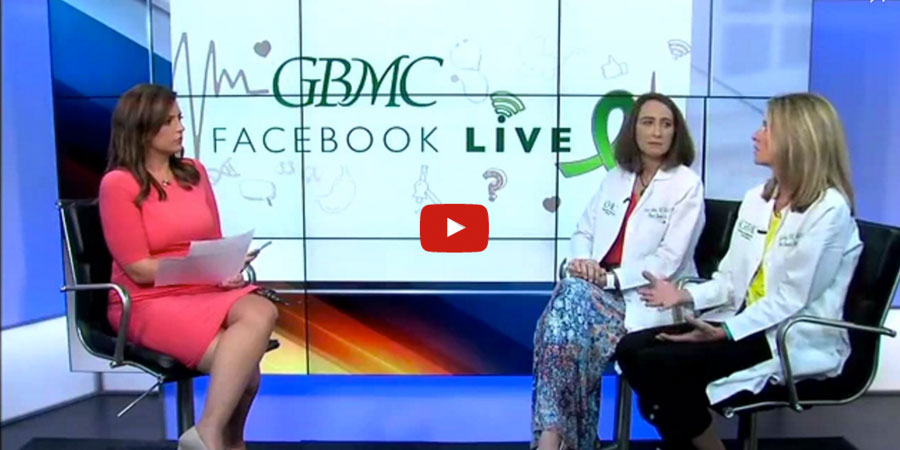
<iframe class="embed-responsive-item" src="https://www.youtube.com/embed/hkXhTed8ZRA" allowfullscreen="allowfullscreen"></iframe> <p class="article-body"> Are you worried what might happen if you sneeze or laugh? Do you have to get up several times a night to urinate? Do you find yourself sprinting to the bathroom with sudden or frequent urges to empty your bladder? If you’re a woman and you answered yes to any of these questions, you may be one of the approximately 68% of women who are living with incontinence. Dr. Stephanie Jacobs, a GBMC urogynecologist, wants you to know that there’s no reason to be embarrassed and there are treatments that can help. She and Mary Beth Marsden, host of Greater Living with Mary Beth Marsden, talked about the symptoms and treatments for urinary incontinence and pelvic organ prolapse and why women don’t need to grin and bear these conditions. <br> <br> “Incontinence affects more women than most people realize,” explains Dr. Jacobs. “And a lot of these women just aren’t comfortable talking about it, so they try to manage and put off seeing a doctor until the symptoms are really interfering with their quality of life. But you don’t have to live with incontinence. Depending on what the cause of the incontinence is, there are a range of treatments that can get symptoms under control, so you can get back to doing what you enjoy.” <br> <br> While doctors don’t know exactly what makes a woman likely to become incontinent, they do know that age, pregnancy and vaginal delivery, and genetics may all play a role. Treatment options range from Kegel exercises, physical therapy, and losing weight to Botox injections in the bladder and surgery. <br> <br> For women living with pelvic organ prolapse (a condition where the muscles and ligaments supporting the pelvic organs weaken, allowing the pelvic organs to drop lower in the pelvis and create a bulge in the vagina), whether or not they choose to treat this bothersome, but not dangerous condition depends on whether the discomfort affects their quality of life. “If the symptoms of prolapse or incontinence are bothering you, talk to a urogynecologist and find out what your options are. There’s nothing to be afraid of and there is help,” adds Dr. Jacobs. </p>
<iframe class="embed-responsive-item" src="https://www.youtube.com/embed/JfYDuS3fdeQ" allowfullscreen="allowfullscreen"></iframe> <p class="article-body"> Parents may overlook their children's eye health, especially when they are young. Dr. Mary Louise Collins, Chairman of the Department of Ophthalmology at GBMC sat down with ABC2's Ashley James to discuss children's eye health and important questions to ask your child's doctor about their vision. Vision screenings and eye exams should be a regular part of your child's health and wellness checks. An easy way to remember this is to schedule vision screenings as part of your child's <a href="/node/3018">back-to-school routine</a>. According to Dr. Collins, only about 30% of children get an eye exam before starting school. <br> <br> Schools conduct periodic vision screenings for children, usually in the 5th and 8th grades, but formal eye exams should start around age three. The difference between a vision screening and a comprehensive eye exam is simple: vision screenings detect reduced vision in one or both eyes, whereas a comprehensive eye exam looks at the medical health of the eye (retina, optic nerve, etc.). The team of ophthalmologists at GBMC has specialized equipment and screening techniques that allow them to evaluate eye health without having to use a vision chart. This is especially helpful for young children who are preverbal or cannot yet read. <br> <br> While some eye issues don't show symptoms, there are a few telltale signs that your child may have vision problems. If your child is frequently squinting or has trouble reading the board in school, he or she should be taken for a vision screening or eye exam. During the evaluation, your doctor can decide what the best solution is for your child. <br> <br> As children get older, especially once they reach their teens, the question of contact lenses starts to come up more frequently. Many parents want to know at what age it is appropriate to allow their child to wear contacts, but there is no magic number. Dr. Collins says that although her practice doesn't usually prescribe contacts until middle school, maturity is a much better indicator than age when it comes to whether or not your child should get contacts. Some ten year olds are better prepared and more likely to take care of their contacts than other sixteen year olds. Throughout the conversation, Dr. Collins discussed the importance of eye protection in sports and how screen time can affect your child's development. She also answered pre-submitted and live questions from viewers. </p>
<iframe class="embed-responsive-item" src="https://www.youtube.com/embed/Kl4JrEvepHo" allowfullscreen="allowfullscreen"></iframe> <p class="article-body"> Have you ever wondered what it would be like to have bariatric weight loss surgery? GBMC bariatric weight loss patient AND chef, Michael Salamon as he shares his story with Don Scott on Facebook Live. </p>
<iframe class="embed-responsive-item" src="https://www.youtube.com/embed/iaJcZRb3gow" allowfullscreen="allowfullscreen"></iframe> <p class="article-body"> <strong>How much is appropriate and when?</strong> <br> <br> With the drastic increase in technology that has happened over the past few years, parents are often left with questions about what's healthy for their children and teens. GBMC primary care physician Dr. Rajani Tadimalla and WPOC radio host Michael J On Air answer your questions about how much screen usage is too much and how to help your kids form healthy screen habits. <br> <br> The seemingly simple question "at what age should I let my child have a cell phone?" doesn't have a simple answer. According to Dr. Tadimalla, maturity is much more important than age. Parents should ask themselves whether or not they trust their child to safely use cell phones and the Internet. Your children may experience a lot of peer pressure from their friends and once they have unlimited access to the internet, it's very difficult to monitor whether or not the content they are viewing is age appropriate. <br> <br> Despite these gray areas, there are standard recommendations for screen times that have been put out by the American Association of Pediatrics (AAP). According to the AAP, children under the age of 18 months shouldn't be exposed to any screen time. Children between the ages of 2 and 6 should have a maximum of one hour of screen time per day. When children are in these formative stages of their lives, they are developing fine motor skills and need to physically be active rather than watching a screen. Once they get past the age of 6, parents need to ease their children into the media world rather than giving them full access right away. It is important to set clear ground rules about what they are and are not allowed to do. Dr. Tadimalla suggests giving your kids a test run with WiFi access to see if they follow the rules that you have set and use the Internet appropriately. Treat screen time as a privilege and take the privilege away if your child doesn't follow the rules that you have set for them. </p>
<iframe class="embed-responsive-item" src="https://www.youtube.com/embed/2T7KKmNY2N8" allowfullscreen="allowfullscreen"></iframe> <p class="article-body"> Every year parents are given a long list of things to do and supplies to buy to start off the school year. Although it may not be on the list sent by the school, a back-to-school checkup should be part of your child's annual routine. Dr. Kevin Carter, family physician for GBMC at Owings Mills, and Magic 95.9 multi-media personality April Watts address your questions about back-to-school checkups and what children must have before the school year begins to keep them healthy. <br> <br> Parents often ask why an annual checkup is necessary if their child isn't having any health problems. Dr. Carter says that the main goal of your child's back-to-school checkup is prevention; it's better to intercept a potential problem early than to have an emergency later. The appointment gives you the chance to address any concerns you may have with the doctor and it allows the doctor to make sure that your child's growth and development are on track. Annual checkups include tests such as vision and hearing screenings, blood pressure checks, and mental health evaluations, as well as vaccination updates. <br> <br> In the past few years, there has been a growing concern about the safety of vaccines. Dr. Carter addressed this issue head on. When asked if vaccines were dangerous, he responded "quick, easy answer: no." Vaccines are not linked to autism and do not make you sick. They have a hugely positive effect on the health of you and those around you and are the reason that we no longer have to worry about many dangerous diseases like polio and smallpox. They also greatly reduce your likelihood of catching the flu, pneumonia, shingles, and other viruses. Parents have expressed apprehension about how many vaccines their children are getting, especially since the amount has increased substantially since their childhood. According to Dr. Carter, this is because: <br> <br> </p> <blockquote> "There have been so many medical advancements in recent years that we've been able to develop more. The vaccines that are given to your child have gone through such intensive research and trials to prove safety. Nothing is going to be on the standard, recommended schedule that isn't proven to be absolutely safe." </blockquote> Dr. Carter and Ms. Watts also discussed when it's appropriate to keep your child home from school and answered live and pre-submitted questions about mental health in children, vaccines, and more.
<iframe class="embed-responsive-item" src="https://www.youtube.com/embed/JvCV5m79iw4" allowfullscreen="allowfullscreen"></iframe> <p class="article-body"> With the start of the fall recreation and school athletic season underway, Dr. James Baronas, family medicine physician with GBMC at Joppa Road, whose medical specialty is orthopaedics and sports medicine, discussed sports related injuries and concussions with host John Lazarou. <br> <br> Dr. Baronas defines a sports injury as "anything that can cause an athlete or child to miss time from their sport." Some of the most common injuries are sprains, strains, fractures, and concussions. There are a lot of misconceptions about what exactly a concussion is and how it is diagnosed. In essence, a concussion is any mild traumatic brain injury. The main symptoms are headache, dizziness, vision changes, light sensitivity, and unexplained mood changes. Because many of the symptoms can be attributed to other health concerns, concussions can be difficult to diagnose. Despite the potential difficulty with diagnosis, it's important to err on the side of caution, especially with younger athletes. If you are unsure whether or not the athlete you love is suffering from a concussion or other injury, be sure to make an appointment with his or her primary care physician for evaluation. <br> <br> There are several things that athletes can do to decrease their risk of injury. One of the most important is getting a full eight hours of sleep each night. This may not seem directly related to sports, but studies have found that children and teenagers who don't get eight hours of sleep each night are significantly more likely to sustain an injury than those who do. Proper hydration is also important for avoiding injury. In the short term, it prevents heat stroke and heat cramps, and in the long term, it helps to prevent kidney damage and other issues. An easy way for kids to tell if they are getting enough water is for them to look at their urine color. The lighter the urine, the better. Dr. Baronas said that the color should be close to clear; when it is darker than that, kids know they aren't getting enough water. If you suspect an athlete has sustained an injury, Dr. Baronas says "when in doubt, hold them out." </p>
<iframe class="embed-responsive-item" src="https://www.youtube.com/embed/RJFOFcNi9W8" allowfullscreen="allowfullscreen"></iframe> <p class="article-body"> The voice is something that's often taken for granted, but it still needs to be taken care of. Laryngologist Dr. Kenneth Fletcher and speech-pathologist Melissa Bidlack from the Johns Hopkins Voice Center at GBMC recently sat down with Gina Crash from Today's 101.9 Morning Show to talk about the best ways to keep your voice healthy. <br> <br> Vocal cords (also called vocal folds) are muscles that vibrate to create tones, much like a guitar string, as well as open and close to control the airflow in and out of the lungs. Just like any other muscle, vocal cords can be overused or strained, so it's important to pay attention when it feels like something might be wrong. The most common vocal injuries are nodules, polyps, and hemorrhaging. These are generally caused by infection, overuse, or trauma to the vocal cords. Some symptoms include hoarseness, soreness, and the inability to sustain the voice for more than a short period of time. <br> <br> Many people think of singers and actors as being the only ones to suffer from voice problems, but any person whose profession depends on a healthy voice can be seriously affected. Teachers (especially music teachers), lawyers, broadcasters, and even doctors depend heavily on their voices to do their jobs well. <br> <br> The Johns Hopkins Voice Center at GBMC is unique in that laryngologists and speech language pathologists work hand in hand with each patient to decide the best treatment options. Once the vocal folds have been visualized and a diagnosis has been made, the team is able to prescribe medication, therapy, potential surgery, or a combination of these. <br> <br> Voice therapy is also a team effort between the patient and the therapist. Ms. Bidlack describes therapy as "educating patients about the voice, giving them some exercises to promote healing, and then helping them to keep their voice healthy for long term." The patient must be willing to commit to sessions for several weeks or more, but voice therapy can greatly improve a patient's condition and may help to avoid potential surgery. During their conversation, Dr. Fletcher and Ms. Bidlack answered live and pre-submitted questions concerning the prevention of vocal injury, how other body issues may affect the voice, and general voice health. </p>
<iframe class="embed-responsive-item" src="https://www.youtube.com/embed/rqvLVBNUe4Q" allowfullscreen="allowfullscreen"></iframe> <h2> Greater Living with Mary Beth Marsden </h2> There are a lot of reasons why people get tattoos...and there are a lot of reasons why many people want to get theirs removed. Cathleen Barenski, CRNP from the Vein Center at GBMC recently spoke with Baltimore Broadcast Journalist Mary Beth Marsden to talk about the why and the how of tattoo removal as well as to give insight into the growing industry of laser hair removal. <br> <br> It turns out that around 50% of women over the age of 50 that have a tattoo want to get it removed and they aren't the only ones. Whether there is an emotional reason to get one removed, or it's because of lifestyle and body changes, the demand for tattoo removal is higher than it's ever been. So how does it work? The laser used in treatment breaks up the ink particles in the skin allowing them to be taken away by the bloodstream. Over time, the body is able to break down some of this ink on its own, which makes older tattoos easier to remove than newer ones. <br> <br> When describing the removal process Ms. Barenski explains that "tattoos were designed to be permanent, so we have to take them off very carefully and over time." The number of sessions needed to fully remove the tattoo depends on several factors. The color of the ink, the number of colors used in the tattoo, where it is on the body, and the person's skin type all affect the treatment of the tattoo; however, a person usually has to go through 8 sessions to completely remove the tattoo with 4 to 6 weeks in between each session. <br> <br> While hair removal also includes the use of lasers, they are completely different than those used in tattoo removal. These lasers target melanin rather than the hair itself in order to stop hair in its earliest stage of growth. The process effectively stops the growth of hair rather than removing the hair that is already there — patients are actually asked to come into their appointment with the area already shaved. Patients are also asked to avoid waxing, plucking, and using other hair removal products for a month before they start their treatment so that hair follicles are intact and the lasers have something to target. During the conversation, Ms. Barenski answered live and pre-submitted questions about the process, results, potential for side effects, and overall experience for both tattoo and hair removal.
<iframe class="embed-responsive-item" src="https://www.youtube.com/embed/crlu0MoCZtI" allowfullscreen="allowfullscreen"></iframe> <p class="article-body"> Every month, GBMC holds a Facebook Live cooking demonstration featuring healthy recipes from <a href="http://thesleevedchef.com/" target="_blank">The Sleeved Chef</a>, Michael Salamon. Michael graduated from the Culinary Institute of America and is passionate about “teaching cooking techniques and recipes to pre- and post-operative bariatric patients.” He had a type of bariatric surgery known as a sleeve gastrectomy in September 2016 and enjoys sharing his knowledge of cooking with fellow weight loss patients. Co-hosting the demonstration with him is Jana Wolff, RD, LDN, Director of Nutrition for GBMC’s Comprehensive Obesity Management Program, where Michael was treated. <br> <br> <b>Ingredients</b> <br> 3 large eggs, separated <br> 1/8 tsp cream of tartar <br> 1/3 cup fat-free Greek yogurt <br> 1 turkey sausage patty <br> 1 egg <br> 1 slice cheddar cheese <br> <br> <a href="https://www.youtube.com/watch?v=crlu0MoCZtI" target="_blank">Watch the Turkey Sausage, Egg and Cheddar Breakfast Sandwich cooking demonstration here</a> <br> <br> <b>Directions</b> <br> <i>Cloud Bread</i> <br> </p> <ol> <li> Separate three of the eggs into yolks and whites. </li> <li> Whip egg whites and cream of tartar to stiff peaks. </li> <li> Whisk together egg yolks and fat-free Greek yogurt. </li> <li> Whip a small amount of the egg whites into egg yolks. </li> <li> Fold egg yolks into egg whites until fully combined. </li> <li> Distribute batter into six segments on a baking tray lined with parchment paper or a Silpat. <i>NOTE</i>: The mixture should hold its shape and look like a fluffy cloud. </li> <li> Bake in a 300-degree oven for 10-15 minutes or until golden brown. </li> <li> Remove cloud bread from tray and place on a cooling rack. </li> </ol> *Cloud bread will store in the refrigerator for 2-3 days. <br> <br> <i>Breakfast sandwich</i> <br> <ol> <li> Put extra virgin olive oil in a sauté pan and warm over medium heat. </li> <li> Season the turkey sausage with salt and pepper. </li> <li> Place turkey sausage in sauté pan and cook for 3 minutes on each side until golden brown. </li> <li> Melt cheddar cheese on turkey sausage and place both on a piece of cloud bread. </li> <li> Crack the remaining egg on a flat surface and put it into a bowl, checking for any shell. </li> <li> Scramble the egg in the same pan as turkey sausage; add additional olive oil as needed. </li> <li> Season the egg with salt and pepper, place on top of turkey sausage and add a second piece of cloud bread. </li> </ol> Eat and Enjoy!! <br> <br> <b>Nutrition Information </b> <br> Recipe yields 1 serving <br> Calories:170 <br> Total Fat: 8g <br> Saturated Fat: 27g <br> Cholesterol: 110mg <br> Sodium: 350mg <br> Protein: 18g <br> Carbohydrate: 6g Recipe courtesy of Michael Salamon, <a href="http://thesleevedchef.com/" target="_blank">The Sleeved Chef</a>.
<iframe class="embed-responsive-item" src="https://www.youtube.com/embed/xUNqEhQJowQ" allowfullscreen="allowfullscreen"></iframe> <p class="article-body"> <strong>Melanoma survivor Dr. Kevin Ferentz shares his advice for staying safe in the sun</strong> <br> <br> When he was in his fourth year of medical school, Dr. Kevin Ferentz, lead physician and family medicine specialist at GBMC at Owings Mills, noticed that a mole on his back was changing. Since he was doing his rotation in dermatology, he asked the physician overseeing him to take a look. Unfortunately, tests found that the mole was melanoma, the most serious type of skin cancer. He underwent surgery to remove the cancer and it has not returned, though he has had a number of basal cell and squamous cell skin cancers in the intervening years. <br> <br> Today, Dr. Ferentz is a strong advocate for making sure you take the right precautions to protect yourself from the damaging rays of the sun. “Your first line of defense is sunscreen,” he explained. “But people rarely use enough or reapply it every two hours like they’re supposed to. In fact, most people use half as much sunscreen as needed to protect themselves. And they also forget that if the sun’s out, you can get burned, whether it’s summer or winter.” <br> <br> He also noted that there’s no need to spend more for name brand sunscreen, since brand name and generic products are both evaluated by the FDA and contain the same active chemical ingredients. In addition to always using sunscreen when you’re out in the sun, Dr. Ferentz explained that sunglasses are another important part of sun protection, since you can also get skin cancer in your retina. Dr. Ferentz shared his advice about who needs a yearly skin check, whether you should have any suspicious moles checked by your primary care physician or if you need a dermatologist, how old your kids should be before you start using sunscreen to protect their skin, and why you should avoid sunscreen/bug repellant combo products. He also pointed out that while lighter skinned people are at greater risk for both sun damage and skin cancer, African Americans and other people with darker skin can and do get skin cancer. “Remember, Bob Marley died of melanoma,” he said. </p>
<iframe class="embed-responsive-item" src="https://www.youtube.com/embed/fPf_GNe1E0Q" allowfullscreen="allowfullscreen"></iframe> <h5 style="text-align: right"> * For closed captioning, click the <img src="/sites/default/files/hg_features/hg_post/edd9ba121c174d97705f2b40e511e38b.png" style="width: 20px;"> button in the bottom-right of the video. * </h5> <strong>Listen up! Dr. Regina Presley on how to protect against hearing loss</strong> <br> <br> What comes to mind when you think about hearing loss? A lot of people think that hearing loss is mostly a problem older people face, but Dr. Regina Presley, Senior Cochlear Implant Audiologist at GBMC, put that assumption to rest in her discussion with Greg Carpenter, host of Today’s 101.9 Morning Show. “There are 40 million people in the U.S. living with hearing loss. 1.7 million of them are kids and 60% are people who are still in the workforce,” she explained. <br> <br> And while Greg now regrets his years of concert going without ear protection, Dr. Presley explained that damage from loud sounds is just one of the potential causes of hearing loss. Others include complications during pregnancy or delivery, genetic conditions, wax or fluid buildup in the ear, and head trauma, while ringing in the ears can be the result of high blood pressure, a side effect of medications, or a sign that you’re overdoing it with the caffeine. <br> <br> The effects of hearing loss reach farther than you might think. Studies have linked hearing loss to an increased risk for diabetes, obesity, heart health problems, depression, and dementia, which makes taking steps to protect your hearing even more important. One of the biggest threats to your hearing may come from a very small source—your earbuds. Dr. Presley’s advice is to listen at no more than 60% volume for no more than 60 minutes. <br> <br> And how do you broach the often tough subject of hearing loss with a family member or friend? “One thing that often works is to express your concerns in a non-judgmental way,” said Dr. Presley. “Let your loved one know he or she is missing out on what the grandkids are saying, for example, and that might motivate them to see an audiologist.” Online quizzes that let you add up how many signs of hearing loss you’re experiencing can be another good, non-confrontational approach. Dr. Presley recommended that, if you think you or your child is having hearing problems, get a baseline hearing test. “You may be doing damage to your hearing without even know it,” she added. “So educate yourself on hearing loss and prevention, see your doctor, and if you’re a music fan, rock responsibly.”
<iframe class="embed-responsive-item" src="https://www.youtube.com/embed/3HZ1364mzh8" allowfullscreen="allowfullscreen"></iframe> <p class="article-body"> Dr. Johnston, joined Orthopedic Specialists of Maryland at GBMC as a board-certified orthopedic surgeon specializing in hip and knee replacements and geriatric hip fracture prevention. </p>
<iframe class="embed-responsive-item" src="https://www.youtube.com/embed/ufanT2g0rnc" allowfullscreen="allowfullscreen"></iframe> <p class="article-body"> Is your idea of a treat a chocolate chip cookie, bowl of ice cream, or slice of pie? Then like most Americans, your sweet tooth may be making it hard for you to lose weight and might even be putting your health in jeopardy by increasing your risk of diabetes and other serious diseases. Dr. Elizabeth Dovec, Director of GBMC’s Comprehensive Obesity Management Program, talked with Magic 95.9 host April Watts, who’s on her own quest to get healthier, about the negative impact sugar has on your health, how to making healthier eating choices, and why exercise alone isn’t the answer to weight loss. <br> <br> One shocking fact that Dr. Dovec shared was that while you should strive to eat less than 15 grams of sugar a day, including the sugar found in foods like ketchup, fruit juice, and pasta sauce, most Americans eat about 73 grams a day or 180 pounds of sugar a year! Why do we crave sugar? “Sugar is incredibly addictive,” said Dr. Dovec. “In fact, it’s eight times more addictive than crack cocaine. And while most people who want to decrease the sugar in their diet try to just cut back, the only approach that really works long-term is to quit cold turkey. You may have a few days of cravings and headaches, but you’ll find it easier to stick to and your health with really benefit.” <br> <br> If you still want something sweet to eat, Dr. Dovec recommends berries, which are sweeter than grapes or bananas. Whole fruits do contain natural sugar, but they also contain beneficial nutrients, enzymes, water, and fiber, so you can get your sugar fix in a healthy way. Dr. Dovec’s tip for not feeling hungry and keeping your cravings under control? Make sure you eat enough protein and healthy fats, which keep you full longer. Viewers also asked how to keep their kids from getting addicted to sugar, whether sugar increases your belly fat (an indicator of your risk for heart disease, diabetes, and other serious health problems), and whether honey or agave nectar are better choices than sugar. “To make real healthy changes in the way you eat, you have to figure out your ‘why’,” she added. “Set your goals, whether that’s being around to walk your kids down the aisle, feeling more comfortable in your own skin, or improving your self-esteem. Once you have your why, it’s easier to stick with your new, healthier eating habits.” </p>
<iframe class="embed-responsive-item" src="https://www.youtube.com/embed/PRB0gwkQ2H4" allowfullscreen="allowfullscreen"></iframe> <p class="article-body"> Every month, GBMC holds a Facebook Live cooking demonstration featuring healthy recipes from <a href="http://thesleevedchef.com/" target="_blank">The Sleeved Chef</a>, Michael Salamon. Michael graduated from the Culinary Institute of America and is passionate about “teaching cooking techniques and recipes to pre- and post-operative bariatric patients.” He had a type of bariatric surgery known as a sleeve gastrectomy in September 2016 and enjoys sharing his knowledge of cooking with fellow weight loss patients. Co-hosting the demonstration with him is Jana Wolff, RD, LDN, Director of Nutrition for GBMC’s Comprehensive Obesity Management Program, where Michael was treated. <br> <br> <b>Ingredients</b> <br> <br> <i>Spicy Tofu</i> <br> 1 lb extra firm tofu, pressed <br> 1 tbsp peanut butter <br> 3 tbsp light soy sauce <br> 2 tbsp Sriracha <br> 2 tbsp rice vinegar <br> 2 tsp sesame oil <br> 2 tsp finely minced ginger <br> <br> <i>Pad Thai</i> <br> 8 oz shirataki noodles <br> 2 tsp sesame oil <br> 1 red bell pepper, thinly sliced <br> 1 small yellow onion, thinly sliced <br> 2 carrots, thinly sliced <br> 1 Thai chili, minced <br> 1/2 cup cilantro, finely chopped <br> <br> <i>Spicy Pad Thai Sauce</i> <br> 3 tbsp low sodium soy sauce <br> 2 limes, juiced <br> 1 tbsp Sriracha <br> 3 tbsp vegetable broth <br> 1 tsp honey <br> 2 tsp garlic chili paste <br> 3 garlic cloves, minced <br> <br> <a href="https://www.youtube.com/watch?v=PRB0gwkQ2H4" target="_blank">Watch the Spicy Peanut Tofu Pad Thai cooking demonstration here</a> <br> <br> <b>Instructions</b> <br> <i>Spicy Tofu </i> <br> Press Tofu <br> </p> <ol> <li> Place a dry paper towel on a plate and the extra firm tofu on top. </li> <li> Place a dry paper towel on top of the tofu and a similar plate on top of the paper towel. </li> <li> Place a weighted object (cans work well) on top of the plate and place in the fridge. </li> <li> Drain the extra water every 30 minutes or until no water is drained. </li> <li> Place tofu aside. </li> </ol> Prepare Tofu & Marinade <br> <ol> <li> Whisk all ingredients for the tofu marinade in a mixing bowl thoroughly and pour into a quart freezer bag. </li> <li> Place a cast iron skillet on the stove over a medium flame and pour 1 tbsp of sesame oil in the skillet. </li> <li> When you smell the sesame oil, add the tofu to the pan and brown it on both sides. </li> <li> Remove tofu from the pan and place on a cutting board to rest for 2 minutes. </li> <li> Large dice the tofu, place it in the marinade, close the bag and toss liberally. </li> </ol> <i>Spicy Pad Thai Sauce</i> <br> <ol> <li> Whisk all ingredients together in a stainless steel mixing bowl and reserve. </li> </ol> <i>Shirataki Noodles</i> <br> <ol> <li> Drain the Shirataki noodles in a colander and rinse thoroughly with cold water. </li> <li> Bring water to a boil and add salt. </li> <li> Place the Shirataki noodles in the boiling water and cook for 2 minutes. </li> <li> Drain and reserve the Shirataki noodles. </li> </ol> <i>Putting it All Together</i> <br> <ol> <li> Thinly slice red bell pepper, yellow onion and carrots. </li> <li> Mince the Thai chili pepper. </li> <li> Finely chop cilantro. </li> <li> Place all ingredients on a plate. </li> <li> Place a cast iron skillet on the stove over a medium flame and add 2 tsp of sesame oil to the pan. </li> <li> When you smell the sesame oil, add the onion, bell pepper, carrot and Thai chili to the pan. Season with salt and pepper. </li> <li> Sauté all ingredients for 2-3 minutes until soft. </li> <li> Add the diced spicy tofu to the pan. Sauté for 1 minute. </li> <li> Add the spicy pad thai sauce and shirataki noodles to the pan. </li> <li> Toss all ingredients together and add cilantro. </li> <li> Serve in a bowl and enjoy!! </li> </ol> <b>Nutrition Information</b> <br> Recipe yields 4 servings Calories: 220 <br> Total Fat: 14g <br> Saturated Fat: 2g <br> Cholesterol: 0mg <br> Sodium: 960mg <br> Protein: 16g <br> Carbohydrate: 14g Recipe courtesy of Michael Salamon, <a href="http://thesleevedchef.com/" target="_blank">The Sleeved Chef</a>.
<iframe class="embed-responsive-item" src="https://www.youtube.com/embed/IX5ltp_Jw1A" allowfullscreen="allowfullscreen"></iframe> <p class="article-body"> You may have heard about clinical trials for new cancer treatments in the news, but what’s really involved in a clinical trial? If you or someone you care about has been diagnosed with cancer, a clinical trial may open the door to new treatments. Judy Bosley, Oncology Research Nurse Manager, and Pamela Nikoles, Oncology Research Nurse, who both work with patients in clinical trials at GBMC’s Sandra and Malcolm Berman Cancer Institute, talked with ABC2News Good Morning Maryland host Ashley James and answered viewers’ questions about the topic. <br> <br> A question on many viewers’ minds was how to find and become part of a clinical trial. Explained Judy and Pamela, “Your doctor can open the gate to clinical trials that are appropriate for you. If you’re interested in considering a clinical trial, do some homework before you meet with your doctor so you’re ready to ask questions about available trials if your doctor doesn’t bring up the subject.” How do you know what trials are available? There are several websites that list this information, including <a href="https://clinicaltrials.gov/" target="_blank">ClinicalTrials.gov</a>, <a href="http://www.eviticlinicaltrials.com/Services/" target="_blank">TrialCheck</a>, and the<a href="/node/2351" target="_blank"> clinical trials section</a> of GBMC’s website. Depending on the site, you can search by type of cancer, drug name, or available trial locations. <br> <br> Some concerns that viewers raised include the cost of participating in a trial (most costs are covered by insurance, with any additional costs covered by the organization sponsoring the trial), whether you can decide to leave a trial, and whether you might receive a placebo, a treatment that doesn’t contain any active ingredients, rather than an actual medication. “Using a placebo isn’t considered ethical in a cancer treatment trial,” said Judy. “You either receive the standard treatment or the standard treatment plus the trial medication. The goal of the trial is to find out if the added medication improves the outcome of the standard treatment.” The benefits of taking part in a clinical trial are many. You have access to new treatments, often years before they’re available to the general public, and you’re closely followed by a specialized medical team that monitors your health and is available to answer any questions. Added Pamela, “Clinical trials not only help the people who participate, they also help patients in the future by advancing the science of cancer treatment.” </p>