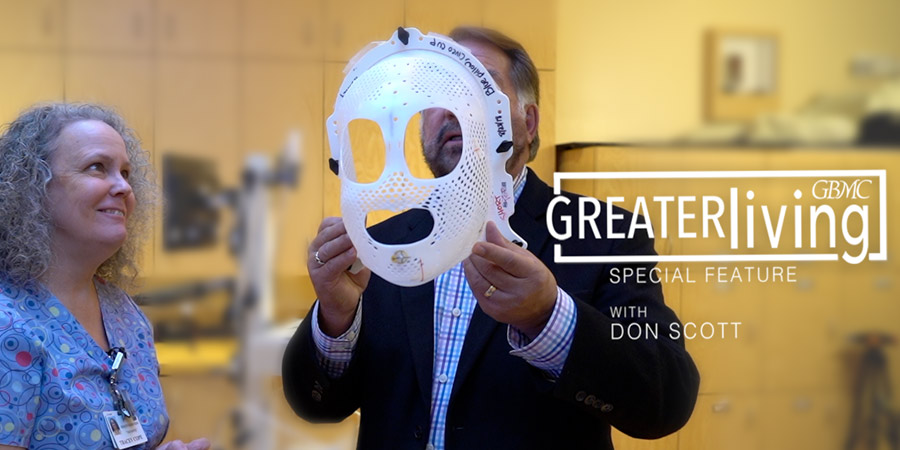
<iframe class="embed-responsive-item" src="https://www.youtube.com/embed/Rg5NZz1W9WM?rel=0&ecver=1" allowfullscreen="allowfullscreen"></iframe> <p class="article-body"> When it comes to cancer radiation therapy, the goals are the safe destruction of cancer cells and tumors with minimal side effects, the shortest possible treatment time and negligible damage to healthy surrounding tissue — no more, no less. <em>Greater Living</em> host Don Scott visited with Senior Radiation Therapist, Tracey Cope, to get up close and personal with this groundbreaking technology. </p>
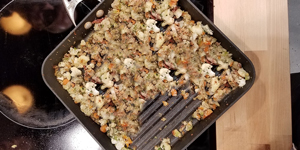
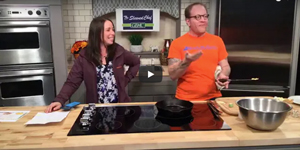
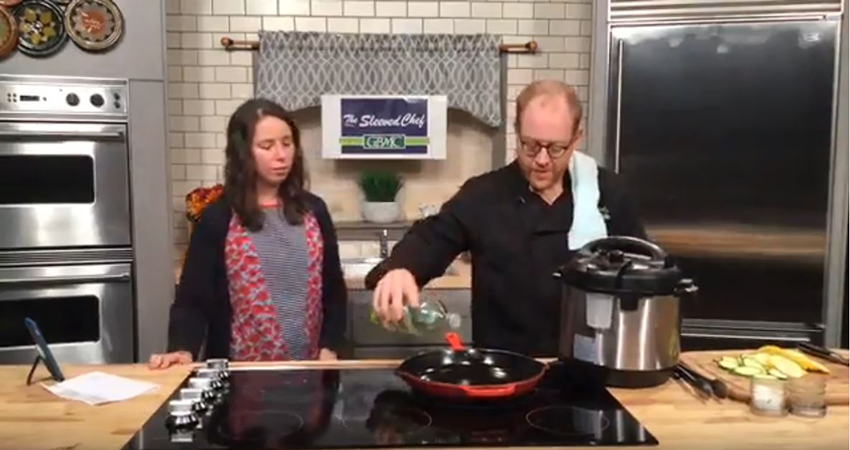
<iframe class="embed-responsive-item" src="https://www.youtube.com/embed/89mAcIHLDkQ" allowfullscreen="allowfullscreen"></iframe> <p class="article-body"> Every month, GBMC holds a Facebook Live cooking demonstration featuring healthy recipes from The Sleeved Chef, Michael Salamon. Michael graduated from the Culinary Institute of America and is passionate about “teaching cooking techniques and recipes to pre- and post-operative bariatric patients.” He had a type of bariatric surgery known as a sleeve gastrectomy in September 2016 and enjoys sharing his knowledge of cooking with fellow weight loss patients. Co-hosting the demonstration with him is Jana Wolff, RD, LDN, Director of Nutrition for GBMC’s Comprehensive Obesity Management Program, where Michael was treated. <br> <br> <strong>Ingredients</strong> <br> 1 large head cauliflower, cut into florets <br> 1 large onion, minced <br> 3 celery stalks, small diced <br> 3 carrots, peeled and small diced <br> ¼ cup pecans, rough chopped <br> 2 tbsp extra virgin olive oil <br> ½ tsp thyme <br> ½ tsp sage <br> ½ tsp oregano <br> ½ tsp rosemary <br> ½ tsp parsley <br> Kosher salt and black pepper to taste <br> <br> <strong>Directions</strong> </p> <ul> <li> Prepare cauliflower, onion, celery, carrots, and pecans. Set aside. </li> <li> Heat olive oil in a cast iron pan over medium heat. </li> <li> Sauté cauliflower until soft, about 3 minutes. </li> <li> Add onion, celery, and carrots; sauté until vegetables are translucent. Season with salt and pepper. </li> <li> Add pecans and sauté for an additional 1-2 minutes. </li> <li> Add thyme, sage, oregano, and rosemary; sauté for an additional 2-3 minutes. </li> <li> Remove from heat and add parsley. </li> </ul> <strong>Nutrition</strong> <br> <em>Recipe yields 6 servings</em> <br> <br> Calories: 126 <br> Fat: 8.7g <br> Saturated Fat: 1.1g <br> Cholesterol: 0mg <br> Sodium: 62.4mg Protein: 3.1g Carbohydrate: 11.9g
<iframe class="embed-responsive-item" src="https://www.youtube.com/embed/iYwzqV1FGhs" allowfullscreen="allowfullscreen"></iframe> <p class="article-body"> While the number of Americans who smoke cigarettes has decreased significantly in the U.S., especially for teens and young adults, there are still 30 million people in this country who do smoke. Though cigarette use is less common, vaping or the use of e-cigarettes has grown quickly. And it’s the habit of choice among teens and young adults, even ones as young as middle school age. Dr. Kevin Ferentz, Chairman of Family Medicine at GBMC Health Partners, shared his 35 years’ experience helping people quit smoking and his concerns about the rise of vaping with Mary Beth Marsden. <br> <br> “Cigarette smoking is the most important cause of disease and premature death in the U.S.,” he explained. “Half a million people die in this country each year because of cigarette smoking, which adversely affects every organ system in the body. And though some people claim vaping is a safer alternative, the truth is we just don’t know. There’s no data and the production of vaping devices and liquids is completely unregulated by the FDA and the EPA. We don’t know what’s in these liquids and many devices contain lead, which can be inhaled when the device is heated. We do know that carcinogens are found in the urine of people who vape and that e-cigarettes are frequently an entry into cigarette smoking for teens.” <br> <br> To get people to quit smoking or vaping, Dr. Ferentz focuses on the positive effects of quitting, including decreasing the risk of lung cancer, COPD, and other lung diseases and saving more than $2,300 per year if you’re a pack a day smoker. He emphasized that the people who are most successful at quitting are those who take the time to prepare by writing down why they want to quit, identifying their smoking triggers, and telling everyone they’re quitting so they’re held accountable. <br> <br> He also dispelled that myth that quitting smoking means putting on a lot of weight and that medications that help you quit don’t work or are too risky. “Quitting smoking is the best thing you can do for your body,” he added. “Minutes after you quit, your risk of a heart attack decreases. And 15 years after quitting, your risk of dying is the same as people who have never smoked.” <br> <br> Dr. Robin Motter-Mast, Medical Director of Primary Care and Population Health at GBMC, discussed lung cancer screening for people at high risk. “85% of people who smoke have the potential to develop lung cancer,” she said. “It’s the leading cause of cancer-related death in the U.S. But screening people at high risk can help us catch the cancer earlier and reduce the number of lung cancer deaths.” <br> <br> People at high risk are those between the ages of 55 and 80 who smoked for more than 30 pack years (1 pack a day for 30 years or two packs a day for 15 years, for example), as well as current smokers and people who have smoked within the last 15 years. She noted, however, that before starting screening, it’s important to discuss the risks and benefits of being screened with your primary care physician. Dr. Motter-Mast also talked about COPD (chronic obstructive pulmonary disease), which is often related to cigarette smoking. “The best way for most people to lower their risk of lung cancer and COPD is never to start smoking or to quit today,” she urged. </p>
<iframe class="embed-responsive-item" src="https://www.youtube.com/embed/B4DZd0x_xgA" allowfullscreen="allowfullscreen"></iframe> <p class="article-body"> The number of people using e-cigarettes has increased by 1 million users since 2017. It’s a trend that’s hitting young people especially hard. In fact, 30% of high schoolers and 10% of middle schoolers say they vape. Dr. Ari Zaiman, Medical Director of Pulmonary Medicine at GBMC Health Partners, talked about the health risks cigarettes and e-cigarettes pose and why quitting is the best choice for your health. <br> <br> “Smoking-related diseases don’t just affect your lungs,” he explained. “In addition to increasing your risk of lung cancer and COPD (chronic obstructive pulmonary disease), smoking increases your risk of a stroke two to four times. It also increases your risk of a heart attack, rheumatoid arthritis, diabetes, other cancers, and peripheral vascular disease.” <br> <br> Dr. Zaiman noted that while many people think of e-cigarettes as a safer alternative, there’s a lack of knowledge and scientific study to back up those beliefs. “Research on the health effects of vaping is in its infancy,” he said. “We simply don’t know how it affects your health or how second hand smoke from e cigarettes affects the health of those around you. What we do know is that it has the potential to generate nicotine addiction, especially in young people, whose developing brains are changed by nicotine use.” He also talked about the use of e-cigarettes to vape synthetic drugs as well as the risk of overdose and what signs parents should look for if they’re concerned their teens are vaping. </p>
<iframe class="embed-responsive-item" src="https://www.youtube.com/embed/tfGJ1Z2_TGY" allowfullscreen="allowfullscreen"></iframe> <p class="article-body"> Looking to buy and wear some of those cool contact lenses?! Think again before buying ones from your local store and visit a professional eye doctor like an optometrist or opthalmologist. Pediatric and Adolescent Opthalmologist Dr. Allison Jensen discusses what to look for and how to be safe this Halloween. </p>
<iframe class="embed-responsive-item" src="https://www.youtube.com/embed/JW4i2rG8GQA" allowfullscreen="allowfullscreen"></iframe> <p class="article-body"> Whether you’re having your first child or your fourth, knowing what to expect and how to care for your little ones and yourself can make the experience less stressful and more blissful. GBMC Parent Educator and Doula Coordinator, Lanny Dowell, shared her tips and advice for parents-to-be and new parents with Good Morning Maryland’s Ashley James, who’s a new mom herself. <br> <br> “GBMC is the only hospital in the area that offers a fully staffed birth and postpartum program,” explained Lanny. “We work with parents from preconception, for people facing fertility issues, through pregnancy, birth, and after to help families get prepared to welcome their child and care for him or her when they get home. Our job as doulas is to take away stress by helping women through labor and birth and during those first days at home as the whole family adjusts to having a new addition so you’re off to a great start.” <br> <br> In addition to the labor and delivery and post-partum doula services at GBMC, the hospital also offers a wide range of classes to help women and their partners prepare for birth and caring for their new baby, from infant care and CPR to breastfeeding and sibling preparation. There’s also a “warm line” that anyone can call, regardless of where they delivered their baby, where lactation consultants provide advice on breast and bottle feeding. “Our classes are a great chance to meet other moms, make new friends, and establish playgroups and parent get-togethers,” added Lanny. “You can feel a bit isolated as a new parent and making these connections helps you avoid that feeling and the additional stress it can cause.” </p>
<iframe class="embed-responsive-item" src="https://www.youtube.com/embed/JMIqVYPxUNw" allowfullscreen="allowfullscreen"></iframe> <p class="article-body"> October is Breast Cancer Awareness Month! Sara Fogarty, DO, FACS, Breast Surgeon at The Sandra and Malcolm Berman Comprehensive Breast Care Center at Greater Baltimore Medical Center, and Christina & Chardelle from BMORE Lifestyle discuss breast cancer myths. </p>
<iframe class="embed-responsive-item" src="https://www.youtube.com/embed/AZ3_ii6EskY" allowfullscreen="allowfullscreen"></iframe> <p class="article-body"> Every month, GBMC holds a Facebook Live cooking demonstration featuring healthy recipes from The Sleeved Chef, Michael Salamon. Michael graduated from the Culinary Institute of America and is passionate about “teaching cooking techniques and recipes to pre- and post-operative bariatric patients.” He had a type of bariatric surgery known as a sleeve gastrectomy in September 2016 and enjoys sharing his knowledge of cooking with fellow weight loss patients. Co-hosting the demonstration with him is Jana Wolff, RD, LDN, Director of Nutrition for GBMC’s Comprehensive Obesity Management Program, where Michael was treated. <br> <br> <strong>Ingredients</strong> <br> <br> 4 oz. shrimp, peeled and deveined <br> 2 Tbsp extra virgin olive oil <br> 1 Tsp butter <br> 3 garlic cloves, minced <br> ½ cup low sodium chicken broth <br> ½ bunch parsley, minced <br> ½ oz. parmesan reggiano <br> 1 lemon, juiced <br> 3 oz. noodles (squash, shirataki, or zucchini) <br> Salt and pepper to taste <br> <br> <strong>Directions</strong> </p> <ol> <li> In a large skillet, add extra virgin olive oil and butter. When oil perfumes, add garlic and saute until fragrant. </li> <li> Add broth, salt and pepper and bring to a simmer. Reduce broth by half. Add shrimp and saute until pink, 2 to 4 minutes per side. </li> <li> Stir in parsley and lemon juice, and add noodles. </li> <li> Finish with parmesan reggiano cheese. </li> </ol> <strong>Nutrition </strong> <br> <br> <strong>Shrimp Scampi with Spaghetti Squash Noodles</strong> <br> <br> Recipe yields 1 serving <br> Calories: 405 <br> Fat: 36.4g <br> Saturated Fat: 9.6g <br> Cholesterol: 198.8mg <br> Sodium: 694.1mg <br> Protein: 33.3g <br> Carbohydrate: 13.7g <br> <br> <strong>Shrimp Scampi with Shirataki Miracle Noodles</strong> <br> <br> Recipe yields 1 serving <br> Calories: 379 <br> Fat: 35.8g <br> Saturated Fat: 9.5g <br> Cholesterol: 198.8mg <br> Sodium: 677.1mg <br> Protein: 32.7g <br> Carbohydrate: 7.7g <br> <br> <strong>Shrimp Scampi with Zucchini Noodles</strong> <br> <br> Recipe yields 1 serving <br> Calories: 389 <br> Fat: 35.8g <br> Saturated Fat: 9.5g <br> Cholesterol: 198.8mg <br> Sodium: 881.1mg Protein: 33.2g Carbohydrate: 10.1g
<iframe class="embed-responsive-item" src="https://www.youtube.com/embed/bNSdE8fIRFs" allowfullscreen="allowfullscreen"></iframe> <h5 style="text-align: right"> * For closed captioning, click the <img src="/sites/default/files/hg_features/hg_post/edd9ba121c174d97705f2b40e511e38b.png" style="width: 20px;"> button in the bottom-right of the video. * </h5> GBMC’s cochlear implant center recently received a generous gift from the Presbyterian Board of Governors that will allow the center to expand the services it offers to patients living with hearing loss and its research into new technologies and techniques. Dr. Regina Presley, senior cochlear implant audiologist at the Presbyterian Board of Governors Cochlear Implant Center of Excellence at GBMC, talked about how the gift will positively impact patient care and allow the center to reach more patients, as well as sharing her expertise about hearing loss treatment. <br> <br> <blockquote> “I have the best job. When people can hear, it’s life changing and I’m so inspired to see what they’re able to do.” </blockquote> “This gift will help us offer our patients better service and allow us to invest in new technology, increase the size of our staff, and reach more patients who need assessment and treatment,” she explained. “With this support, we’ll also be able to expand our research efforts and continue our mission to change the face of hearing healthcare.” <br> <br> That expanded reach will be even more important in the future, with 1 out of 10 people projected to be living with debilitating hearing loss by 2050. Dr. Presley discussed the many possible causes of hearing loss, from infection and fluid in the ear to genetic conditions and damage caused by exposure to loud noise, the tests audiologists use, and the treatment options for hearing loss. <br> <br> “There are many different options for treatment, including hearing aids and cochlear implants,” she noted. “The best advice is to develop a rapport with your audiologist and talk about your listening needs and your lifestyle so that together you can choose the best device or solution for your situation.” She emphasized the importance of detecting hearing problems early and not putting off getting your hearing tested. “Most patients wait 10 years before they pursue treatment,” she said. “But it’s about more than your ability to hear. People with hearing loss often become socially isolated and depressed. Hearing loss also increases your risk of developing dementia. People with mild hearing loss have a 2% greater risk and those with severe loss have a 5% greater risk.”
<iframe class="embed-responsive-item" src="https://www.youtube.com/embed/4EPyFesBsZk" allowfullscreen="allowfullscreen"></iframe> <h5 style="text-align: right"> * For closed captioning, click the <img src="/sites/default/files/hg_features/hg_post/edd9ba121c174d97705f2b40e511e38b.png" style="width: 20px;"> button in the bottom-right of the video. * </h5> The Presbyterian Board of Governors Cochlear Implant Center of Excellence at GBMC is making important strides in the lives of people who have experienced hearing loss. Dr. Brian Kaplan, MD, Chairman, Department of Otolaryngology, talks with Mary Beth Marsden about the services available to patients with hearing loss.
<iframe class="embed-responsive-item" src="https://www.youtube.com/embed/7TTbDWA-dm4" allowfullscreen="allowfullscreen"></iframe> <p class="article-body"> Domestic violence against women, children, and men leaves emotional and physical scars. Samuel Hahn, MD, an otolaryngologist and facial and plastic surgeon with ENT Associates at GBMC, is part of a national non-profit organization that provides treatments to help survivors overcome their physical scars at no cost. He talked with Good Morning Maryland host Ashley James about his work with the program and the need to spread the word about the care he and others around the country provide to help survivors heal. <br> <br> “The goal of the Face to Face program is to give survivors who have scars or other injuries of the face, head, and neck a fresh start and to help them regain their sense of self,” said Dr. Hahn. “Visible scars are only a small part of the burden they’re carrying with them. Our goal is to at least take away some of the stigma that might be associated with their scars, which can take the focus away from who they are as a whole person. We want to empower survivors.” <br> <br> The program provides care for survivors, from outpatient procedures to more complex inpatient surgeries, at no cost to the patient. To be considered for the program, Dr. Hahn recommended that survivors talk with a counselor at their local domestic violence shelter, who can guide them through the application process. “Caring for survivors is a very humbling experience,” added Dr. Hahn. “It’s really why I chose to become a plastic surgeon—the chance to be part of a transformation that helps someone feel empowered and whole again.” </p>
<iframe class="embed-responsive-item" src="https://www.youtube.com/embed/S8uQ8GOQeWw?ecver=1" allowfullscreen="allowfullscreen"></iframe> <p class="article-body"> Patient safety and satisfaction are the foundation of everything we do at GBMC and we’re always looking for ways to get even better. Rachel Ridgley, RN, Nurse Manager, Medical and Surgical Intensive Care Units and Central Monitor Station, and Lisa Griffee, Director of Quality Improvement, talked with Mary Beth Marsden and Don Scott about the steps that GBMC takes every day to ensure our patients get the high-quality care they need in a safe and caring environment. <br> <br> </p> <blockquote> LDM has broken down barriers at GBMC </blockquote> “Through a process called LEAN Daily Management (LDM), the executive team and leaders from every area of the hospital visit each department at 9 a.m. every weekday to see how well we’re meeting our safety goals, what we could be doing better, and what support the department needs to achieve its goals. We don’t believe in doing things just because this is the way we’ve always done them,” explained Rachel. “The really exciting thing is how I’ve seen our nurses take ownership of this process. They’re on the front lines of patient care and have great ideas about how we can serve our patients better. We’ve seen real positive changes in patient outcomes and satisfaction as a result of LDM.” <br> <br> One example of an LDM-driven change Lisa shared is the bedside hand-off checklist for ICU nurses. The checklist makes sure that the nurse going off duty shares key information with the one coming on duty to lower the risk of common issues including infections and falls. The patient and his or her family also play an important part in these conversations. “We want all patients and family members to feel comfortable to ask questions, raise issues, and advocate for the patient,” Rachel added. <br> <br> “LDM has broken down barriers at GBMC,” said Lisa Griffee. “There are interactions and conversations between front line employees and the hospital’s leaders that don’t happen at other institutions. In fact, other hospitals have come to observe how we’re doing this since we’re a leader in this area.” During the daily LDM walks, as they’re called by staff, GBMC’s executive staff and hospital leaders visit 35 locations in the hospital. They also make regular visits to Gilchrist and the GBMC Health Partners physician practices. “This is a direct pipeline to the executive staff,” added Lisa. “They’re here to help front line staff get the resources they need to make positive changes for patients, not to tell them what to do. It’s an open dialogue.”
<iframe class="embed-responsive-item" src="https://www.youtube.com/embed/WWRNSEt9API" allowfullscreen="allowfullscreen"></iframe> <p class="article-body"> Dr. John Chessare, GBMC’s president and CEO, knows how important it is for patients and their families to receive the best quality care and feel safe and secure while they’re in the hospital. “Our goal is to deliver to everyone, every time, the care we’d want for our own loved ones,” he explained. “It’s more than a mission. It’s a promise. We have systems in place to ensure that what should happen does and these systems have helped us dramatically improve patient safety and outcomes.” <br> <br> While other healthcare institutions talk about patient safety, GBMC is the only one to <a target="_blank" alt="GBMC Quality Metrics" href="/node/6125">share its up-to-date patient safety metrics</a> directly with patients and members of the community on the medical center’s website. “We hold ourselves to a higher bar,” added Dr. Chessare. “We have a zeal for building and refining systems to ensure patient safety that’s unmatched. <br> <br> The system is called LEAN Daily Management and its goal is to put improving patient safety at the top of every GBMC manager’s daily agenda. During weekday visits to every department, Dr. Chessare, members of the GBMC leadership team, and department heads talk with staff about key patient safety issues including surgical site infections, hand hygiene, and the patient experience. “We’re there to learn, to say thank you to the staff for their work, and to remove any barriers that managers identify as making it more difficult to do their jobs and deliver safe, high quality care,” he said. <br> <br> Dr. Chessare also discussed the role that the educated and informed patient has to play in patient safety, what questions you should ask your doctors and nurses, and why a partnership between caregivers and patients is such a powerful safety tool. “You’re statistically safer at GBMC than you are in your own home,” noted Dr. Chessare. “We’re honored to be the first winner of the American Society for Healthcare Risk Management (ASHRM) Patient Safety Award. It’s an honor we earned through the hard work and commitment of all our dedicated staff members.” </p>
<iframe class="embed-responsive-item" src="https://www.youtube.com/embed/4EakS8xzjn8" allowfullscreen="allowfullscreen"></iframe> <p class="article-body"> Do your legs feel oddly heavy, painful, or itchy? Vein problems could be the underlying cause of your symptoms. Dr. Jennifer Heller, Director of the Vein Center at GBMC, talked with Good Morning Maryland’s Ashley James about the symptoms and treatments for varicose veins. <br> <br> “Veins have a difficult job,” said Dr. Heller. “They bring blood from the feet and legs back up to the heart and lungs using valves to push the blood upward against gravity. If the valves don’t close all the way, the extra blood falls back into the legs and pools, putting stress on the veins and creating varicose veins.” <br> <br> The symptoms of this common condition include achiness, heaviness, itching, and fatigue in the legs. What puts you at greater risk of varicose veins? There are a number of factors, including being female (though many men also have varicose veins), multiple pregnancies, getting older, and a family history of varicose veins. <br> <br> Dr. Heller explained that if you have varicose veins but aren’t experiencing any symptoms, you don’t need to seek treatment. Your first stop for an assessment should be with your primary care physician to determine what’s causing any symptoms you experience. If your doctor thinks varicose veins may be the culprit, he or she can refer you to a vein specialist for a more in-depth evaluation. If you are experiencing symptoms, getting an assessment and treatment is important. If you don’t get treatment, you may develop phlebitis or thickening and hardening of the skin near the affected veins. “Treatment for varicose veins has come a long way in the last 15 years,” added Dr. Heller. “Most patients can walk in for treatment and walk out a few hours later. It’s not particularly painful and patients don’t need prescription pain medication after treatment. In fact, many of my patients say they feel immediate relief from their symptoms.” </p>
<iframe class="embed-responsive-item" src="https://www.youtube.com/embed/7oSNTQVEJCc?ecver=1" allowfullscreen="allowfullscreen"></iframe> <p class="article-body"> Every month, GBMC holds a Facebook Live cooking demonstration featuring healthy recipes from The Sleeved Chef, Michael Salamon. Michael graduated from the Culinary Institute of America and is passionate about “teaching cooking techniques and recipes to pre- and post-operative bariatric patients.” He had a type of bariatric surgery known as a sleeve gastrectomy in September 2016 and enjoys sharing his knowledge of cooking with fellow weight loss patients. Co-hosting the demonstration with him is Jana Wolff, RD, LDN, Director of Nutrition for GBMC’s <a href="/node/2332" target="_blank">Comprehensive Obesity Management Program</a>, where Michael was treated. Watch as The Sleeved Chef demonstrates different recipes using an InstaPot! <br> <br> </p> <h2> Pork Loin Stuffed with Apples and Pumpkin Seeds </h2> <strong>Ingredients</strong> <br> ¼ cup Extra Virgin Olive Oil <br> 1 cup onion, minced <br> 6 garlic cloves, minced <br> 2 granny smith apples, peeled, cored, and diced <br> ¼ cup apple cider vinegar <br> ¼ cup pumpkin seeds, lightly toasted <br> 2 tbsp parsley, chopped <br> Kosher salt, to taste <br> Pepper, to taste <br> One 3½ pound pork loin, butterflied <br> <br> <strong>Directions</strong> <br> For the Stuffing: <ol> <li> In a saute pan, heat 2 tbsp of olive oil over medium heat </li> <li> Add onion and garlic and saute until soft </li> <li> Stir in diced apples and ¼ cup of apple cider vinegar. </li> <li> Bring to a boil and reduce liquid by half. </li> <li> Transfer to a large bowl along with pumpkin seeds and parsley. </li> <li> Season with salt and pepper. </li> </ol> For the Pork Loin: <ol> <li> Using a sharp knife, butterfly the pork loin. </li> <li> Season the pork loin with salt and pepper. </li> <li> Spread the stuffing over the pork loin and roll up the meat. </li> <li> Sear the pork loin in a hot pan and place into the InstaPot. </li> <li> Cook on high pressure for 8 - 10 minutes. </li> </ol> <strong>Nutrition</strong> <br> Recipe yields 14 servings <br> Calories: 180 <br> Total Fat: 9.1g <br> Saturated Fat: 1.7g <br> Cholesterol: 45mg <br> Sodium: 563.6mg <br> Protein: 23.6g <br> Carbohydrate: 4.8g <h2> Pork Loin with Garlic Herb Butter </h2> <strong>Ingredients</strong> <br> One 3 pound pork loin <br> 4 tbsp butter, room temperature <br> 1 garlic clove, minced <br> 1 tsp ground black pepper <br> 1 tsp parsley <br> 1 tsp basil <br> 1 tsp oregano <br> <br> <strong>Directions</strong> <br> <ol> <li> Bring the butter to room temperature. </li> <li> In a stainless steel bowl, combine butter, garlic, parsley, basil, oregano, salt, and pepper. </li> <li> Mix thoroughly and set aside. </li> <li> Season pork loin with olive oil, salt, and pepper. </li> <li> Sear the pork loin and allow to cool to room temperature. </li> <li> Coat the top of the pork loin in garlic herb butter </li> <li> Cook on high pressure for 8 - 10 minutes in the InstaPot. </li> </ol> <strong>Nutrition</strong> <br> Recipe yields 1 serving <br> Calories: 154 <br> Total Fat: 7.7g <br> Saturated Fat: 3.3g <br> Cholesterol: 55mg <br> Sodium: 583.4mg Protein: 23g Carbohydrate: 1.1g