<embedded-content data-plugin-config="{"video_content_config":{"video_image":[],"video_image_alt":"","video_upload":[],"video_embed":"https:\/\/www.youtube.com\/embed\/yXtmo7eZoeY","video_url":""},"video_style_config":{"video_background_color":{"settings":{"color":""}},"video_play_background_color":{"settings":{"color":""}},"video_play_opacity":"","video_play_color":{"settings":{"color":""}}}}" data-plugin-id="embedded_video"> </embedded-content><p class="article-body">Nominate a Compassionate Caregiver today for the Nancy J. Petrarca Compassionate Caregiver Award of the Dr. John Adams Rounds. <a href="https://gbmchealthcare.formstack.com/forms/compassionate_caregiver" target="_blank" alt="Nominate a Compassionate Caregiver">Nominate someone today!</a></p>
Search for open positions and apply today on our careers site.
<iframe class="embed-responsive-item" src="https://www.youtube.com/embed/lDjypgWuXVQ" allowfullscreen="allowfullscreen"></iframe>
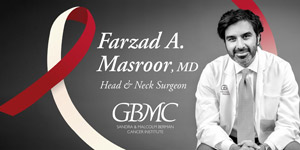
<iframe class="embed-responsive-item" src="https://www.youtube.com/embed/t2ADN3G65oo" allowfullscreen="allowfullscreen"></iframe> <p class="article-body"> Dr. Farzad Masroor earned his medical degree from the Medical College of Georgia at Augusta University, where he was elected into the Alpha Omega Alpha medical honor society. He then completed a residency in Internal Medicine at the Hospital of the University of Pennsylvania. He received additional residency training in Otolaryngology-Head & Neck Surgery at the Kaiser Permanente Oakland Medical Center. This was followed by a fellowship in Head and Neck Surgical Oncology and Microvascular Reconstruction at the University of Pittsburgh Medical Center. Dr. Masroor treats head and neck cancer, with expertise in thyroid surgery, head and neck surgical oncology, and microvascular reconstructive surgery. <br> <br> On Wednesday, March 13, Dr. Masroor discussed thyroid cancer, how we can treat it and who is at risk. He also shared that most thyroid cancers are treatable with surgery, much more so than the other types of cancers he sees daily. Here are the top takeaways from Dr. Masroor's interview: </p> <ul> <li> The thyroid is the butterfly-shaped gland that sits on your windpipe. It produces thyroid hormones to control a person's metabolism. Dr. Masroor said there are various genetic diseases that can stem from the thyroid such as Hashimoto's disease and Graves' disease. He also said a person can easily live without their thyroid, thanks to modern medicine. The difference between thyroid cancer and disease is in cancer the cells have escaped the body's control. </li> <li> There are three different types of thyroid cancer: differentiated, medullary and anaplastic. Differentiated is the least lethal and most common. It is easily treatable and usually found incidentally while scanning the upper body, abdomen or head for something else. Medullary is the second most common and grows from "C-cells." The third and most dangerous type is anaplastic thyroid cancer. Dr. Masroor said this is the most rare, effecting only 1% of patients. </li> <li> The risk factors for thyroid cancer are not well defined; however, women are 2.5x more likely to develop thyroid cancer than men. Those with a family history, past radiation treatments around the thyroid, or with a thyroid disease should regularly have their thyroid checked by their primary care or a genetics doctor. If a patient notices any bumps or lumps near the thyroid gland, Dr. Masroor recommends getting it checked. </li> </ul> At GBMC, patients receive university-level care in a community hospital setting. Dr. Masroor believes the leadership team at GBMC is always looking for ways to do things better and improve patient care. Dr. Masroor is passionate about his work and his patients, and believes they deserve the best care possible. He, along with the rest of the oncology team, are currently working to consolidate cancer services into one convenient location, <a href="http://www.gbmcpromise.org">The Sandra R. Berman Pavilion.</a>
<iframe class="embed-responsive-item" src="https://www.youtube.com/embed/FVwGmVFWDlg" allowfullscreen="allowfullscreen"></iframe>
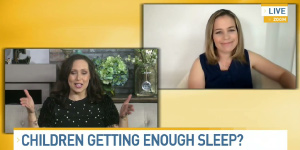
<iframe class="embed-responsive-item" src="https://www.youtube.com/embed/5VKJmtQ1ykU" allowfullscreen="allowfullscreen"></iframe> <p class="article-body"> Doctor Rachel Plotnick tells us about how the pandemic has affected children’s sleep time and what parents can do to help their children get better sleep. </p>
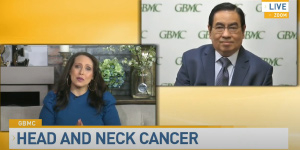
<iframe class="embed-responsive-item" src="https://www.youtube.com/embed/3o_QddAzayQ" allowfullscreen="allowfullscreen"></iframe> <p class="article-body"> Doctor Ray Blanco tells us about several types of head and neck cancers and how we can prevent them. </p>
<embedded-content data-plugin-config="{"video_content_config":{"video_image":[],"video_image_alt":"","video_upload":[],"video_embed":"https:\/\/www.youtube.com\/embed\/txkh-amnoLE","video_url":""},"video_style_config":{"video_background_color":{"settings":{"color":""}},"video_play_background_color":{"settings":{"color":""}},"video_play_opacity":"","video_play_color":{"settings":{"color":""}}}}" data-plugin-id="embedded_video"> </embedded-content><p class="article-body">Melissa Bidlack speaks on voice health and tells us about voice disorder and how our voices can change over time.</p>
<iframe class="embed-responsive-item" src="https://www.youtube.com/embed/5FhHdy_ImoQ" allowfullscreen="allowfullscreen"></iframe> <p class="article-body"> Many seniors have serious illnesses and need extra care, but want to stay in their homes and maintain their independence. Nurse Practitioner Team Lead, Jennifer Castello explains how the Gilchrist home-based Elder Medical Care program can help. </p>
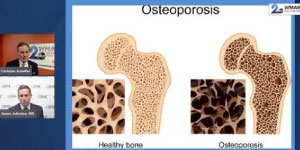
<iframe class="embed-responsive-item" src="https://www.youtube.com/embed/OgkXvncuUQc" allowfullscreen="allowfullscreen"></iframe> <p class="article-body"> James Johnston, MD, Orthopedic Surgeon at GBMC Health Partners Orthopaedics discusses how bone fractures are treated and how to prevent them, and more. </p>
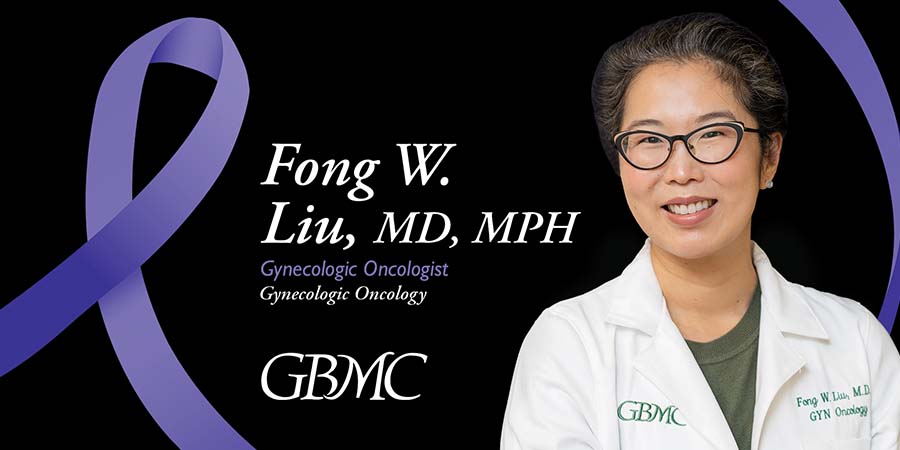
<iframe class="embed-responsive-item" src="https://www.youtube.com/embed/LNF5H7nAlLE" allowfullscreen="allowfullscreen"></iframe> <p class="article-body"> <a href="/node/6003">Fong W. Liu, MD, MPH,</a> is a gynecologic oncologist at the Sandra and Malcolm Berman Cancer Institute at GBMC. She is board-certified in both Obstetrics and Gynecology and Gynecologic Oncology and earned her Doctor of Medicine degree from the University of Alabama. She completed her residency in Obstetrics and Gynecology at Beth Israel Deaconess Medical Center in Boston, where she also served as an instructor. Dr. Liu is an assistant professor of Gynecology and Obstetrics at the Johns Hopkins University School of Medicine. <br> <br> On January 12, Dr. Liu discussed her work with gynecological oncology patients. Her patients motivate her to continue to study, teach and put her best efforts toward caring for her patients. Dr. Liu shared that it is important, as women, to be sure you care for yourself and not minimize any signs or symptoms while caring for your family. </p> <h3> Three Takeaways </h3> <ol> <li> Regular, in-person screenings and pelvic exams are the most important factors when it comes to catching gynecological cancers early. Despite the pandemic, it is still very important for women to receive regular exams and to see their doctor if they notice any abnormal symptoms such as post-menopausal spotting or bleeding. Family history is also very important, and women should not be afraid to talk to their family members about medical issues so they can understand their own risk better. </li> <li> The most common type of gynecological cancer is endometrial cancer, with 55,000 women diagnosed annually. Endometrial cancer is not the same as endometriosis, which does not pose a risk for endometrial cancer. However, women with excess estrogen, especially those with a family history of gynecological cancer or who are overweight, might be at risk and should receive regular screenings. Excess estrogen can be managed somewhat by maintaining a healthy diet and weight. </li> <li> All three treatment modalities (surgery, chemotherapy, radiation therapy) are not always needed to treat gynecological cancers. It often depends on the site and the stage of the cancer, as well as other patient characteristics to determine the best course of treatment. </li> </ol> It is important for patients to utilize the Oncology Support Services Program at GBMC. Often patients' family and friends offer to help in a way that might not be what is best at the time, and it is important for patients to speak up and ask for what they truly need, which sometimes might mean the occasional moment of alone time. Support Dr. Liu's patients and others <a href="https://www.classy.org/give/288692/#!/donation/checkout">by considering a contribution to Oncology Support Services.</a>
<iframe class="embed-responsive-item" src="https://www.youtube.com/embed/UebEoOiRlfs" allowfullscreen="allowfullscreen"></iframe> <p class="article-body"> Lung cancers can be asymptomatic until they spread, so understanding your risk is important. Learn more about risk factors and screenings. www.gbmc.org </p>
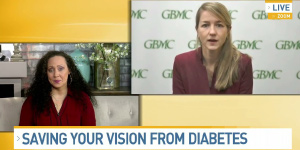
<iframe class="embed-responsive-item" src="https://www.youtube.com/embed/x4zQiRtJ0EI" allowfullscreen="allowfullscreen"></iframe> <p class="article-body"> Doctor Katherine Duncan tells us about how diabetes can affect the eyes. Dr. Duncan goes more in depth about what causes this irritation and how we can prevent it. </p>
<iframe class="embed-responsive-item" src="https://www.youtube.com/embed/h0JqOotaIXA" allowfullscreen="allowfullscreen"></iframe> <p class="article-body"> We think of hospice mostly as a service for adults, but sometimes it's necessary for children. Learn more about Gilchrist Kids. <a target="_blank" href="www.gilchristcares.org">www.gilchristcares.org</a> </p>
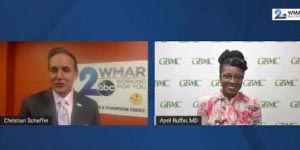
<iframe class="embed-responsive-item" src="https://www.youtube.com/embed/DJdW2rFe77M" allowfullscreen="allowfullscreen"></iframe> <p class="article-body"> Dr. April Ruffin, GBMC Hospitalist discusses flu prevention, diagnosis, and treatment. WMAR-2 News Day of Answers - Flu </p>